

A European standard, EN 14068, defines a test method for determining the waterproofing of cracks injected into concrete with a defined crack width. This test method is applied to circular and rectangular ducts and components used in air conditioning and ventilation systems in buildings.
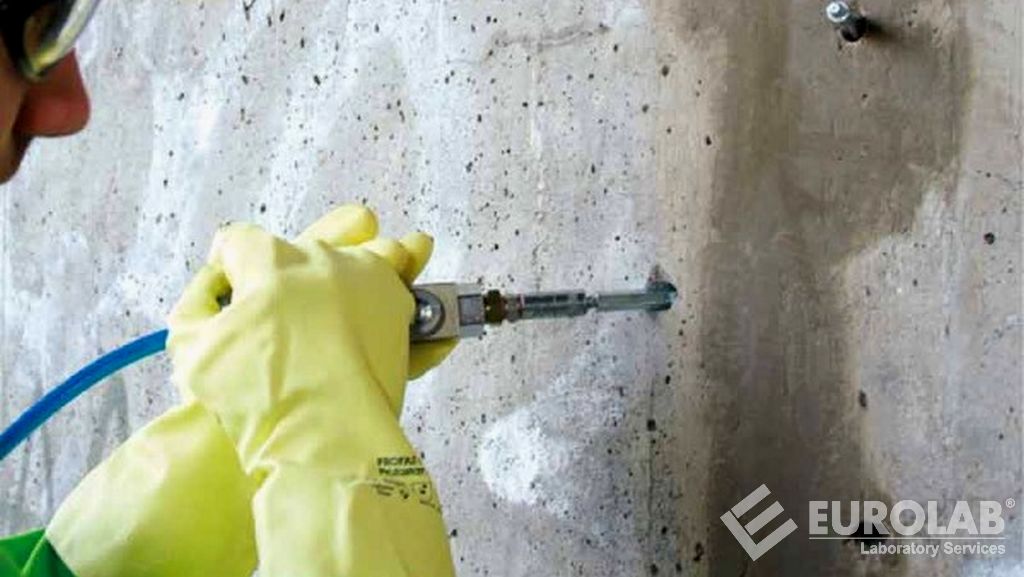
During testing, the injection product is injected into a 1 mm wide crack where the moisture content is controlled (dry, damp, wet, or with water back pressure). After hardening, the watertightness of the injected crack is tested by applying a hydraulic direct pressure that is increased in a specific number of steps. For special applications, test parameters different from those specified in the EN 1504-5 standard are used.
There are several causes of concrete cracks. This may be because the concrete element has experience of concrete crack grouting before the appropriate aging time to achieve the designed loads, or it may simply fail after years. Engineers apply several methods to repair cracks in concrete. The most common among these is concrete epoxy application. Cracks in any concrete element compromise structural durability. That's why builders have found a way to repair these cracks in the most economical way, rather than demolishing the structure completely.
The main standards applied for crack grouting are:
Our organization, among the numerous test, measurement, analysis and evaluation studies it has given for businesses in various sectors, with its trained and expert staff and advanced technological equipment, within the scope of the EN 14068 standard, regarding the products used for the protection and repair of concrete structures, it is possible to detect the cracks injected in the concrete. It also provides testing services for the determination of waterproofing.
To get an appointment, to get more detailed information or to request an evaluation, you can ask us to fill in our form and reach you.

