
Kautex TSt 02-10 Stress Crack Tests - Testing of Stress Crack Resistance

Kautex TSt 02-10 Stress Crack Tests - Testing of Stress Crack Resistance

Developed by Kautex, a leader in the design and manufacture of automotive plastic fuel systems, the standard "Kautex TSt 02-10 Stress crack tests - Testing of stress crack resistance" describes in detail the test setup and test procedure for the test equipment. This standard describes and defines all methods used by Kautex to test the environmental stress crack resistance of parts.
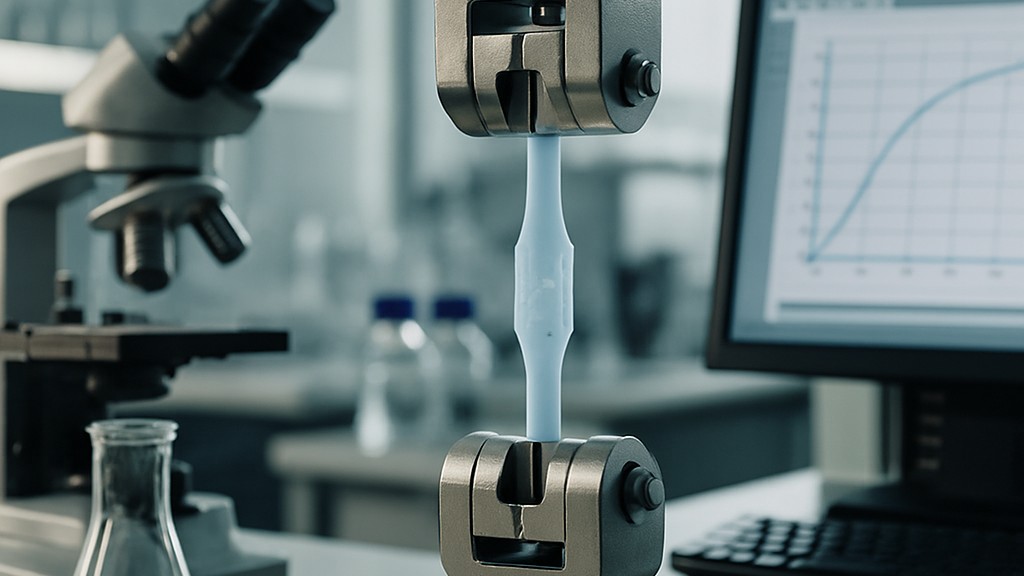
Kautex TSt 02-10 Stress Crack Tests - Testing of Stress Crack Resistance

This test standard applies to all stress crack tests and is divided into the following applications:

  • Welded parts that come into contact with fuel on one side and air on the other.
  • All injection molded parts containers
  • Containers (PFT and other containers)
  • Parts made of polyoxymethylene

For comparing parts made of polyoxymethylene at different processing parameters, but not for application-specific suitability testing.

Under mechanical load, plastics can change irreversibly over time. This can also occur when the load is below the yield stress. This behavior is often called stress cracking. No applied load is required, but it can also result from internal stresses caused by the manufacturing process. This behavior resembles creep and can be amplified by fluids that promote stress cracking. In this case, it is called environmental stress cracking. Cracks can lead to failure of the assembled component and leakage. Environmental stress crack resistance can be analyzed using the methods described in this test standard.

Conditions that favor the formation of stress cracks include:

  • Very high cooling rates in injection molding and blow molding
  • High shear force in the melt (e.g. small radii)
  • Large wall thickness differences
  • Low crystallinity (if polymer types are comparable)
  • Low molar mass (if polymer types are comparable)

The materials and equipment required for the tests are as follows:

  • Welded parts:
    • Plastic tanks for test sample installation (e.g. laboratory tank)
    • Fuel resistant hoses
    • Test fuel FAM B (according to DIN 51604-2 standard)
    • Explosion-proof heating cabinet (60 degrees plus/minus 5 degrees)
    • Fluorescent penetrant according to DIN 54 152 standard
    • UV flashlight adapted to the UV active wavelength of the penetrant.
    • magnifying glass, mirror
    • Sealing test equipment with connectors and compressed air suitable for tests up to 500 mbar
    • Canister with a volume at least equal to the volume of test fuel used.
  • All injection molded parts:
    • Samples (mounted)
    • Surfactant test
    • Fluorescent penetrant
    • UV flashlight adapted to the UV active wavelength of the penetrant.
  • Containers:
    • Applied pressure testing
      • Conditioning room (heated room) 60 degrees plus/minus 1 degree
      • Compressed air 300 mbar plus/minus 2 mbar
      • Surfactant test
      • Welding equipment
      • Injection molded fittings and discs from PE
      • • Drill that fits the inside diameter of the nipple.
    • Testing without applying pressure
      • Conditioning room (heated room) 80 degrees plus/minus 1 degree
      • Surfactant test
      • Fixtures
  • Polyoxymethylene parts
    • Hood (certified for formaldehyde) (toxic, carcinogenic)
    • Sulfuric acid
    • Glass container (e.g. beaker)
    • Tracking is stopped
    • Personal protective equipment (nitrile gloves, goggles, lab coat)
  • Optional microscope
    • microscope
    • Rotary or slide microtome

In the world of industrial plastics, where safety, durability, and regulatory compliance are paramount, Kautex specializes in innovative plastic solutions for automotive fuel systems, battery enclosures, clear visibility systems, and perhaps most relevantly, high-performance industrial packaging. The company's TSt 02-10 standard is a testing standard for verifying the integrity of plastic packaging under simulated real-world stresses.

This standard is an in-house benchmark developed to evaluate the mechanical and environmental durability of plastic containers, particularly those from 2 to 10 liters. In essence, this standard simulates the lifecycle stresses of industrial packaging: from filling and sealing to stacking, from vibration during transportation to long-term storage. Key test stages include:

  • Drop and impact testing (Stage 02): Containers are filled to 98 percent capacity with water or simulated high-density media (solutions) and dropped from heights of up to 1,8 meters onto non-flexible surfaces. This mirrors UN Packaging Group II/III requirements, but adds rotary drops to assess handle integrity. Pass criterion: No leaks after 24 hours of observation.
  • Pile load and compaction (Stage 05): Pile loads of up to 10 units are compacted at 1,5 times the nominal load for 28 days at 23 degrees Celsius and 50 percent humidity, followed by vibration simulation. This ensures stability in warehouse stacks where a 10-liter drum can carry a load of 300 kg.
  • Environmental exposure (Stage 10): Accelerated aging under UV light, temperature cycles (-20 degrees Celsius to 60 degrees Celsius), and chemical immersion (e.g., 10 percent hydrochloric acid or oils for 168 hours). Measurements include permeation rates (less than 0,5 percent weight loss) and seal integrity, and comply with REACH and food contact regulations.

In short, the Kautex TSt 02-10 standard is of critical importance to ensure the reliability and durability of plastic packaging.

Our organization, with its competent and experienced team, has been understanding the needs of its customers for years, providing them with the advanced testing services they need, and assisting them in establishing, implementing, and improving management systems. In this context, we also provide testing services in accordance with the Kautex TSt 02-10 Stress crack testing - Testing stress crack resistance standard.

WhatsApp

