

Glass transition temperature is the temperature value of amorphous polymers at which increased molecular mobility causes significant changes in thermal properties. Plastic products molded with oriented molecules expand differently unless the glass transition temperature is reached. Above the glass transition temperature, the polymer tends to expand isotropically, and hysteresis (lag) in expansion or dimensional changes upon cooling is noted when the material will be rubbery and ductile.
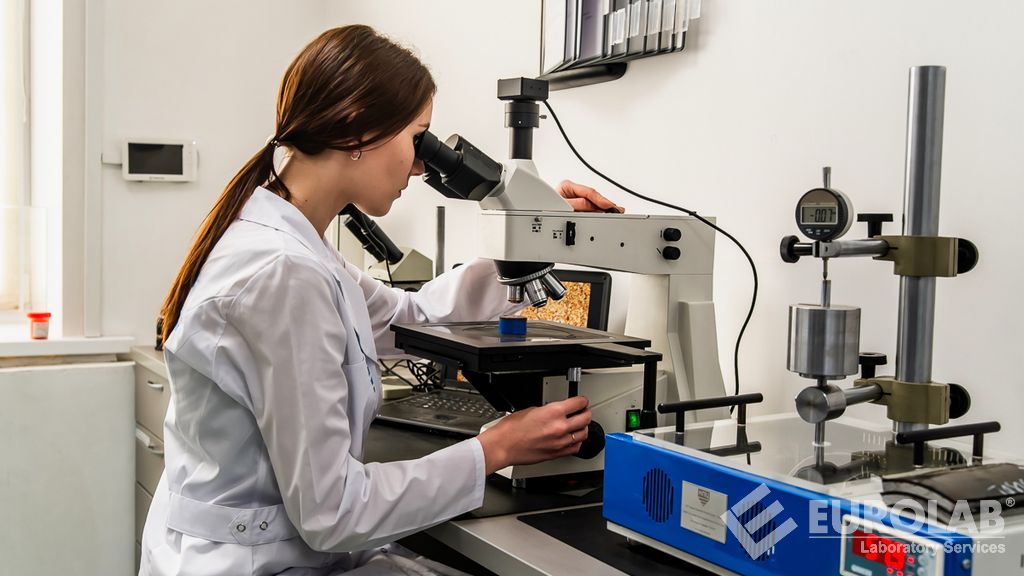
Glass transition temperature analyses are performed according to the ASTM E1356 standard developed by the American Society for Testing and Materials (ASTM) (ASTM E1356-08 Standard test method for the determination of glass transition temperatures by differential scanning calorimetry). The test method described in this standard involves assigning the glass transition temperatures of materials using differential scanning calorimetry or differential thermal analysis. This test method is applied to amorphous materials or partially crystalline materials containing amorphous regions that are stable and do not undergo degradation or sublimation in the glass transition region. The normal operating temperature range is between -120 and +500 degrees Celsius. The temperature range can be extended depending on the instrumentation used.
The glass transition temperature is often pronounced when applying polymers used as adhesives and coatings. This feature is actually one of the most critical features to consider when choosing the right material for the application.
The simplest definition of a polymer's glass transition temperature is the temperature at which an amorphous polymer transitions from a hard or glassy state to a softer, usually rubbery or viscous state. Especially when dealing with plastics and polymers, the property of the glass transition temperature is necessary because these materials do not behave like conventional solids and liquids.
Conventional materials include: metals (copper, steel, aluminum), solvents (toluene, xylene) and water. These conventional materials reversibly go from solid form to liquid form at the melting point. Most polymers, on the other hand, do not behave the same and have a slightly less defined change from solid to liquid. These amorphous polymers change from a more crystalline or glassy structure to a typically softer or rubbery structure at the glass transition temperature.
Our organization also provides glass transition temperature analysis services with its trained and expert staff and advanced technological equipment, among the numerous test, measurement, analysis and evaluation studies it provides for businesses in various sectors.
To get an appointment, to get more detailed information or to request an evaluation, you can ask us to fill in our form and reach you.

