

The ASTM E345 Standard Test Methods for Tensile Testing of Metallic Foils , developed by the American Society for Testing and Materials (ASTM) , describes test methods for determining the tensile strength of metallic foil at room temperature. Exceptions to these methods may be required in individual specifications or test methods for a given material.
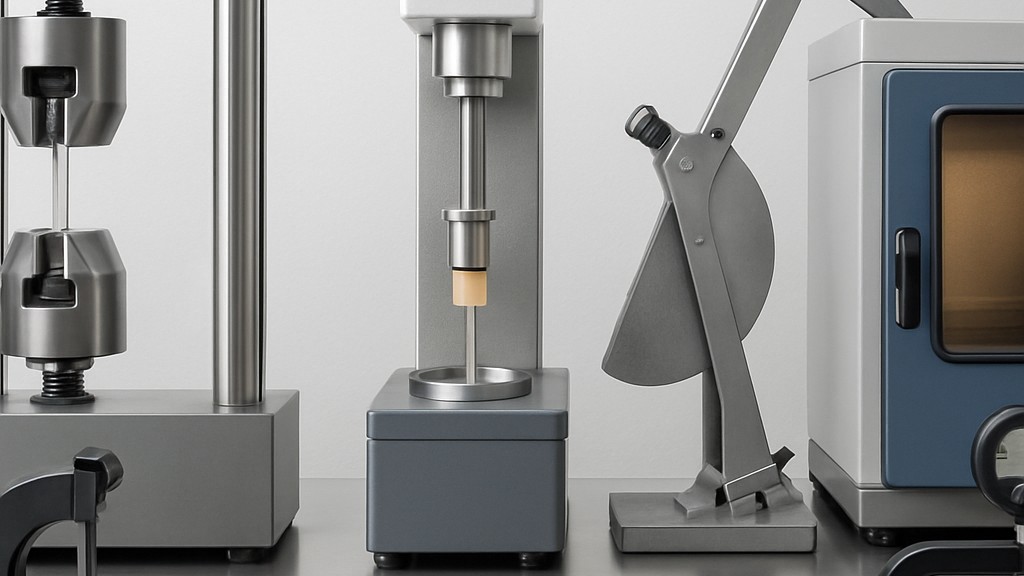
Tensile tests provide information about the strength and ductility of materials under uniaxial tensile stresses. This information can be useful in material comparisons, alloy development, quality control, and design.
Tensile test results from specific sections of a part or material may not fully reflect the strength and ductility of the entire final product in service under different environments. These test methods are considered adequate for acceptance testing of commercial shipments because they are widely used for this purpose.
Tensile tests provide a means of determining the ductility of materials by measuring elongation or area reduction. However, as the specimen thickness decreases, tensile tests may become less useful in determining ductility. For these purposes, the ASTM E796 standard test method is an alternative test method for measuring ductility. Different industries distinguish between foil and sheet of varying thicknesses.
This standard differs from the test methods described in ASTM E8/E8M in that it allows the determination of specimen thickness by weighing and, for some specimens, the elongation due to crosshead displacement.
ASTM E345 cannot define a thickness range for every possible alloy, so it should be used in place of ASTM E8/E8M standard test methods or other tensile testing standards. To avoid material damage and achieve sufficient accuracy, better results can be obtained for a given alloy and thickness by weighing the specimen thickness. Furthermore, conventional extensometers in contact with the specimen, used to determine the elongation due to crosshead displacement, are acceptable for a given alloy and thickness.
In short, ASTM E345 is a critical standard outlining tensile testing procedures for metallic foils, particularly those thinner than 0,150 mm. This standard is vital for industries that rely on thin metallic foils, such as those used in lithium-ion batteries for electric vehicles, electronics, and aerospace applications. By providing a standardized method for evaluating the strength and ductility of these materials under uniaxial tensile stresses, this standard ensures consistency and reliability in materials testing.
ASTM E345 standard focuses on tensile testing of metallic foils at room temperature. This standard is designed for thin, delicate specimens, distinguishing it from other tensile testing standards, such as ASTM E8/E8M, used for thicker metallic materials. Key features of this standard include:
This standard emphasizes that exceptions to these methods may be necessary for certain materials, as specified in individual specifications. It also states that due to the sensitive nature of the samples, users should establish appropriate safety, health, and environmental practices.
Tensile tests under ASTM E345 provide critical data on the mechanical properties of metallic foils, including:
A key application of ASTM E345 is the testing of metallic foils used as current collectors in lithium-ion batteries for electric vehicles. Aluminum and copper foils must withstand swelling during battery charge-discharge cycles, so tensile strength and yield point elongation are critical to battery life and quality. As battery technology evolves to include materials such as lithium-silicon, the importance of ASTM E345 in evaluating foil elongation continues to grow. The rapidly increasing demand for electric vehicles has further enhanced the importance of this standard in ensuring the reliability of battery components.
The ASTM E345 standard outlines specific procedures to ensure accurate and repeatable testing of sensitive metallic foils:
As a result, ASTM E345 is a fundamental standard for testing the tensile properties of thin metal foils, which play a crucial role in industries such as electric vehicle battery manufacturing, electronics, and aerospace. Its focus on precise specimens, precise measurement techniques, and appropriate gripping solutions ensures accurate assessment of strength and ductility. As demand for high-performance foils increases, particularly in electric vehicle battery applications, ASTM E345 remains crucial for quality control, materials development, and design.
Our organization, which has been serving businesses for many years and meticulously following global developments in science and technology, employs a skilled team and extensive infrastructure to conduct testing, measurement, and analysis in a wide range of areas for businesses across all sectors. In this context, we also provide testing services in accordance with ASTM E345 Standard Test Methods for Tension Testing of Metallic Foils.
To get an appointment, to get more detailed information or to request an evaluation, you can ask us to fill in our form and reach you.

