

The ISO 6245 Petroleum Products - Determination of Ash standard, published by the International Organization for Standardization (ISO), describes a method for determining the ash content of petroleum products such as distilled and residual fuel oils, crude oil, lubricating oils, waxes, and other petroleum products, where ash-forming components are normally considered undesirable impurities or contaminants. Ash can originate from metallic compounds soluble in oil or water, or from foreign solids such as dirt and rust.
This method is applicable to products with an ash content between 0,001% (m/m) and 0,180% (m/m), but not to products containing ash-forming additives, including certain phosphorus compounds. Analysis of unused or used lubricating oils, used engine crankcase oils, lead-containing lubricating oils, or certain non-hydrocarbon diesel fuels containing additives should be determined using the ISO 39871 standard, which involves a step to produce sulfated ash with a higher melting point.
In some sample types, test results may not quantitatively account for all metal compounds that can form ash. Some unused lubricating oils and distilled fuel oils contain low molecular weight metal inorganic additives (e.g., sodium, potassium), and these metal oxides may sublimate below the temperatures specified in this standard.
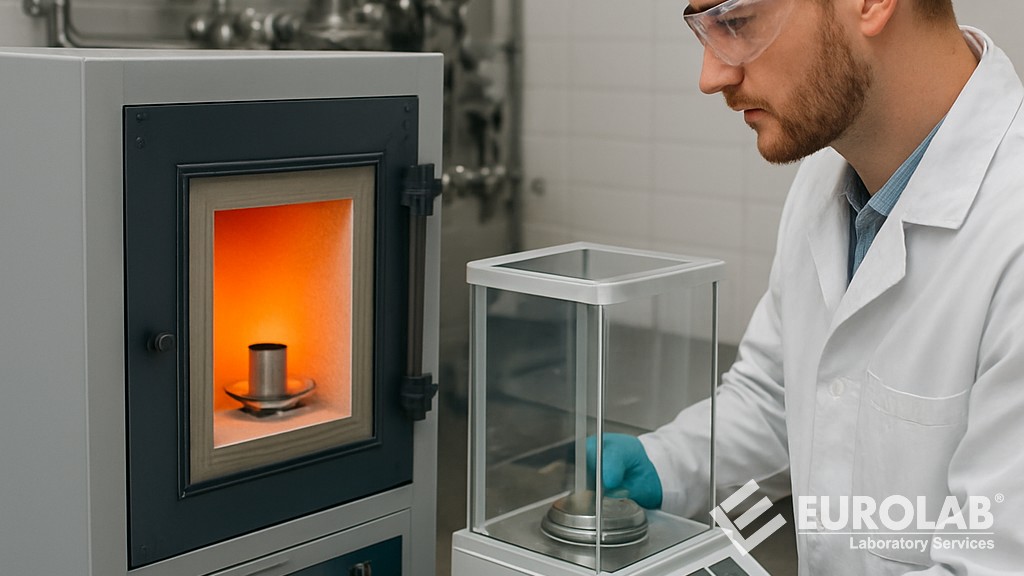
In principle, a test sample in a suitable container is ignited and allowed to burn until only ash and carbon remain. The carbonaceous residue is then heated to ash in a furnace at 775 degrees, allowed to cool, and weighed.
Unless otherwise specified, samples should be taken in accordance with the procedures described in ISO 3170 or ISO 3171 standards. Before transferring the test sample to be annihilated into the evaporation vessel, it is necessary to ensure that the sample in the vessel is homogeneous using one of the methods described in this standard.
Mobile samples are mixed to evenly distribute particulate material such as catalyst powders, rust, or foreign particles throughout the sample. Mixing intensity is increased until visual homogeneity is observed. Mixing with manual or mechanical shaking for 10 minutes is the lowest intensity mixing process, followed by repeated and longer mixing times. When it becomes clear that repeated or prolonged shaking does not provide homogeneity, the mixer is used for a minimum amount of time to homogenize the sample. If the sample cannot be sufficiently homogenized, it is discarded and a new sample is taken.
Samples of viscous, semi-solid, and solid materials are heated at room temperature until they become mobile enough to be stirred. Extreme caution is necessary if heating above 90 degrees is likely, as any water in the sample could boil, causing splashing or foaming. Appropriate safety glasses and gloves should be worn. An oven or hot water bath is used to heat the sample container. A minimum temperature of approximately 5 degrees above the material's pour point is normally required to achieve sufficient mobility for stirring.
The ISO 6245 standard includes a laboratory procedure for measuring ash, which is the inorganic residue left after a sample of a petroleum product has been completely burned at high temperatures. Ash typically originates from:
This standard applies to a wide range of products, including the following:
The ISO 6245 standard is designed for products where ash-forming components are generally considered undesirable impurities or contaminants. This method is suitable for ash content ranging from 0,001% (m/m) to 0,180% (m/m) (mass ratio).
This standard does not cover all petroleum products:
Additionally, some low molecular weight metal additives (e.g., sodium or potassium compounds) may sublimate (evaporate) at test temperatures, leading to underreporting of ash levels.
Measuring ash content is very important for several reasons:
This test method is equivalent to or closely compatible with other methods, such as the “ASTM D482 Standard test method for ash from petroleum products” standard.
In conclusion, the ISO 6245 standard provides a reliable and standardized approach to determining the ash content in petroleum products, helping to ensure product purity and performance. Although simple in concept (burning and weighing the residue), it requires careful laboratory practice to obtain accurate results. For products containing complex additives, it is essential that this standard be used in conjunction with complementary standards such as ISO 3987.
For many years, our organization, with its competent and experienced staff, has been understanding the needs of its customers, providing the advanced testing services they require, and assisting them in the establishment, implementation, and improvement of management systems. Within this framework, we also provide testing services to businesses in accordance with the "ISO 6245 Petroleum products - Determination of ash" standard.
To get an appointment, to get more detailed information or to request an evaluation, you can ask us to fill in our form and reach you.

