SES N 3108 Forged Steel Components
Developed by Suzuki Motor Corporation as part of metallic material standards, the “SES N 3108 Forged Steel Components” standard describes the technical requirements for forged steel parts used in the automotive industry. This standard, a material and manufacturing standard, specifically covers high-strength and critical, segmented components.
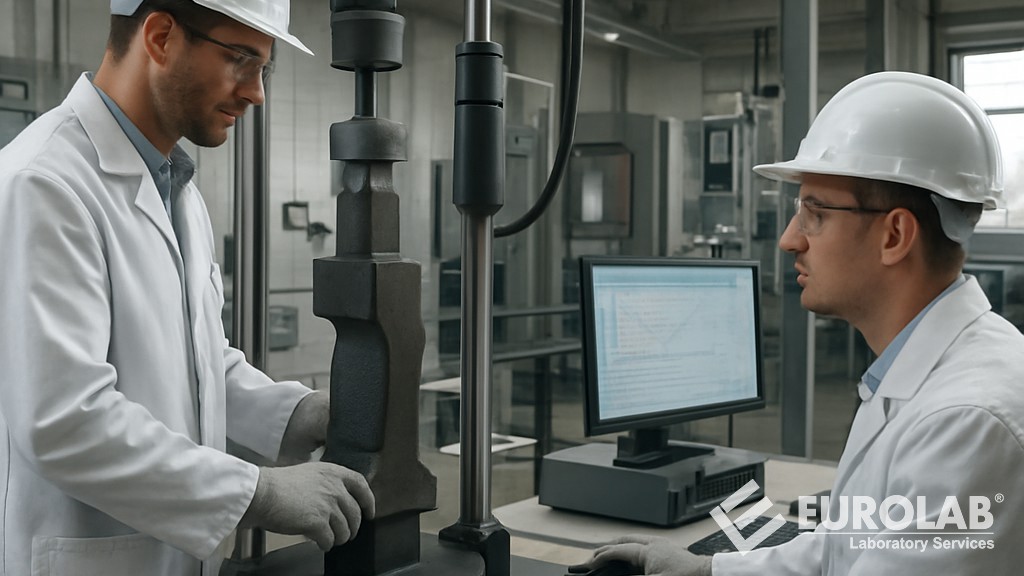
Forged steel components are preferred in automotive applications where high strength, safety, and long service life are required. This is not only because they are more robust, but also because their manufacturing methods improve the internal structure of the material.
Wrought steel is used in the automotive industry for the following reasons:
- Very high strength: During the forging process, the internal grain structure of the steel is compressed and oriented. This results in higher tensile and yield strength, and the same part is produced thinner/lighter.
- Fatigue resistance: Vehicle parts operate under constant load (vibration, impact, rotation). Forged steel is more resistant to cracking under repeated loads and provides a longer service life.
- Impact and fracture resistance: Especially under sudden loads (such as potholes or impacts): It fractures less than cast or machined parts. It behaves more robustly and is not brittle.
- Minimal internal defects: Defects such as voids and pores are largely eliminated in the forging process. This is a critical advantage in terms of safety.
- Oriented grain structure: During forging, the fiber structure of the metal conforms to the part geometry. This feature provides extra strength, especially in shafts, arms, and connecting parts.
Wrought steel components are generally critical and load-bearing parts:
- crankshaft
- connecting rod
- Steering parts (tie rod, tie rod end)
- Suspension elements
- Axles and shafts
- Gears
The SES N 3108 standard covers the following components:
- Production systems from forged (fake) steel.
- Load-bearing and safety-critical parts.
- Automotive components where mechanical strength and fatigue life are important.
For example, parts such as tie rods and tie rod ends are made of forged steel.
Wrought steel is produced by shaping it under high pressure. Its main advantages are:
- High strength and impact resistance.
- Improved grain structure and longer lifespan.
- Resistance to cracking and breaking.
- High fatigue resistance.
Therefore, it is preferred in suspension, steering, and power systems.
This standard typically includes the following technical specifications:
- Chemical composition:
- Element limits such as carbon, manganese, and chromium.
- Strength control through alloy ratios.
- Mechanical properties:
- Tensile strength
- Yield strength
- Elongation
- Hardness
- Heat treatment:
- Normalization
- Watering (extinguishing)
- Tempering
- Production requirements:
- Tattooing process
- Grain structure control
- Internal defect (void, crack) limit
The SES N 3108 standard specifies the following test quality control methods:
- Ultrasonic testing
- Magnetic wave test
- Mechanical tests
Forged steel parts, covered by the SES N 3108 standard, are used in the automotive industry in the following areas:
- Steering system (tie rod, tie rod end)
- Suspension parts
- Crankshaft, axle parts
- Fasteners (high strength)
For example, a steering rod component can be manufactured from forged steel, providing both strength and safety.
The SES N 3108 standard is not just a technical document in the automotive industry, but a critical requirement that directly ensures safety, quality, and manufacturing consistency. The main reasons for this are as follows:
- Ensuring the safety of critical components: Forged steel components are commonly used in the following systems:
- Steering wheel
- Suspension
- power transmission
A fault in these parts can lead to serious accidents such as steering loss or wheel detachment. Therefore, the standard...
- Determines minimum strength values.
- It prevents the use of defective parts.
- Ensuring the same quality for all suppliers: There are many different suppliers in automotive production. Without a standard,
- Each manufacturer produces a different quality.
- Vehicle performance becomes inconsistent.
Thanks to this standard,
- Each part is manufactured according to the same technical requirements.
- A global quality standard is established.
- Ensuring repeatability in mass production: In the production of millions of vehicles, every part needs to exhibit the same behavior. This standard guarantees consistent results in every batch by defining material composition, heat treatment, and mechanical properties.
- Preventing hidden defects: Even forged parts can carry these risks:
- Internal cracks
- gaps
- Insufficient tattooing
This standard mandates the following:
- Ultrasonic testing
- Magnetic test
This way, even errors that are invisible to the naked eye can be detected.
- Ensuring the correct production process: Incorrect forging or heat treatment,
- It can make the piece crispy.
- It can reduce my strength.
This standard
- Tattooing method
- Heat treatment parameters
- Hardness and microstructure criteria
and identifies similar critical details.
- Reducing cost and warranty risks: Without this standard,
- The failure rate in the field increases.
- Recall costs are incurred.
Thanks to this standard:
- The risk of malfunction decreases.
- Warranty costs are reduced.
- Meeting legal and customer expectations: In the modern automotive industry,
- Safety regulations are very strict.
- Original equipment manufacturers demand high quality.
The SES N 3108 standard is a reference that technically meets these requirements.
In conclusion, the SES N 3108 standard,
- It provides security.
- It standardizes quality.
- It ensures consistency in production.
- It prevents hidden errors.
- It reduces costs and risks.
For many years, our organization, with its competent and experienced team, has been understanding the needs of its clients, providing the advanced testing services they require, and assisting them in the establishment, implementation, and improvement of management systems. Within this framework, we also provide testing services compliant with the SES N 3108 standard.



