

The test methods defined in the ASTM D256-10 standard, developed by the American Society for Testing and Materials (ASTM), involve determining the resistance of plastics to fracture by a pendulum rotation of standard specimens mounted on standardized pendulum hammers or standardized machines. In test methods A, C, and D, the notch produces a stress concentration that increases the probability of a brittle fracture rather than a ductile fracture. In test method E, impact resistance is obtained by rotating the notched specimen 180 degrees in a clamping vise. The results of all test methods are reported in terms of energy absorbed per unit of specimen width or per unit cross-sectional area under the notch.
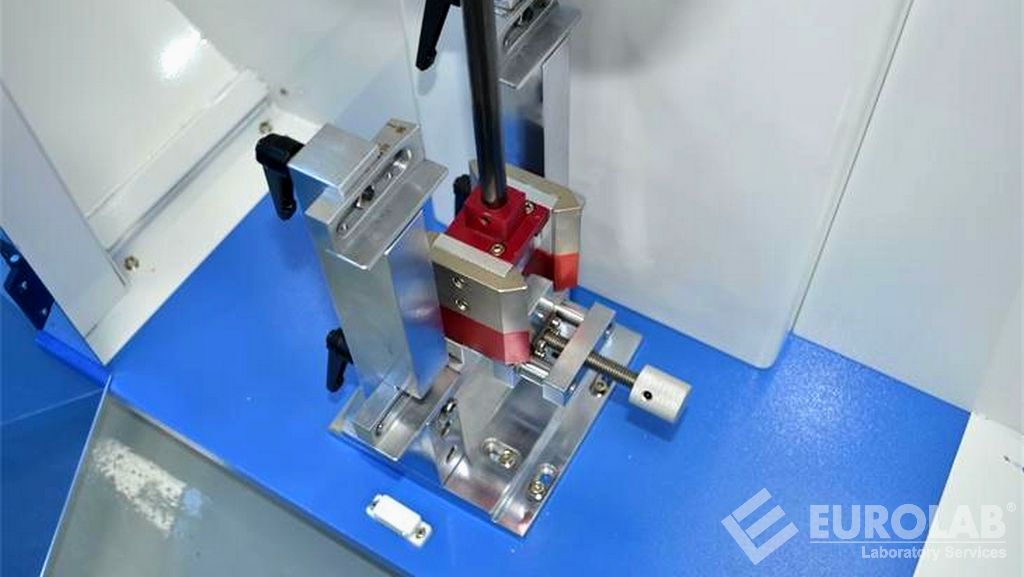
Machines with pendulum hammers are standardized to meet certain requirements, including a constant hammer drop height resulting in a substantially constant hammer velocity at impact. However, it is recommended to use hammers with different initial energies for use with specimens with different impact resistance.
The notch in the isod specimen serves to concentrate the stress, minimize plastic deformation, and redirect the fracture to the portion of the specimen behind the notch. The scattering in the energy to be broken is thus reduced. However, since the elastic and viscoelastic properties of plastics are different, the response to a certain notch differs between materials.
When evaluating the results of these standard test methods, the following test parameters can significantly affect test results:
Any test specimen preparation, conditioning, dimensions and test parameters covered in the material specification are priority issues. If there is no material specification, the default conditions apply.
The pendulum impact test indicates the energy required to break standard test specimens of the specified size under the parameters of prescribed specimen assembly, notching, and pendulum impact velocity.
Among the numerous test, measurement, analysis and evaluation studies it provides for businesses in various sectors, our organization also provides standard testing services for the determination of isod pendulum impact strength of plastics within the scope of ASTM D256-10 standard, with its trained and expert staff and advanced technological equipment.
To get an appointment, to get more detailed information or to request an evaluation, you can ask us to fill in our form and reach you.

