

The standard “DIN 53142-1 Sheet testing - Puncture testing - Part 1: Puncture testing with pendulum punching device,” published by the German Institute for Standardization (DIN), evaluates a combination of different properties of the material being tested, similar to the burst test. In addition to the known effects of the puncture process (e.g., piercing, tearing, and bending of the specimen), other effects occur in corrugated cardboard, such as the so-called cushioning effect. This standard includes a linear motion puncture test to determine the resistance of a compressed specimen to puncture by a punching tool.
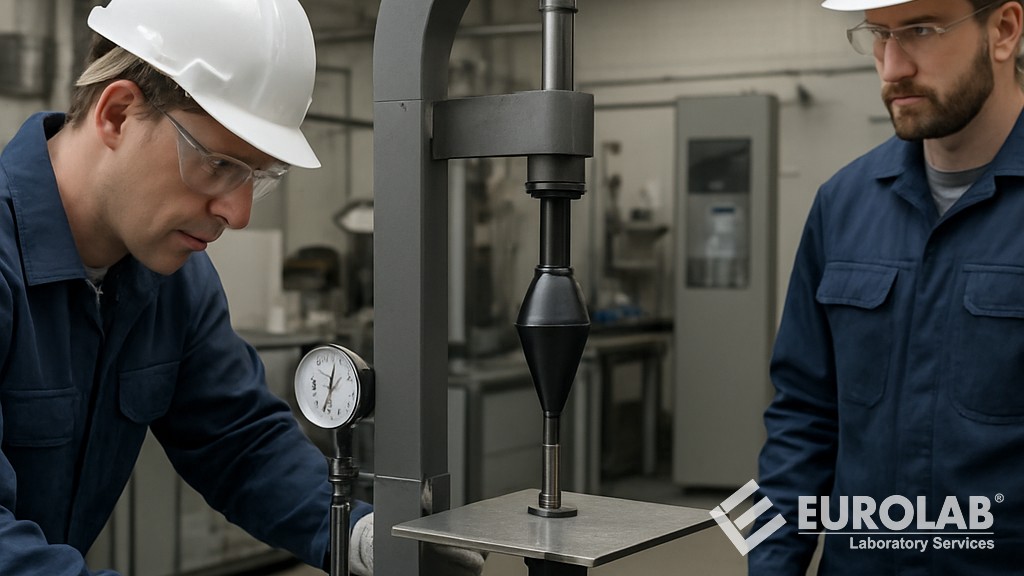
The DIN 53142-1 standard defines a specific method for testing the puncture resistance of cardboard materials, such as corrugated and solid cardboard, used particularly in packaging applications. This standard aims to determine the energy required to puncture a compressed cardboard specimen using a pendulum impact tester. This method measures the material's resistance to puncture or tearing using a sharp, pyramid-shaped instrument that simulates impacts or punctures that may occur during the handling, transport, or use of the packaging.
Puncture resistance is an important mechanical property for corrugated cardboard and heavy-duty cardboard materials, as it indicates how well the material can withstand sharp forces. This is particularly important for protective packaging in logistics, transportation, and industrial applications.
The main characteristics of this method are as follows:
The DIN 53142 standard consists of two parts:
The pendulum pulse method is the traditional and widely used approach, although in modern testing the linear method is sometimes preferred for better repeatability.
The DIN 53142-1 standard is compatible with its international equivalents, including:
Many testing devices comply with all three standards simultaneously.
This testing method is routinely performed in the following quality control laboratories:
This method helps evaluate carton quality, compare suppliers, ensure compliance with packaging specifications, and predict real-world performance against sharp impacts.
In short, the DIN 53142-1 standard defines a method for determining the puncture resistance of cardboard materials. This test evaluates the ability of cardboard, such as packaging cardboard, cardboard sheets, or corrugated cardboard, to withstand penetration by a sharp object under specific conditions. This test is particularly important in the packaging industry, where cardboard needs to be resistant to damage during handling, transport, and stacking.
This standard defines:
Puncture resistance reflects a plate's ability to withstand sudden localized forces, such as impacts from sharp or pointed objects.
This method is generally based on the following:
The method generally follows these steps:
The difference in energy before and after impact indicates the puncture resistance.
The DIN 53142-1 standard specifies the following:
Calibration is essential for obtaining consistent and accurate results.
The DIN 53142-1 standard defines the following:
Typically, to ensure reproducibility, samples are conditioned in a standard laboratory climate before testing.
The results are evaluated as follows:
Higher energy values indicate greater resistance to penetration.
This test is commonly used in the following areas:
It helps producers with the following:
Puncture resistance is critically important in the following areas:
Cardboard with insufficient puncture resistance can be damaged during shipping, leading to product damage and financial losses.
The DIN 53142-1 standard can be supplemented by other cardboard testing standards covering the following topics:
Together, these tests provide a comprehensive mechanical profile of the cardboard materials.
In conclusion, the DIN 53142-1 standard provides a standardized and reliable method for determining the puncture resistance of cardboard materials. This standard supports the following by measuring the energy required to puncture the sheet:
It remains an important method in packaging material testing, especially in situations where resistance to impacts and localized mechanical stress is critical.
For many years, our organization, with its competent and experienced staff, has been understanding the needs of its clients, providing the advanced testing services they require, and assisting them in the establishment, implementation, and improvement of management systems. Within this framework, we also provide testing services in accordance with the DIN 53142-1 standard.
To get an appointment, to get more detailed information or to request an evaluation, you can ask us to fill in our form and reach you.

