
Bending Test in Sheet Metal Production

Bending Test in Sheet Metal Production

Curl testing plays a critical role in many industries dealing with sheet-like materials, particularly paper, cardboard, packaging laminates, films, textiles, and even advanced manufacturing processes such as additive manufacturing or sheet metal forming. The term curl refers to the unwanted bending, rolling, or edge deformation of a material, often triggered by changes in humidity, temperature variations, asymmetric stresses, coating/lamination processes, or manufacturing conditions. This phenomenon can lead to serious production problems.
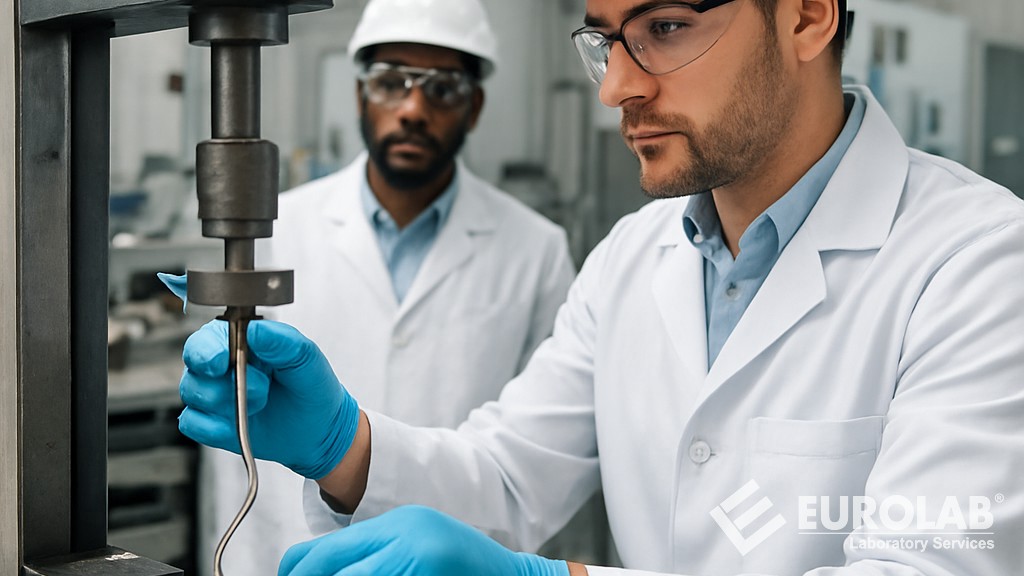
Bending Test in Sheet Metal Production

In industrial manufacturing, particularly sheet metal fabrication, crimping refers to a specialized cold-forming technique used to transform the edge of a sheet metal workpiece into a hollow, circular ring or tubular profile. This process is widely applied in industries such as automotive, home appliances, construction, aerospace, and consumer goods manufacturing.

Crimping is the process of taking a flat, usually sharp-edged piece of sheet metal and bending its edge gradually inward or outward to form a smooth, rounded roll. Unlike simple bending, crimping creates a closed or nearly closed loop at the edge, serving both functional and aesthetic purposes.

The main purposes of the curling process are as follows:

  • To improve worker safety during handling and assembly by eliminating hazardous sharp edges and burrs remaining from cutting or bending operations.
  • Increasing the moment of inertia near the edge, thereby enhancing stiffness and structural strength without adding extra material or weight.
  • To provide a clean, finished look for visible components.
  • Providing functional features such as hinge joints, wire guides, pipe guards, or reinforcement rims.

Common materials suitable for bending are ductile metals such as low-carbon steel, stainless steel, aluminum, brass, and copper alloys. Sheet thicknesses generally vary in fine proportions depending on the tool and machine used.

The crimping process is a multi-stage process, usually performed cold (at room temperature) to prevent thermal degradation. It is often integrated into staggered molds or multi-process setups for high-volume production. The basic steps of this process are as follows:

  • Preparation: The sheet metal is cut or processed, and the initial burrs are directed away from the die.
  • First bend: The edge is pre-bent to a small radius.
  • Progressive rounding: Specialized curling dies or rollers gradually transform the edge into a tighter curl, usually in 3-4 stages, to prevent cracking or wrinkling.
  • Finishing: The final stroke closes or nearly closes the curl into a hollow ring.

The equipment used here varies depending on the method applied:

  • Press brakes or stamping presses: Specialized crimping dies are used for precise, small-batch or medium-scale production.
  • Roll forming lines: Ideal for long, continuous profiles (e.g., grooves or trim pieces).
  • Rotary or spinning machines: For cylindrical parts such as boxes, lids, or rings.
  • Panel/sheet bending machines: Suitable for smaller, off-center bends.

In high-production environments, the crimping process is often combined with related processes such as cutting, beading, or deep drawing (for example, creating rounded edges on metal bottle caps or pot rims).

The curling process is seen in many everyday and industrial products:

  • Household appliances and cookware: Pots, pans, and metal lids feature rounded, safe edges.
  • Automotive: Exhaust components, trim parts, and hinges.
  • Construction: Gutters, downpipes, and door and window frames.
  • Furniture and enclosures: Secure, reinforced edges on cabinets, panels, and enclosures.
  • Packaging: Metal caps and closures where the folded edge covers or reinforces the surface.

In some cases, the coiling process produces functional double-walled structures under compression from thin tubes used in energy absorbers or structural components.

The benefits of curling are as follows:

  • It improves safety and ergonomics.
  • It economically increases edge strength.
  • It enhances the aesthetics and durability of the product.
  • Compatible with high-speed automated lines.

However, it has the following difficulties:

  • Precision tooling, tailored to the material thickness and ductility, is required to prevent cracks or incomplete bends.
  • Thicker or less ductile materials may require annealing or multiple processing stages.
  • In progressive patterns, misalignment can lead to defects.

Overall, bending remains a cost-effective and reliable process in modern sheet metal manufacturing, contributing to both functionality and surface quality in numerous industrial products.

While crimping isn't always necessary for every sheet metal part, many components function perfectly without it. However, in many real-world industrial applications, crimping becomes essential or highly advantageous for various critical reasons. Here are some reasons why manufacturers routinely include crimping as a crucial step in sheet metal fabrication:

  • Safety - Elimination of Sharp Edges and Burrs: After cutting, raking, drilling, or molding, sheet metal edges are often sharp and contain raised burrs that can cause cuts, abrasions, or injuries during handling, assembly, transport, or end use. The crimping process rounds the raw edge inward into a smooth, hollow ring, completely sealing the sharp burr and creating a rounded, finger-safe profile.
  • Structural strengthening - Increased edge strength: A flat, untreated edge is the weakest part of a sheet metal component and is prone to bending, crushing, or tearing under load. Bending significantly increases the moment of inertia (a measure of resistance to bending) at the full edge without adding extra material, weight, or separate reinforcements.
  • Enhanced aesthetics and professional appearance: Curved edges conceal rough cuts and burrs, giving parts a clean, polished, and premium look. Sharp, unfinished edges look cheap and industrial, while curved edges reflect quality and care.
  • Functional purposes in specific designs: In some cases, bending is not only useful but necessary for the part to function:
  • Creating hinge joints or pivot points (e.g., door hinges, cabinet hardware).
  • Creating rounded edges for leak-proof sealing (e.g., metal can lids, jar lids).
  • Providing wire channels, pipe protectors, or reinforcement rings.

For many years, our organization, with its competent and experienced staff, has been understanding the needs of its customers, providing the advanced testing services they require, and assisting in the establishment, implementation, and improvement of management systems. Within this framework, we also provide bending testing services for sheet metal production to businesses.

WhatsApp

