

Elongation at break is also known as elongation at break or tensile elongation at break. The elongation at break value is the ratio between the increased length and the initial length after fracture of the tested specimen at a controlled temperature. It refers to the ability of a plastic sample to resist deformation without cracking. The elongation at break is calculated as the relative increase in length. In other words, the maximum elongation at break shows the strain strength of the sample until failure.
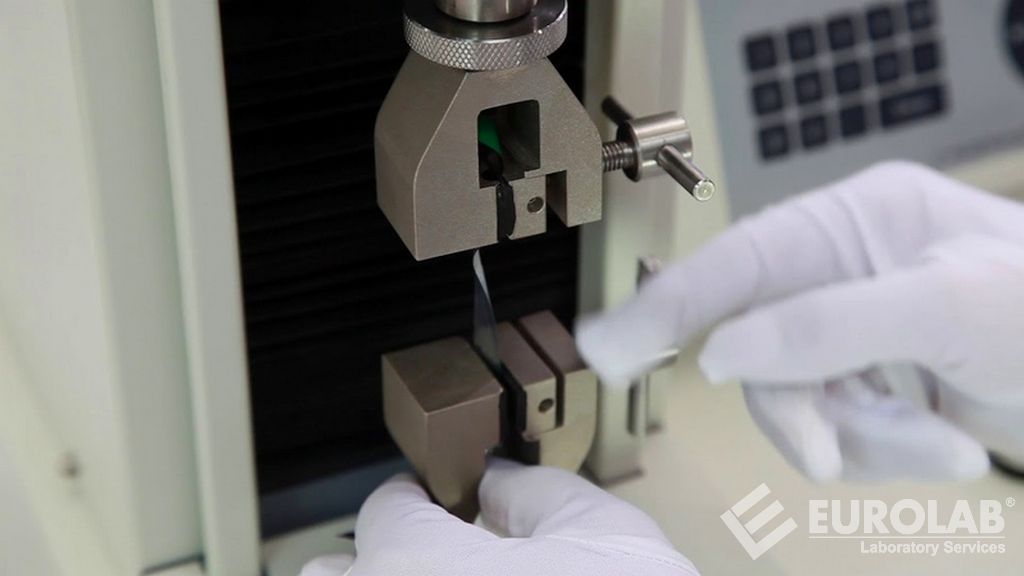
The rate of elongation at break is common for elastomers and film or packaging polyolefins. Rigid plastics, especially fiber-reinforced ones, typically have a value of less than 5 percent. Fibers have low elongation at break and elastomers have high elongation at break. The combination of high ultimate tensile strength and high elongation indicates that the material has high toughness. Briefly, the elongation measured at break values is an indicator of the ductility of a polymer. Elongation at break is important for components that absorb energy through plastic deformation, for example plastic hinges.
Tensile strength and elongation at break tests are performed to determine the force required to break a sample and how far the sample has stretched to that breaking point. Generally, tensile test methods are applied to measure the elongation at break of materials. The main international standards based on these tests are:
ISO 527-1 standard describes general principles for determining the tensile properties of plastics and plastic composites under defined conditions. The methods described in this standard are used to investigate the tensile behavior of test specimens and to determine tensile strength, tensile modulus, and other aspects of the tensile stress/strain relationship under defined conditions.
ASTM D638-14 specifies test methods for determining the tensile properties of reinforced and non-reinforced plastics in the form of standard dumbbell-shaped test specimens when tested under defined conditions of pretreatment, temperature, humidity, and test machine speed.
Our organization also provides tensile strength and elongation at break test services with its trained and expert staff and advanced technological equipment, among the numerous test, measurement, analysis and evaluation studies it provides for businesses in various sectors.
To get an appointment, to get more detailed information or to request an evaluation, you can ask us to fill in our form and reach you.

