

The standard “ISO 1431 Rubber, vulcanized or thermoplastic - Resistance to ozone cracking” published by the International Organization for Standardization (ISO) consists of the following subsections published under the same title:
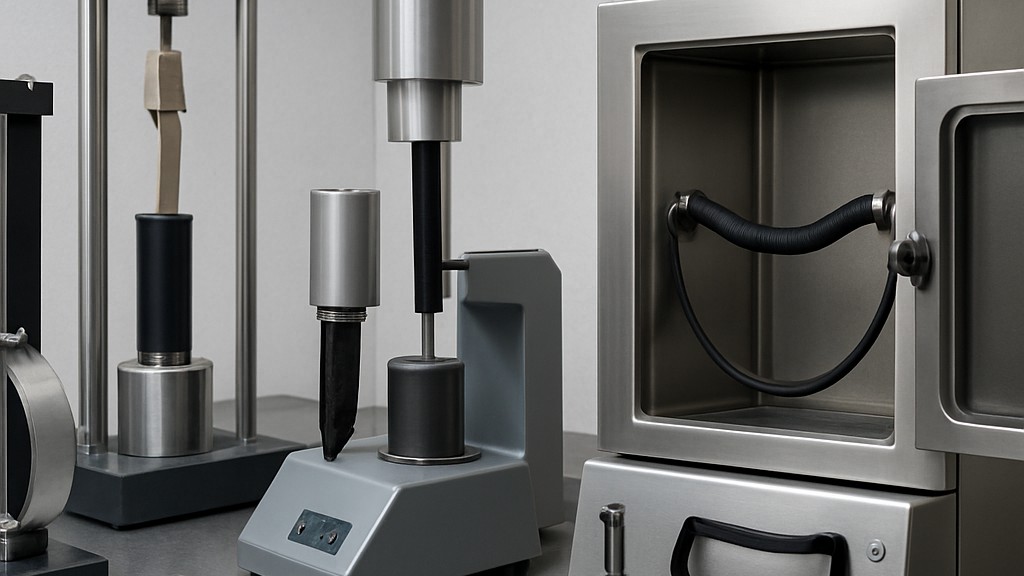
This standard uses visual observation, image analysis, or both to assess crack formation and growth. Changes in physical or chemical properties resulting from exposure can also be determined. Reference and alternative methods for determining ozone concentration are included in ISO 1431-3.
Ozone is generally present in trace amounts in the atmosphere. However, even small amounts of ozone can cause cracking under tensile stress in sensitive rubbers, resulting in loss of strength. Therefore, rubbers must be tested for resistance to ozone exposure. Due to the uncertainties of natural exposure, ozone resistance testing of rubbers is usually conducted in laboratories using specially designed ozone chambers.
Great care must be taken when attempting to relate standard test results to in-service performance, as the relative ozone resistance of different rubbers can vary significantly depending on conditions, particularly ozone concentration, temperature, and relative humidity. Furthermore, tests are performed on thin test pieces deformed in tension, and the severity of attack on in-service pieces may vary considerably due to the effects of size and the type and magnitude of deformation. Explanatory notes on the nature of ozone cracking are included in the standard appendix (Appendix A).
Various techniques are available for the analysis of gaseous ozone/air mixtures used in ozone cracking testing of rubbers. These include wet chemical procedures, electrochemical cells, UV absorption, and ethylene chemiluminescence.
In principle, wet chemical, electrochemical, and UV absorption methods are comparable, but in practice they often fail to produce the same results. Wet chemical methods, typically involving the absorption of ozone in potassium iodide solution and titration of the released iodine with sodium thiosulfate, have been traditionally used in the rubber industry and are specified in national standards. They are not suitable for continuous operation or control and are therefore less preferred in practice than instrumental methods. The results obtained have been shown to be sensitive to small variations in testing procedures and the concentration and purity of the reagents, and much debate has arisen regarding the stoichiometry of the reaction.
Electrochemical methods are widely used in the rubber industry and have proven useful for continuously monitoring and controlling ozone. Chemiluminescence methods have also been used. Recently, UV absorption analyzers, which have similar monitoring and control capabilities, are increasingly being used. Most importantly, this technique has been adopted as a standard and is universally accepted by all major environmental organizations.
Consequently, this standard UV absorption method has been adopted as the reference technique against which all other methods are intended to be calibrated. Like any measuring instrument, the accuracy of any UV instrument depends on the calibration and maintenance of its components, and therefore even UV analyzers must be compared with accepted standard instruments. Studies are being conducted in many countries to propose a primary standard instrument.
The ISO 1431 series of standards is an international standard that includes test methods for evaluating the resistance of vulcanized or thermoplastic rubber and certain plastics to ozone-induced cracking under static or dynamic conditions. This standard is critical for industries that rely on rubber and plastic materials exposed to ozone, such as automotive, aerospace, and industrial manufacturing.
Ozone, a highly reactive form of oxygen, is present in the atmosphere and can accelerate material aging, particularly in outdoor applications. This standard is essential for ensuring material durability in environments where ozone exposure is significant, such as tires, seals, and hoses. It helps manufacturers predict product lifespans and comply with industry requirements.
The main methods described in the ISO 1431 standard are:
This standard includes precise test conditions. For example,
Samples should be conditioned prior to testing to eliminate residual stresses (e.g., at 23 degrees plus/minus 2 degrees and 50 percent plus/minus 5 percent relative humidity).
To ensure consistent conditions, specialized ozone test chambers equipped with ozone generators and precise environmental controls are required. The chambers must meet ISO 1431 standards for accuracy and repeatability.
The ISO 1431 standard provides standardized methods for:
This standard is critical for industries such as automotive tires, conveyor belts, or sealing systems, where material failures due to ozone cracking could lead to safety risks or performance issues.
Our organization, which has been operating for many years and meticulously follows global developments in science and technology, employs a skilled team and extensive infrastructure to conduct testing, measurement, and analysis in a wide range of areas for businesses across all sectors. In this context, we also provide testing services in accordance with the ISO 1431 "Rubber, vulcanized or thermoplastic - Resistance to ozone cracking" standard.
To get an appointment, to get more detailed information or to request an evaluation, you can ask us to fill in our form and reach you.

