

Developed by the Norwegian oil industry to ensure adequate safety, added value, and cost-effectiveness for oil industry developments and operations, NORSOK standards aim to replace, as much as possible, the specifications of oil companies and to serve as a reference in the regulations of competent authorities. Within this scope, the “NORSOK M-710 Characterization of Nonmetallic Materials and Manufacturers - Polymers” standard describes a methodology for determining the long-term chemical compatibility of polymers based on an accelerated test scheme for components immersed in production and injection hydrocarbon fluids. This standard also defines a methodology for testing the standard rapid gas decompression resistance of polymers (primarily elastomers) that can withstand sudden pressure drops in a gaseous environment.
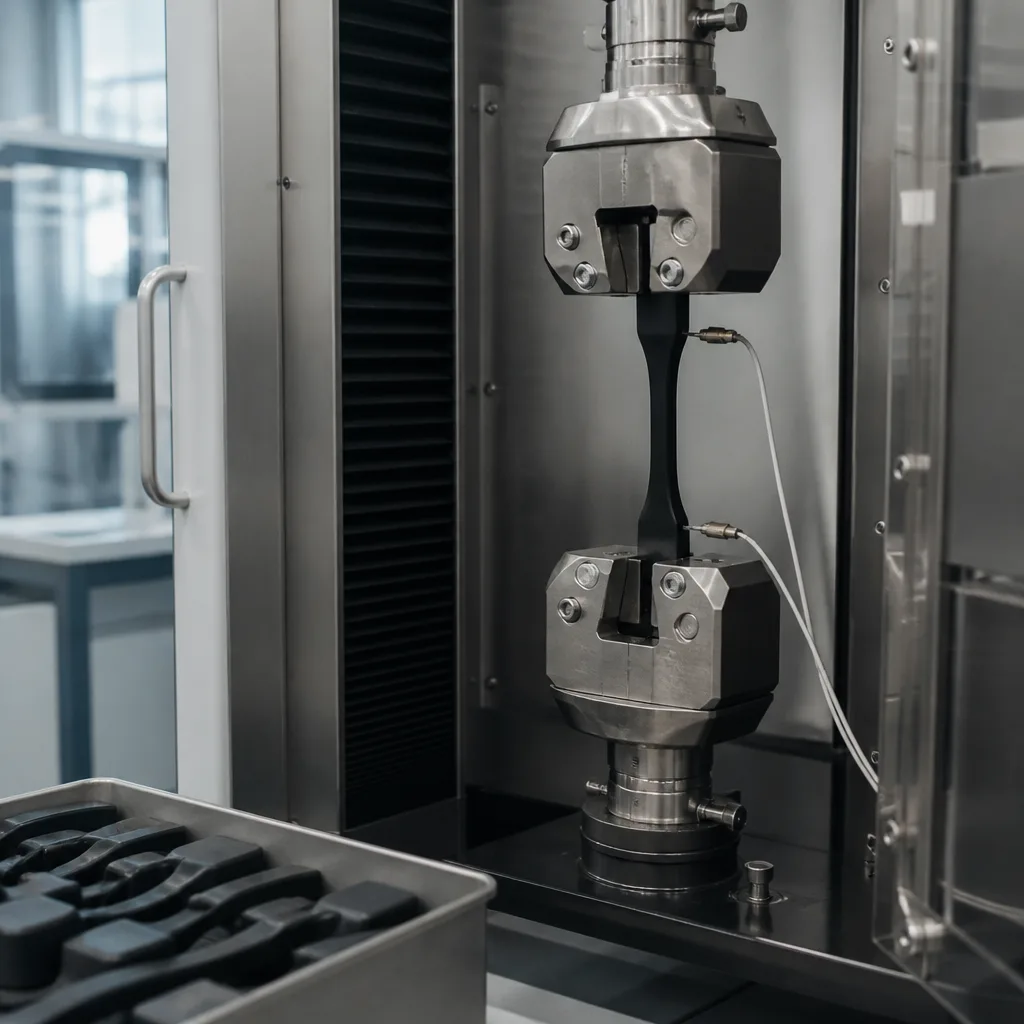
The NORSOK M-710 standard covers material property testing. Functional performance tests and low-temperature properties are not included in this standard. This standard applies to downhole, subsea, and well maintenance systems. It also applies to superstructure systems.
This standard can also be used for materials/components immersed in other liquids. Examples of such components include electrical insulation/seal materials and seal materials for hydraulic systems. In these cases, the liquids and the scope of testing must be specified by the buyer.
This NORSOK standard complements, but does not replace, the material requirements given in relevant design codes, standards, and regulations. Essentially, this standard is based on “ISO 23936-2 Oil, petrochemical and natural gas industries – Nonmetallic materials in contact with oil and gas production media – Part 2: Elastomers”. Additional requirements and clarifications specified in that standard apply.
The NORSOK M-710 standard is a globally recognized standard developed to ensure the reliability and safety of non-metallic (polymer) materials used in oil and gas applications. This standard is part of the broader NORSOK standard system, which aims to improve safety, cost efficiency, and performance in offshore and onshore oil operations.
This standard focuses on elastomers and thermoplastics used in critical sealing applications, particularly in challenging environments such as submarine systems and high-pressure gas operations.
The NORSOK M-710 standard applies to the qualification of non-metallic sealing materials and their manufacturers. This standard is widely used in the following areas:
This standard is particularly important when materials are exposed to the following conditions:
The primary objective of the NORSOK M-710 standard is to ensure that polymer materials provide the following:
This is accomplished by predicting material life and behavior through accelerated laboratory tests that simulate real operating conditions.
This standard is known for its rigorous testing procedures, particularly in two critical areas:
These two test methods are key indicators of long-term performance and reliability in oil and gas service conditions.
The NORSOK M-710 standard covers a variety of polymer materials, including the following:
These materials are commonly used in:
The NORSOK M-710 standard is closely aligned with the following international standards:
This standard does not replace the existing standards; rather, it complements them by adding stricter qualification requirements for polymers under extreme conditions.
The NORSOK M-710 standard is important because it addresses a very specific and serious risk in oil and gas operations: the failure of non-metallic materials under extreme conditions. These materials (such as seals, O-rings, and thermoplastics) are often small components, but their failure can lead to major system failures. This standard is considered necessary for the following reasons:
Over time, this standard has become an international benchmark for non-metallic materials in the oil and gas industry.
In conclusion, the NORSOK M-710 standard plays a vital role in ensuring the reliability of polymer-based components used in harsh oil and gas environments. By defining rigorous test methods, particularly for acid gas resistance and rapid gas decompression, it helps engineers select materials that can withstand extreme operating conditions.
For many years, our organization, with its competent and experienced staff, has been understanding the needs of its clients, providing the advanced testing services they require, and assisting them in the establishment, implementation, and improvement of management systems. Within this framework, we also provide testing services in accordance with the NORSOK M-710 standard.
To get an appointment, to get more detailed information or to request an evaluation, you can ask us to fill in our form and reach you.

