
SES N 3212 Glass Fiber Reinforced Plastics (GFRP)
Developed by Suzuki Motor Corporation under the scope of plastic and polymer material standards, the “SES N 3212 Glass Fiber Reinforced Plastics (GFRP)” standard is an internal automotive material specification that defines the requirements for glass fiber reinforced plastics (GFRP) used in vehicle components. This standard is based on general composite material principles and complements other SES N 32xx polymer standards, focusing specifically on fiber-reinforced thermoplastics and thermosets.
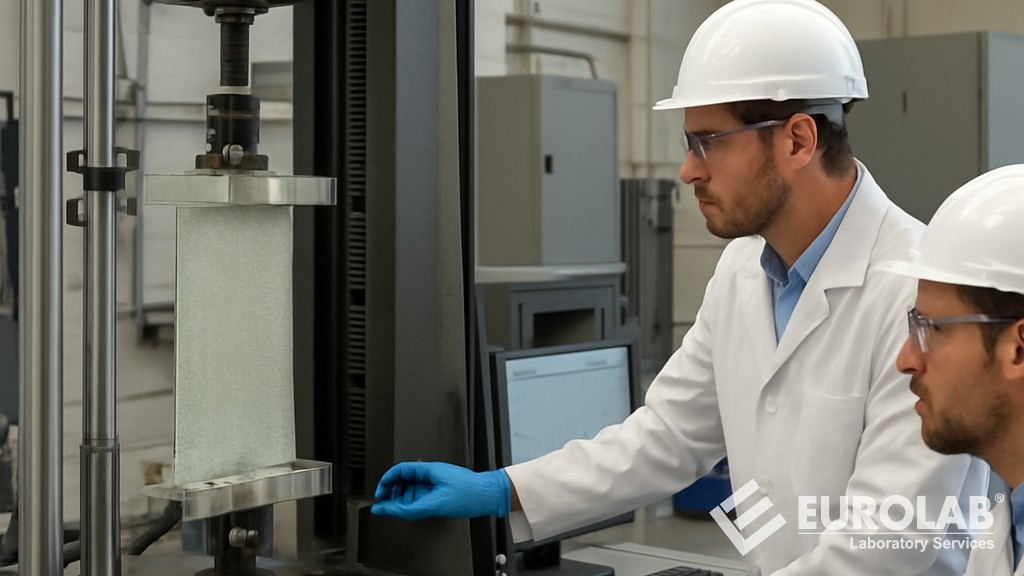
Glass fiber reinforced plastics (GFRP) have become one of the most widely used composite materials in modern automotive engineering. By combining glass fibers embedded within a polymer matrix, these types of plastics offer a balance between strength, durability, weight reduction, and cost-effectiveness, making them highly attractive for both structural and functional vehicle components.
Glass fiber reinforced plastics are a composite material consisting of the following:
- Polymer matrix (thermoplastics such as polypropylene and polyamide, or thermosets such as polyester and epoxy)
- Glass fiber reinforcement (short, long, or continuous fibers)
Glass fibers act as the primary load-bearing element, while the polymer matrix binds the fibers together, transmits stress, and provides protection against environmental damage.
The automotive industry is constantly under pressure regarding the following issues:
- Reducing vehicle weight
- Improving fuel efficiency and emissions.
- To maintain safety and durability.
- Optimizing production costs
Glass fiber reinforced plastics directly support these goals by offering a high strength-to-weight ratio, making them an effective alternative to metals like steel and aluminum in many applications.
The following are types of glass fiber reinforced plastics used in the automotive industry:
- Short fiber reinforced thermoplastics: Commonly used in injection molding. Common materials: glass fiber polypropylene, glass fiber polyamide. Applications: instrument panels, brackets, housings.
- Long fiber reinforced thermoplastics: Longer fibers improve mechanical performance. Applications: front end modules, seat structures.
- Continuous fiber composites: Offering the highest strength and stiffness. Used in high-performance or structural components.
The basic properties of glass fiber reinforced plastics are as follows:
- Mechanical properties:
- High tensile and bending strength.
- Improved stiffness (modulus)
- Good impact resistance.
- Thermal properties:
- High heat deflection temperature
- Suitable for under-hood environments.
- Chemical resistance:
- It is resistant to oils, fuels, coolants, and road chemicals.
- Dimensional stability:
- Low shrinkage and warping compared to unfilled plastics.
Glass fiber reinforced plastic materials are used in a wide variety of vehicle systems. Their applications in automotive components are as follows:
- Internal components:
- Instrument panel carriers
- Seat structures
- HVAC enclosures
- External components:
- Bumpers and front panel supports
- Body panels (on some vehicles)
- Under-the-hood applications:
- Engine covers
- Air intake manifolds
- Battery housings (especially in electric vehicles)
- Structural parts:
- Front section carriers
- Reinforcement beams
- Load-bearing brackets
Production processes of glass fiber reinforced plastic materials:
- Injection molding: This is the most common method for thermoplastic glass fiber reinforced plastics. It is suitable for high-volume production.
- Compression molding: Used for thermoset composites and long fiber reinforced thermoplastic materials.
- Resin transfer molding: Used for complex, high-performance parts.
The advantages of glass fiber reinforced plastic materials in the automotive industry are as follows:
- Weight reduction: Up to 30-50% lighter than steel.
- Corrosion resistance: Unlike metals, it does not rust.
- Design flexibility: Complex geometries can be achieved.
- Cost efficiency: Lower molding and processing costs (especially for thermoplastics).
- Integration capability: Multiple parts can be combined into a single molded component.
The strengths and limitations of these materials are as follows:
- Recycling challenge: Fiber-matrix separation is complex.
- Anisotropy: Mechanical properties depend on fiber orientation.
- Surface treatment issues: Fiber exposure can affect aesthetics.
- Tool wear: Glass fibers are abrasive during processing.
The role of glass fiber reinforced plastic materials is expanding with the following trends:
- Electric vehicles: Lightweight materials increase battery range.
- Hybrid composites: Combining glass fibers with carbon fibers.
- Recyclable thermoplastic composites.
- Automation in composite production.
Consequently, glass fiber reinforced plastics have become a cornerstone of modern automotive design. Their ability to provide lightness, strength, durability, and cost-effectiveness makes them indispensable in meeting today's engineering and environmental challenges. As material technology and recycling methods continue to evolve, glass fiber reinforced plastics are playing an even greater role in shaping the future of the mobility sector.
The SES N 3212 standard generally defines the following:
- Material types:
- Glass fiber reinforced thermoplastics (e.g., glass fiber polypropylene, glass fiber polyamide)
- Glass fiber reinforced thermosets (e.g., polyester, epoxy)
- Injection molding, compression molding, or laminated composites
- Fiber content:
- Typically 10-60% glass fiber.
- Tolerance ranges defined for consistency.
- Applications:
- Structural and semi-structural automotive parts: engine covers, brackets and housings, interior structural components, and under-hood parts.
- Glass fiber reinforced plastics are widely used in automotive design because they meet requirements for strength, durability, and lightness.
SES N 3212 specifies minimum values for the following mechanical properties:
- Tensile strength
- Flexural strength
- Impact resistance
- modulus of elasticity
These characteristics depend on the following:
- Fiber orientation
- Fiber length
- Fiber-matrix bond
This standard also specifies the following thermal characteristics:
- Heat deflection temperature
- Continuous operating temperature
- Thermal expansion behavior
This standard also specifies physical and chemical properties such as density, water absorption, chemical resistance (oil, fuel, coolant), and aging resistance (UV, heat, humidity).
Within the scope of these fire and safety requirements, the standard also specifies flammability (e.g., UL94 classification) and smoke and toxicity limits (depending on the application).
The SES N 3212 standard refers to common test methods such as the following:
- Tensile test (ISO 527 standard)
- Bending test (ISO 178 standard)
- Impact test (Charpy/Izod)
- Fiber content determination (e.g., ISO 1172 standard calcination methods)
The SES N 3212 standard is considered necessary because it provides the following:
- Consistency among suppliers
- Reliable mechanical performance
- Compatibility with automotive environments
- Quality control in mass production
- Safety compliance (thermal, fire, durability)
For many years, our organization, with its competent and experienced team, has been understanding the needs of its clients, providing the advanced testing services they require, and assisting them in the establishment, implementation, and improvement of management systems. Within this framework, we also provide testing services compliant with the SES N 3212 standard.

