

The standard “DIN 51045-1 Determination of Thermal Expansion of Solids - Principles,” published by the German Institute for Standardization (DIN), describes the fundamental principles and general rules for determining the thermal expansion of solid materials. This standard belongs to the broader DIN 51045 series of standards, which deals with dilatometric methods—techniques for measuring how the length or volume of a material changes with temperature.
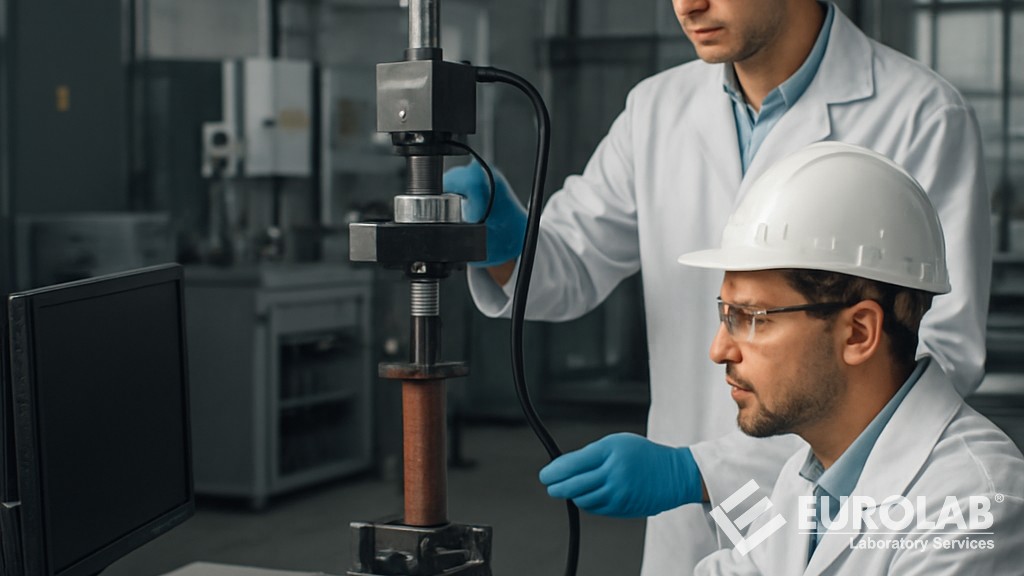
This standard defines the fundamental principles for accurately measuring the thermal expansion (thermal elongation or linear length change) of solids. It covers:
This standard applies to a wide variety of solid materials, including:
The DIN 51045-1 standard is frequently referenced in the fields of material qualification, quality control, research, and accreditation. Another part of the series, DIN 51045-2, focuses on determining linear thermal expansion using a differential method (generally more sensitive for small changes). Other parts of the series address specific applications or advanced techniques.
Many international standards refer to DIN 51045-1 as a normative reference. For example, the standard “ISO 14420 Carbon products - Determination of linear thermal expansion of baked anodes and shaped carbon products”. ISO standards for refractory or graphite materials also refer to this standard.
Thermal expansion is typically measured using a dilatometer:
The DIN 51045-1 standard highlights important considerations such as the following:
Understanding thermal expansion behavior is critically important in many fields:
In short, the DIN 51045-1 standard is a standard that defines the classification and identification of refractory raw materials used in the production of refractory products. Refractories are materials that can withstand extremely high temperatures without loss of strength or stability, and are commonly used in furnaces, kilns, reactors, and metallurgical equipment.
This standard focuses specifically on the terminology, grouping, and naming system for refractory raw materials. This standard was developed for the following purposes:
This standard ensures consistent communication within the refractory industry by standardizing terminology.
The DIN 51045-1 standard applies to the following:
This standard does not define standard test methods or performance requirements. Instead, it focuses on classification and identification. This standard groups refractory raw materials according to their chemical composition and mineralogical structure. Typical categories include:
These materials are commonly used in firebricks and cast iron products.
It is used in applications requiring higher refractory properties and mechanical strength.
It is used in steel production and other highly alkaline environments.
These are used in demanding chemical or thermal shock applications.
The DIN 51045-1 standard specifies the following:
This helps ensure that all parties understand the expected chemical and structural properties, for example, when a material is identified as calcined bauxite.
This standard is particularly important in the following areas:
Correct classification helps in selecting the right refractory material for specific operating temperatures and chemical environments.
This standard is considered important for the following reasons:
Therefore, the DIN 51045-1 standard provides a reliable quality control method for manufacturers and users.
In conclusion, the DIN 51045-1 standard plays a fundamental role in refractory material testing by providing a standardized method for determining bulk density and apparent porosity, which are critical for predicting material behavior in high-temperature industrial applications. While it does not define test procedures, it forms the backbone of technical communication and material specification in high-temperature applications.
The DIN 51045-1 standard ensures compatibility and product consistency for manufacturers, and guarantees reliable performance and a long service life for refractory coatings for users.
For many years, our organization, with its competent and experienced staff, has been understanding the needs of its clients, providing the advanced testing services they require, and assisting them in the establishment, implementation, and improvement of management systems. Within this framework, we also provide testing services in accordance with the DIN 51045-1 standard.
To get an appointment, to get more detailed information or to request an evaluation, you can ask us to fill in our form and reach you.

