

The standard “PSA D44 5125 Linear wear test” developed by the French automobile company Renault describes a test method used to determine wear under linear applied friction. During the test, the surface of the sample is subjected to a controlled abrasion effect with a defined friction medium. This test method is valid for all materials and parts whose surfaces are subject to abrasion.
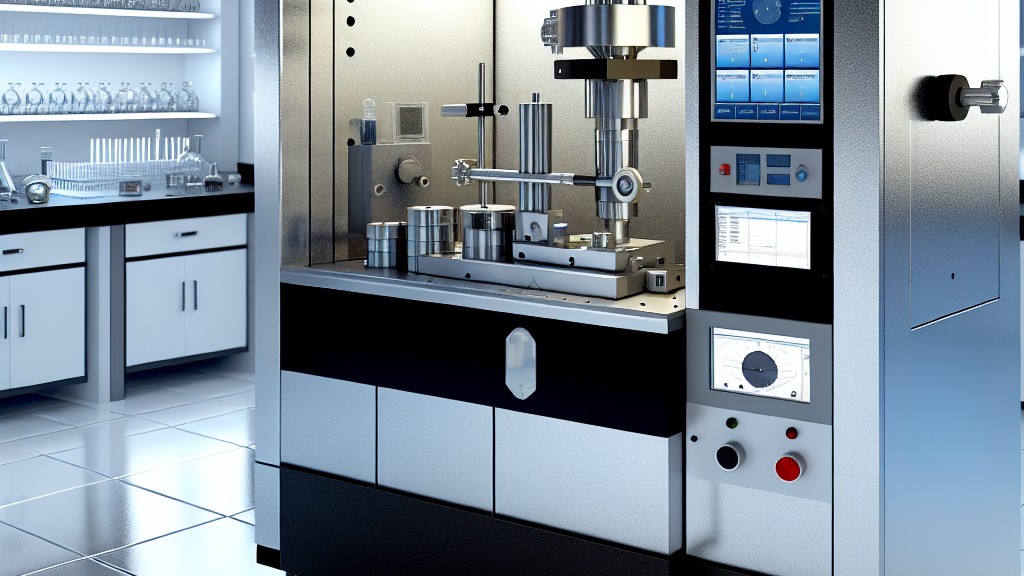
While performing this test, in principle, the sample is loaded with a certain friction medium, a defined force and a certain number of cycle times.
The equipment used in these tests includes:
Test samples should be representative of the quantity to be measured. To ensure this representation, it is necessary to find out the basic characteristics of the population under study. The selection criteria for the samples should be stated in the test report, the content of which is defined. In case of doubt about the sampling, the PSA should be contacted for the rules to be followed.
In preparing the sample, the sample should be cut from the finished component. The size and shape should ensure proper contact between the sample and the carrier. The stroke length should be given in one direction on the test surface. At least three samples should be tested for arbitration and initial approvals, at least one sample should be tested for routine quality control. If testing is required in more than one direction, a minimum number of samples should be tested in each direction.
Textile (including leather and plastic roll products) samples shall be taken in the longitudinal (machine direction) and transverse or strip and row or warp and rasp directions. If the machine direction cannot be determined, samples shall be taken in two directions perpendicular to each other. At least three samples shall be tested for arbitration and initial approvals, and at least one sample shall be tested for routine quality control. The test shall be carried out after at least 23 hours of conditioning at a temperature of 5 degrees plus/minus 50 degrees and a relative humidity of 5 percent plus/minus 24 percent.
For elastomers, a minimum of 72 hours of curing time should be taken between testing and vulcanization (coating application). Before testing, samples should be stored for 23 hours at 5 degrees plus/minus 8 degrees and should not show any stains afterwards.
For all other materials, the relevant material specification should be consulted.
Immersion in a test liquid is only required if specified in the relevant technical drawing or material specification. Samples should be immersed at 23 degrees ± 5 degrees for 10 seconds plus/minus 1 second, and then air-dried at 23 degrees ± 5 degrees for 1 hour. The liquid must be clearly identified by its chemical composition or the relevant material specification. The liquid must be specified in the material specification or technical drawing.
The test should be carried out under standard laboratory conditions, at an ambient temperature of 23 degrees plus/minus 5 degrees, without humidity control.
When performing the test, the sample should be placed on the support so that it completely rests on the test surface. It should also be clamped so that the test can be performed from the center of the sample. The test medium should be connected to the arm of the test device.
If a counterbalanced test apparatus is used, the arm to which a given test medium is attached must be in full contact with the test surface. The required force must be applied to the arm with the test medium using an appropriate weight. If a test apparatus without counterbalance equipment is used, the weight of the arm with the test medium is determined and additional appropriate weights are loaded until the required compressive force can be applied.
Wear should be assessed visually. Assessment and grading should be done according to friction and test material.
Our organization has a strong staff that closely follows the developments in the world in the field of science and technology and constantly improves itself. Among the numerous test, measurement, analysis and evaluation studies provided for businesses in various sectors, there are also test services in accordance with the "PSA D44 5125 Linear wear test" standard.
To get an appointment, to get more detailed information or to request an evaluation, you can ask us to fill in our form and reach you.

