SES N 3110 Cold Drawn Steel Bars
Developed by Suzuki Motor Corporation as part of metallic material standards, the “SES N 3110 Cold Drawn Steel Bar” standard describes the technical requirements for cold-drawn steel bars used in automotive manufacturing. This standard is particularly critical for high-strength and machinable parts.
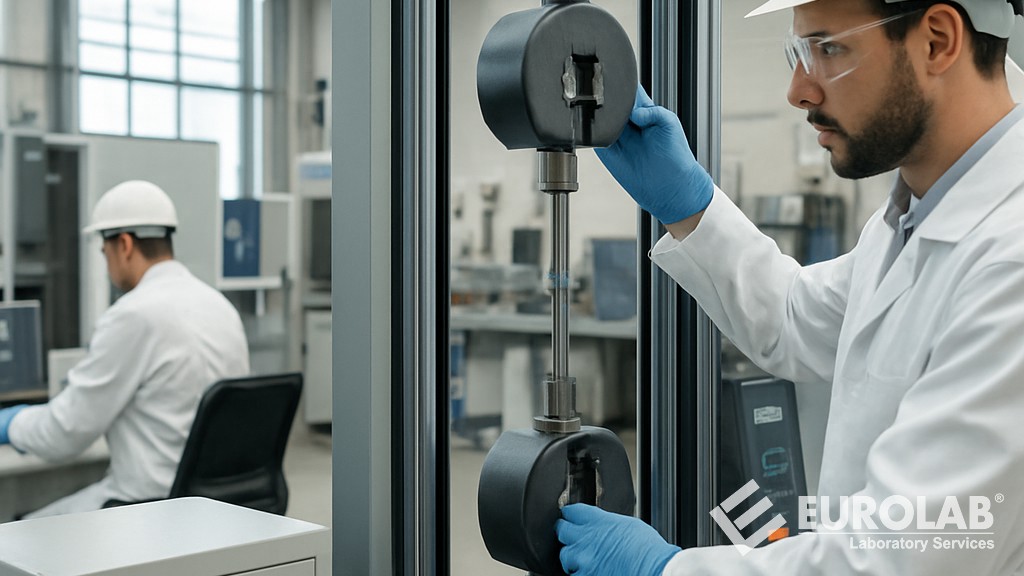
Cold-drawn steel bars are widely used in the automotive industry because this material offers a combination of precision, strength, surface quality, and manufacturability that is difficult to achieve with other forms of material such as hot-rolled steel.
The basic properties of cold-drawn steel bars are as follows:
- High dimensional accuracy (tight tolerances): The cold drawing process is carried out at room temperature, which allows for:
- Very tight dimensional tolerances (e.g., h9-h11)
- Perfect roundness and flatness
This is very important for the following parts:
- Miller
- bearings
- Gear gaps
These components should fit together perfectly without requiring excessive machining.
- Improved mechanical properties: Cold drawing causes stress hardening, which increases the following:
- Yield strength
- Tensile strength
- Hardness
In this way,
- Stronger components without requiring additional heat treatment.
- Better resistance to deformation under load is achieved.
- Excellent surface finish: Cold-drawn bars typically have the following characteristics:
- Smooth, glossy surfaces
- Low surface roughness
Benefits:
- Reduced friction and wear.
- Improved fatigue performance.
- Less need for surface treatment processes.
- Superior machinability: Many cold-drawn steels (especially free-cut grades) offer the following:
Easy chip formation.
- Lower tool wear.
- Faster processing speeds
This is important for the following reasons:
- High-volume automotive production
- Cost-effective CNC machining.
- The advantage of an almost identical shape: Cold-drawn rods can be used in the following ways:
- Round
- Hexagon
- Squared
- Flat shapes
This means:
- Less need for material removal.
- Lower scrap rates
- Reduced processing time
- Consistency and reliability: Automotive manufacturing requires mass production with zero variability. Bars produced by cold drawing provide the following:
- Regular microstructure
- Consistent mechanical properties
- Repeatable performance
This ensures reliable part quality in vehicles.
- Cost efficiency in mass production: Although cold drawing increases processing costs, it reduces the following:
- Processing time
- Tool wear
- Reprocessing and scrap
Overall, this results in a lower total production cost.
Cold-drawn steel bars are commonly used for:
- Transmission shafts
- axles
- Steering components
- Fasteners (bolts, studs)
- Hydraulic parts
- Engine components
In short, the SES N 3110 standard is a material specification that standardizes the following properties of cold-drawn (cold-formed) steel bars used in automotive parts:
- Chemical compositions
- Mechanical properties
- Tolerances
- Surface features
- Production and testing conditions
Cold-drawn steel bars can be produced in round, square, hexagonal, and flat forms. The types of materials used in production are as follows:
- Carbon steels
- Alloy steels
- Free-process steels
These types of steel are suitable for high-precision manufacturing in cold-drawn form.
The SES N 3110 standard is necessary because automotive manufacturing demands absolute consistency, safety, and manufacturability, and these cannot be left to supplier variation. This standard is considered important for the following reasons:
- It guarantees dimensional accuracy: Used in tight-fitting components such as cold-drawn rods, shafts, and gears. While not a standard,
- Diameters, flatness, and tolerances vary depending on the supplier.
- Assembly problems (alignment, vibration, noise) occur.
This standard provides:
- Uniform tolerances
- Interchangeable parts in global production.
- It guarantees mechanical performance: Automotive parts encounter the following:
- Cyclical loads (fatigue)
- Torsional and bending stresses
If material properties change, parts may deform or fail prematurely. This standard defines the following:
- Strength levels
- Hardness ranges
- Acceptable microstructure
This ensures reliable mechanical behavior in every part.
- It checks the quality and cleanliness of the material: Cold-drawn steels must be free from the following:
- Surface defects (cracks, seams)
- Internal remnants
Without strict control:
- The number of crack initiation points increases.
- Fatigue life is significantly reduced.
The standard mandates the following:
- Inspection methods
- Surface quality limits
- It stabilizes processing performance: Automotive manufacturing relies heavily on high-speed CNC machining. If the material varies,
- Tool wear becomes unpredictable.
- Cycle times increase.
- Production costs rise.
This standard provides:
- Consistent processability
- Predictable chip formation.
- It ensures global supplier standardization: Large original equipment manufacturers like Suzuki Motor Corporation work with multiple suppliers worldwide. Without a unified standard,
- Each supplier offers slightly different materials.
- Quality control becomes more complex.
This standard provides:
- A common technical language
- It facilitates supplier qualification and auditing.
- Critical for safety components: Cold draw bars are used in:
- Steering systems
- Transmission shafts
- Suspension parts
Failures in these components can lead to loss of vehicle control. This standard ensures the following:
- Minimum safety margins
- Verified performance under load
- It reduces the total production cost: Even small differences can lead to the following:
- Scrap pieces
- Reprocessing
- Assembly line stoppages
Standardization leads to the following:
- Stable processes
- Lower error rates
- Predictable costs
In conclusion, the SES N 3110 standard provides the following:
- Consistent material instead of variable quality.
- Perfect fit instead of assembly problems.
- Stable production instead of unpredictable processing.
- Reliable performance instead of a higher risk of failure.
This standard is necessary because it transforms cold-drawn steel bars from a common raw material into a controlled, reliable engineering input. In automotive production, this difference directly impacts:
- Security
- Quality
- Cost
- Production efficiency
For many years, our organization, with its competent and experienced team, has been understanding the needs of its clients, providing the advanced testing services they require, and assisting them in the establishment, implementation, and improvement of management systems. Within this framework, we also provide testing services compliant with the SES N 3110 standard.



