SES N 3124 Hot and Cold Rolled Steel Plate and Strip
Developed by Suzuki Motor Corporation as part of its standards for cast iron and iron-based materials, the “SES N 3124 Hot and Cold Rolled Steel Sheet and Strip” standard covers hot-rolled and cold-rolled steel sheets and strips used in automotive manufacturing.
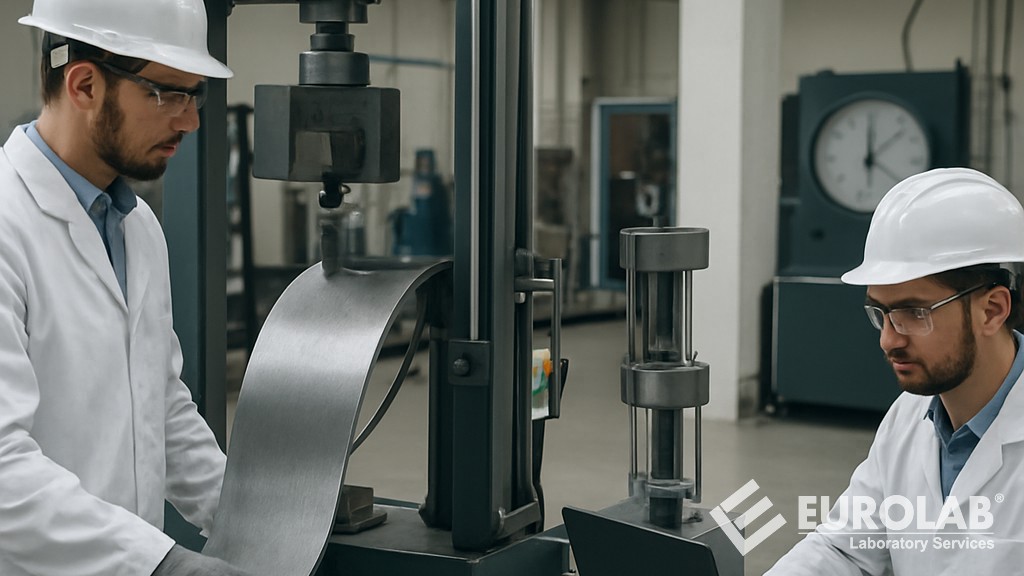
Hot-rolled steel is generally preferred for its strength and cost-effectiveness, while cold-rolled steel is preferred for its precision and surface quality. The choice depends on several factors:
- Load requirements
- Moldability
- Surface quality requirements
The first step in the process is cutting and forming. Steel sheets or coils are first cut into flat shapes (dies), and then prepared for forming operations. The most critical stage is forming. Steel sheets are formed using the following methods:
- Press forming
- Deep draw
- Bending
Cold-rolled steel is ideal for deep drawing. It is used where shape accuracy is critical. Hot-rolled steel is used for simple or thick parts. It is less susceptible to surface defects.
The formed parts are joined together using the following methods:
- Point source
- MIG/MAG welding
- Laser source
- Riveting / bonding
Cold-rolled steel performs better in the following areas:
- Source consistency
- Surface contact
Surface treatment is important, especially for cold-rolled steel. This step involves cleaning, phosphating, and painting/coating. This ensures corrosion resistance and aesthetic quality.
Hot-rolled steel is used where strength and thickness are more important than appearance:
- Chassis frames
- Suspension brackets
- Reinforcement beams
- Lower body components
- Truck chassis
It has the following advantages:
- Lower cost
- Good weldability
- High satiety
Cold-rolled steel applications are used where precision and surface quality are critical:
- Exterior body panels (doors, hood, roof)
- Interior panels
- Seat components
- Instrument panel structures
- Battery housings (electric vehicles)
It has the following advantages:
- Smooth surface (suitable for painting)
- Tight tolerances
- Excellent moldability
Modern vehicles use a combination of:
- It is for hot-rolled steel structural keel.
- Cold-rolled steel parts are visible and delicate.
This balance ensures the following:
- Cost efficiency
- Security
- Production flexibility
The basic engineering features are as follows:
- Moldability:
- Cold rolled: high (deep draw)
- Hot rolled: medium
- Dimensional accuracy:
- Cold rolled: very high
- Hot rolled: lower
- Strength: Both can be strong, however,
- Hot-rolled: better for thick sections.
- Cold-rolled: better for thin, high-strength sheets.
- Surface quality:
- Cold rolled: excellent (ready for painting)
- Hot rolled: rough (requires processing)
The SES N 3124 standard provides the following:
- The sheets behave predictably during pressing.
- No cracks or defects occur during shaping.
- The source quality is consistent.
- The latest vehicle meets safety requirements.
The SES N 3124 standard specifies the following requirements:
- Types of materials
- Hot-rolled steel sheet and strip
- Cold-rolled steel sheet and strip
- Mechanical properties (strength, elongation, formability)
- Chemical composition limits
- Dimensional tolerances (thickness, width, flatness)
- Surface quality
- Examination and testing methods
These products are plain steels delivered in the following forms:
Hot-rolled steel:
- It is produced at high temperatures (above recrystallization).
- It's easier to shape and less expensive.
- Lower dimensionality accuracy
- Used for structural and thicker applications. Parts
Typical automotive uses:
- Chassis components
- Supplements
- Frames
Hot rolling allows for shaping at high temperatures, but with less precision.
Cold-rolled steel:
- It is processed at room temperature after hot rolling.
- Higher strength, better surface quality.
- Tight tolerances and thickness control.
Typical automotive uses:
- Body panels
- Internal parts
- Deep drawing components
Cold-rolled sheets provide high dimensional accuracy and surface quality.
Cold-rolled grades are primarily used for deep drawing and forming, while hot-rolled grades are used for load-bearing structures.
This standard specifies the following basic technical requirements:
- Mechanical properties:
- Yield strength
- Tensile strength
- Elongation (percentage)
- Dimensional tolerances:
- Thickness accuracy
- Width tolerance
- Flat and sloping
Tight tolerances are critical for pressing and assembly.
Surface condition:
- Hot rolled: flake, pickled, oiled
- Cold rolled: bright or matte finish.
Surface quality directly affects painting, welding, and shaping.
The Suzuki SES N 3124 standard is necessary because it ensures that steel plates used in automotive manufacturing behave consistently, safely, and predictably across all suppliers and production processes. This standard is considered important for the following reasons:
- Ensures consistent material quality: Automotive factories use steel from many suppliers worldwide. Without a strict standard, thickness can vary, strength can differ, or surface quality can be inconsistent.
- It guarantees manufacturability (forming and stamping): Automotive parts are produced by pressing and deep drawing. If steel properties vary, cracks may form, wrinkles may appear, or parts may fail during pressing.
- It ensures reliable welding and assembly: Vehicle bodies are assembled using the following methods: spot welding and laser welding. If the steel is not controlled, the weld strength may be inconsistent, or defects such as porosity or weak connections may occur.
- It guarantees vehicle safety: Steel plates form critical components such as body panels, structural reinforcements, and base and side elements. If material properties are inconsistent, crash performance becomes unpredictable, or structural integrity may be compromised.
- Surface quality ensures coating and appearance: For cold-rolled steel, especially in visible areas, a poor surface leads to poor paint quality, and defects affect the risk of corrosion.
In conclusion, the Suzuki SES N 3124 standard is a fundamental materials standard that provides the following:
- Flat steel products meet stringent automotive requirements.
- Both cost-effective (hot-rolled) and high-precision (cold-rolled) materials are precisely controlled.
- Production, safety, and quality remain consistent across all suppliers.
For many years, our organization, with its competent and experienced team, has been understanding the needs of its clients, providing the advanced testing services they require, and assisting them in the establishment, implementation, and improvement of management systems. Within this framework, we also provide testing services compliant with the SES N 3124 standard.



