

The “SAE J 2665 Test Procedure for Measuring Fuel Permeability of Materials by Weight Loss Method” standard, developed by the American Society of Automotive Engineers (SAE), describes a procedure for measuring the permeability of fuels or fuel substitutes from test specimens made of elastomeric, plastic, or composite materials up to approximately 3 mm thick. This procedure involves filling a test vessel with the test fluid (fuel or fuel substitute), sealing the test specimen at the open end of the vessel, and then placing the sealed vessel in an oven at the desired test temperature and measuring the weight loss over time. Permeability ratios are calculated from the weight loss rate and the exposed area of the test specimen.
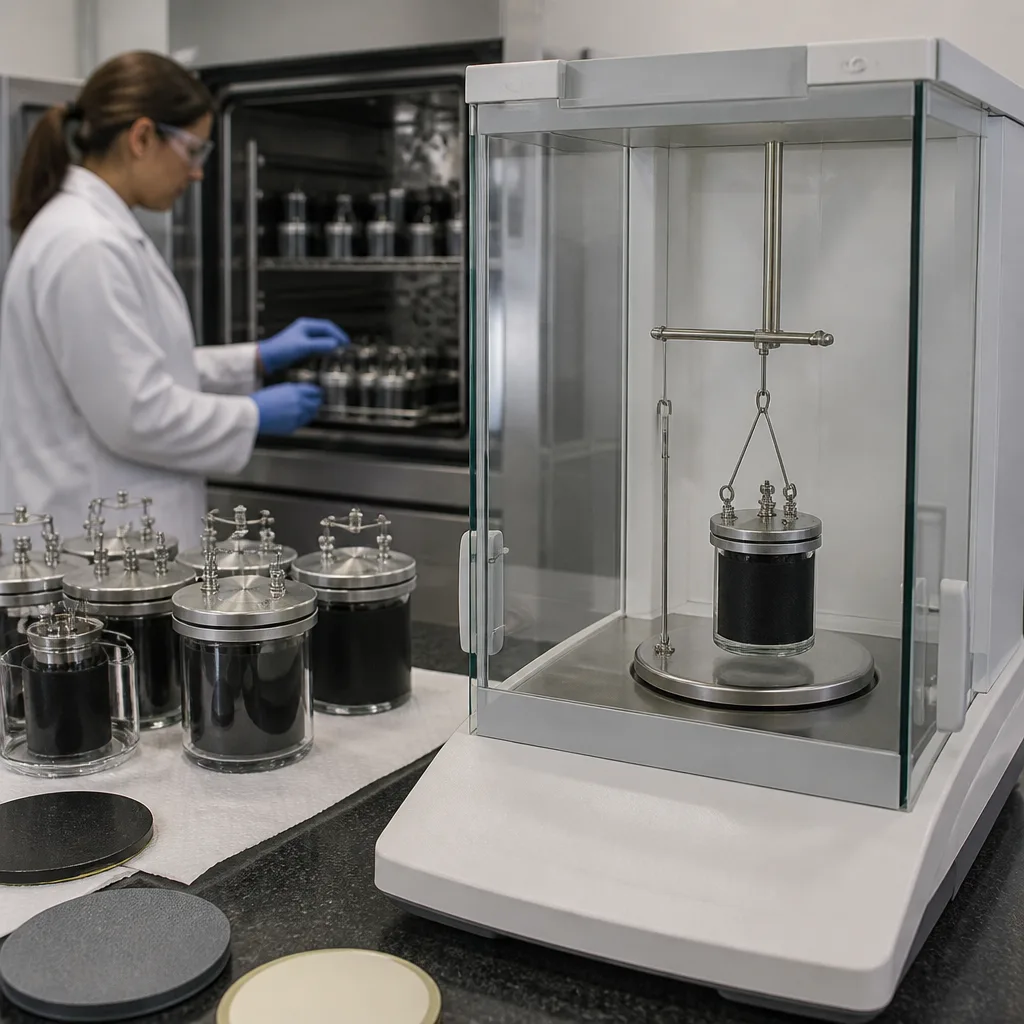
The SAE J2665 standard is an automotive testing standard. It defines a laboratory method for measuring how fuels or fuel-like fluids pass through materials such as plastics, elastomers, and composites. This standard is widely used in the automotive and fuel system industries to evaluate material performance in fuel containment applications.
The primary purpose of this standard is to determine the fuel permeability rate of materials. It typically applies to test specimens up to 3 mm thick and is particularly important for:
This standard helps engineers ensure materials meet emission regulations and durability requirements by minimizing fuel vapor losses.
The SAE J2665 standard uses a container weight loss method based on measuring the mass loss of fuel due to evaporation as it passes through a material. In general, this test follows these steps:
This method is simple, repeatable, and suitable for comparative material evaluation.
The test conditions are as follows:
However, while the SAE J2665 standard is widely applicable, it has some limitations:
These limitations mean that alternative methods may be needed for specific materials or applications.
The SAE J2665 standard is widely used in the following areas:
The importance of the SAE J2665 standard lies in its following capabilities:
As fuel compositions evolve (e.g., ethanol blends), permeability testing is becoming increasingly critical.
The SAE J2665 standard is commonly used in conjunction with the following:
Together, these standards provide a comprehensive framework for fuel system verification.
The requirement for the SAE J2665 standard is based on a fundamental problem: controlling fuel vapor leakage from materials. Without a standardized method for measuring permeability, modern vehicles cannot meet safety or environmental requirements. This standard is considered important for the following reasons:
This standard provides a consistent method for measuring permeability rates and helps manufacturers comply with the following:
Different materials allow different rates of fuel to pass through. This standard provides engineers with the following:
In conclusion, the SAE J2665 standard is a fundamental test method for evaluating fuel permeability in automotive materials. By standardizing the container weight loss method, it provides a reliable and reproducible way to measure how fuels interact with materials under controlled conditions. Its role is crucial in the design of modern fuel systems that meet stringent environmental and performance requirements.
For many years, our organization, with its competent and experienced team, has been understanding the needs of its clients, providing the advanced testing services they require, and assisting them in the establishment, implementation, and improvement of management systems. Within this framework, we also provide testing services compliant with the SAE J2665 standard.
To get an appointment, to get more detailed information or to request an evaluation, you can ask us to fill in our form and reach you.

