

The American Society for Testing and Materials (ASTM) standard “ASTM F1875-98 Standard practice for fretting corrosion testing of modular implant interfaces: hip femoral head-bore and taper-to-cone interface” describes testing, analytical, and characterization methods to evaluate the mechanical stability of the bore-to-cone interface of the head-and-body junction of modular hip implants subjected to cyclic loading by fretting corrosion measurements. The two test methods described are:
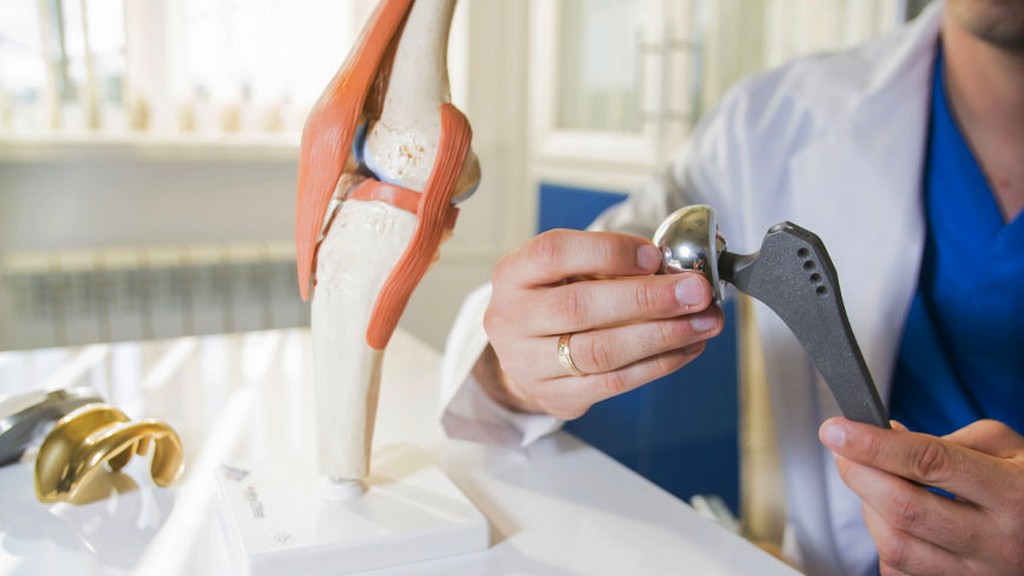
This standard provides a uniform set of guidelines not for the judgment or prediction of live implant performance, but rather for the evaluation of relative differences in performance among different implant designs, structures, or materials, where performance is defined in the context of the amount of fretting and fretting corrosion. Additionally, this practice permits direct comparison of fretting corrosion data between independent research groups, thereby enabling the creation of a database on modular implant performance.
This application provides comparative testing of manufactured hip femoral heads and stems and coupon type specimen testing where the male taper of the modular connection does not contain the entire hip implant, while the taper of the coupon is identical in design, manufacturing and materials to the taper of the final hip implant.
Method I provides a method to assess the fatigue strength of a femoral hip stem in accordance with “ASTM F1440-92 Standard Practice for Cyclic Fatigue Testing of Non-Torsion Metal Stem Hip Arthroplasty Femoral Components” and to allow simultaneous evaluation of mechanical stability and debris generated by fretting and corrosion of the modular interface.
The general concepts and methodologies described in this application can be applied to the study of other modular interfaces in total joint prostheses.
In Method I, the femoral stem and head components or coupons simulating the head-taper-neck geometry are cyclically loaded in a manner similar to that described in ASTM F1440-92. The head-neck junction is exposed to a saline or protein solution by immersion of the entire device or by an envelope containing the liquid. The cyclic load is applied for a minimum of 10 million cycles. At the end of the test, the isolated liquid is withdrawn for chemical analysis for total elemental level and characterization of particulate inclusions. The tapered interface is then separated and the surfaces are examined for wear and corrosion using optical microscopy and scanning electron microscopy. The output of these methods is a quantitative measurement of the total elemental level and a qualitative assessment of the modular interface damage due to wear and corrosion.
In Method II, a coupon or the entire femoral stem and head structure similar to that used in Method I is mounted in an inverted position in a test chamber. The chamber is filled with electrolyte solution to a level sufficient to submerge the bore and cone interface and a small portion of the exposed neck. The contact and articulation area between the ball and the test device is isolated from the electrolyte either above the fill level or by an elastomeric seal used to isolate the bottom of the test chamber.
Among the numerous testing, measurement, analysis and evaluation studies that our organization has provided for businesses in various sectors, our organization also provides testing services defined in the standard “ASTM F1875-98 Standard practice for fretting corrosion testing of modular implant interfaces: hip femoral head-hole and tapered taper interface” with its trained and expert staff and advanced technological equipment.
To get an appointment, to get more detailed information or to request an evaluation, you can ask us to fill in our form and reach you.

