

The standard "ASTM D4587-23 Standard Practice for Fluorescent UV-Condensation Exposure of Paints and Related Coatings" developed by the American Society for Testing and Materials (ASTM) describes artificially accelerated weathering methods for testing the durability of coatings and related products using fluorescent UV lamps and water apparatus operated in accordance with the standards "ASTM G151-19 Standard Practice for Exposure of Nonmetallic Materials in Accelerated Test Apparatus Using Laboratory Light Sources" and "ASTM G154-23 Standard Practice for Operation of Fluorescent Ultraviolet (UV) Lamp Apparatus for Exposure of Nonmetallic Materials". This standard also provides recommendations for preparation of test specimens, exposure time, and evaluation of test results. The standard ISO 16474-3 also describes a fluorescent UV lamp and water apparatus for artificially accelerated weathering of paints and coatings.
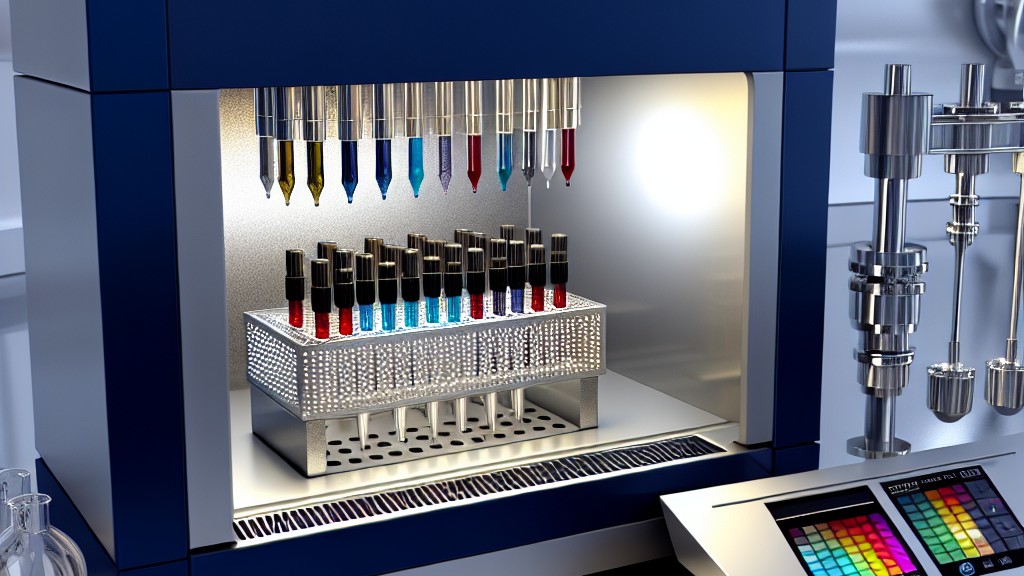
The ability of a paint or coating to resist deterioration of its physical and optical properties caused by exposure to light, heat and water can be important for many applications. This standard describes artificially accelerated weathering methods designed to reproduce property changes associated with exposure to sunlight, moisture and heat under end-use conditions. The weathering methods referenced in this standard do not simulate deterioration caused by local weathering phenomena such as atmospheric pollution, biological attack and exposure to salt water.
Variation in results can be expected when different operating conditions are used. Therefore, no application for use of this application is warranted unless accompanied by a report prepared in accordance with this standard and describing the specific operating conditions used. ASTM G151 applies for detailed information on cautions applicable to the use of results obtained in accordance with this standard. Additional information on sources of variability and strategies for addressing variability in the design, conduct, and data analysis of laboratory accelerated exposure tests is included in ASTM G141.
The spectral radiation of light from fluorescent UV lamps is significantly different from that produced in light and water exposure devices using other light sources. The type and rate of degradation and performance rankings produced by exposure to fluorescent UV lamps may be very different from those produced by exposure to other types of laboratory light sources.
Interlaboratory comparisons are only valid when all laboratories use the same equipment, lamps, and exposure conditions. Reproducibility of test results between laboratories has been shown to be good when the stability of materials is assessed in terms of their performance ranking compared to other materials or a control material. Therefore, it is recommended that a similar material of known performance be exposed simultaneously with the test materials. It is recommended that at least three replicates of each material be exposed to allow statistical evaluation of results.
Repeatability and reproducibility of test results depend on care in operating the equipment in accordance with ASTM G154. Important factors include regulation of line voltage, temperature of the room in which the equipment is operating, temperature control, and condition and age of the lamps. All references to artificially accelerated wear in accordance with this standard must include a complete description of the test cycle and the equipment used.
The test coating is applied to flat (planar) panels with the substrate, preparation method, application method, coating system, film thickness and drying method consistent with the intended end use or as mutually agreed upon between the manufacturer and the user. Panel properties and preparation methods typically used are not limited by ASTM D609, ASTM D1730 or ASTM D7787 standards. Panel sizes appropriate for use with the instrument are selected.
For samples coated on insulating materials such as plastic, polymeric foam or composite, the samples are checked during the condensation period to verify that visible condensation has occurred on the surface of the samples. This visual check is carried out once a week at least one hour after the start of condensation.
If condensation does not occur, the most likely cause is inadequate convective or conductive heat transfer between the sample and the laboratory room air cooling, or common causes are:
Coated test panels are coated in accordance with ASTM D823, followed by film thickness measurement in accordance with a procedure such as ASTM D1005 or ASTM D7091. Non-destructive methods are preferred because panels measured in this manner do not require repair. Before exposing the coated panels to the weatherproof apparatus, they are conditioned at 23 degrees plus/minus 2 degrees and 50 percent plus/minus 10 percent relative humidity for one of the specified periods appropriate to the type of coating. Other procedures for conditioning test specimens may be used if agreed upon by all parties concerned.
Our organization, which has been trying to support businesses from every sector with its testing, measurement, analysis and evaluation studies carried out in a wide range for years, has a strong staff that closely follows the developments in the world in the field of science and technology and constantly improves itself. In this context, testing services in accordance with the "ASTM D4587-23 Standard Application for Fluorescent UV-Condensation Exposure of Paint and Related Coatings" standard are also provided to businesses.
To get an appointment, to get more detailed information or to request an evaluation, you can ask us to fill in our form and reach you.

