SAE ARP 4462 Barkhausen Noise Monitoring for Detecting Grinding Burns on High Strength Steel Parts
The standard “SAE ARP 4462 Barkhausen noise monitoring for detecting grinding burns on high strength steel parts” developed by SAE International, a global professional association and standards organization, describes procedures and a practice for determining acceptance criteria when performing Barkhausen noise testing of case-hardened steel components to detect grinding burns (metallurgical damage due to overheating) on bare or chrome-plated parts.
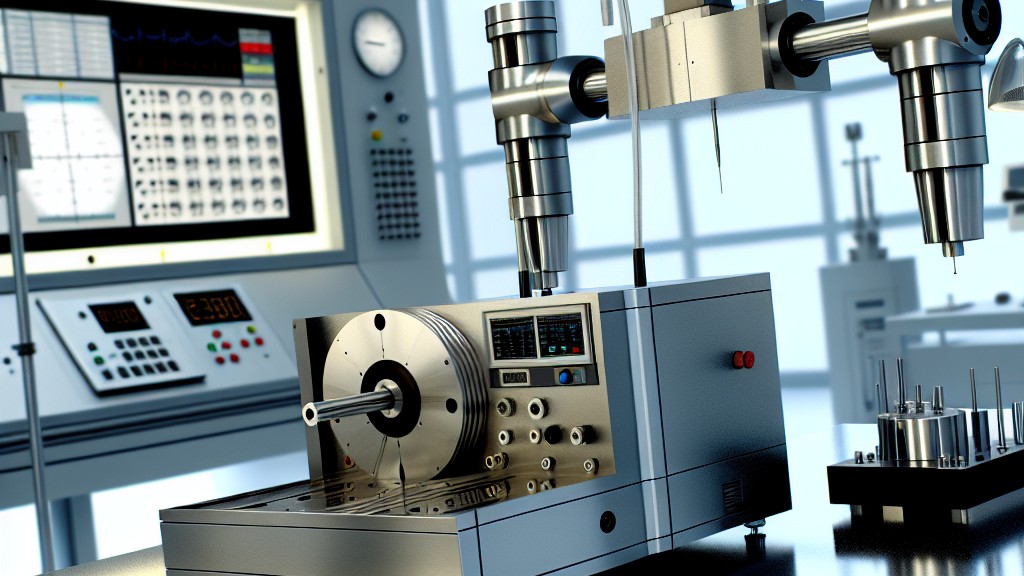
Barkhausen noise is the name given to the noise generated in the magnetic output of a ferromagnet when the magnetizing force applied to that ferromagnet changes.
This recommended practice specifies the requirements and procedures for Barkhausen noise examination of ferromagnetic steel components. A list of common materials for Barkhausen noise examination is included in the appendix of the standard (Appendix B).
- Application to grinding burn: This test method can be used for the non-destructive detection of grinding-induced thermal damage to the base ferromagnetic material in finished floor parts. This test method is primarily used on high strength, low alloy steel parts that have been ground in accordance with MIL-STD-866 or certain commercial standards before or after coating or plating. This test method can be used to detect grinding burn, which can be verified in accordance with MIL-STD-867 on bare components or when coatings, etc., have been removed from the base material.
- Application to stresses: This test method can be used for the non-destructive determination of mechanically induced stresses in bare or coated parts. Examples include residual stress from overloading and localized induced stress from production, maintenance or in-service events.
- Application to microstructure/heat treatment defects: This test method can be used for non-destructive detection or detect defects that occur during pure processing. These include, but are not limited to, lack of heat treatment, soft spots, decarburization, etc. Also include defects that occur during other surface treatments such as shot blasting.
- Application to various thermally induced defects: This test method can be used for the non-destructive detection of defects induced by any process that results in the absorption of excessive heat. This includes friction burns, arc burns, and similar conditions. Typical applications include thermal damage resulting in microstructure transformation or stress relief.
Measurement prerequisites: The Barkhausen noise inspection method is an electromagnetic test and is sensitive to anything that affects the magnetic properties of the surface to be tested. Environmental processes that affect the measurement must be taken into account and controlled. Examples include:
- Coating thickness affects the measurement in coating inspections. It should be determined that coating thickness is a constant or small factor.
- Ferromagnetic coatings and patches (e.g. Nickel patches) affect the measurement and may cause false rejections.
- Sand/media blasting or shot blasting processes can remove a surface layer of material that might otherwise contain detectable damage. This can reduce the ability of Barkhausen noise to detect surface damage. Sand blasting also creates compressive residual stresses that affect the Barkhausen noise measurement and can cause reduced sensitivity.
- Measurements can be made in situ with loaded components. Under load the basic values for the components will be different and as a result the rejection limits may be different. Thermally induced defects detected in loaded components should be verified as detectable in the unstressed/unloaded condition.
Our organization, which has been trying to support businesses from every sector with its testing, measurement, analysis and evaluation studies carried out in a wide range for years, has a strong staff that closely follows the developments in the world in the field of science and technology and constantly improves itself. In this context, testing services in accordance with the "SAE ARP 4462 Barkhausen noise control to detect grinding burns on high-strength steel parts" standard are also provided to businesses.



