

The ISO 15665 Acoustics - Acoustic insulation for pipes, valves and flanges standard, published by the International Organization for Standardization (ISO), defines the acoustic performance of four classes (Classes A, B, C, and D) of pipe insulation. It also describes a standardized test method for measuring the acoustic performance of all types of material system structures, allowing for the rating of existing and new insulation structures according to these four classes. Furthermore, this standard presents some typical building types expected to meet these acoustic performance classes.
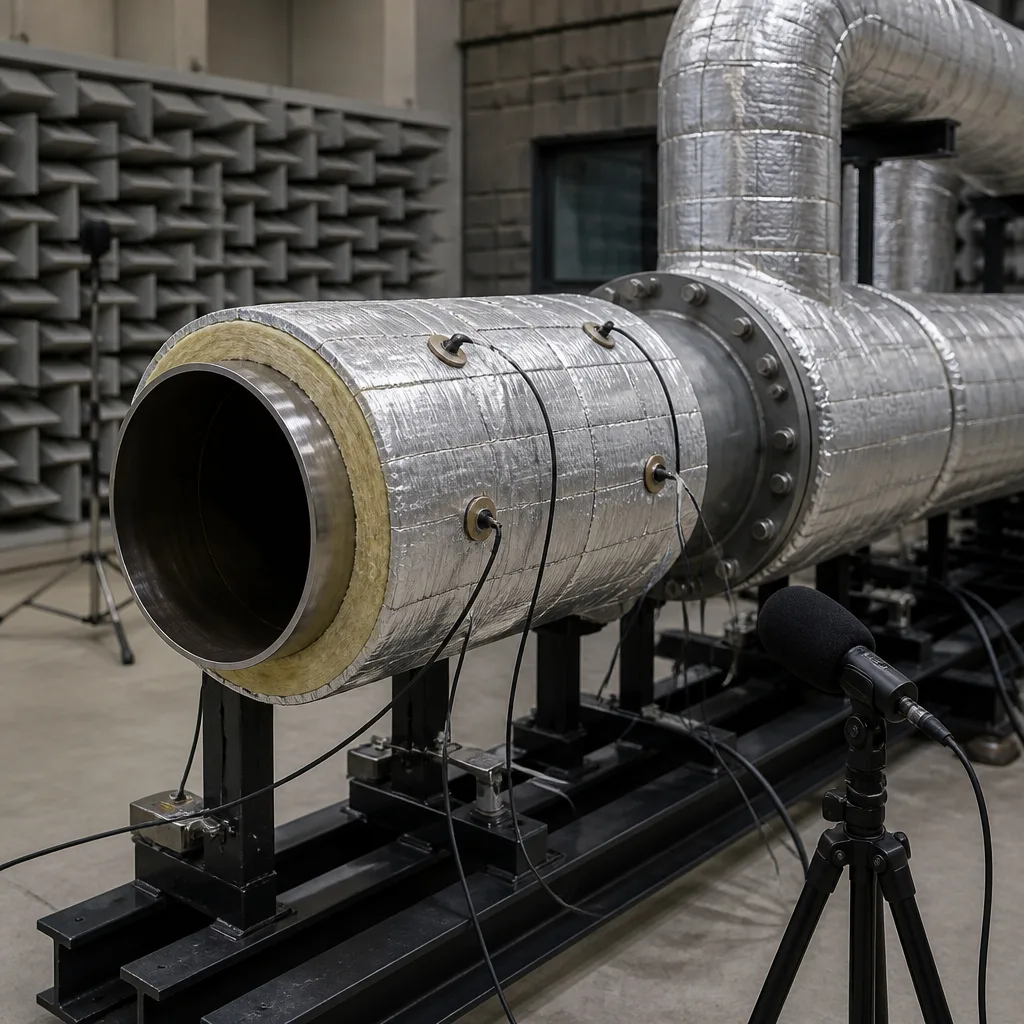
This standard applies to the acoustic insulation of cylindrical steel pipes and pipe components. It is applicable to pipes up to 1 m in diameter with a minimum wall thickness of 4,2 mm for diameters under 300 mm and 6,3 mm for diameters of 300 mm and above. This standard does not apply to the acoustic insulation of rectangular ducts, containers, or machinery.
This standard covers both the design and installation aspects of acoustic insulation and provides guidance to noise control engineers to help them determine the required insulation class and scope for a specific application. It gives examples of typical construction methods, but the examples are for informational purposes only and are not binding.
This standard aims to guide both installers and noise control engineers by highlighting the differences between acoustic insulation and thermal insulation. Details of thermal insulation are outside the scope of this document.
ISO 15665 is an internationally recognized engineering specification for acoustic insulation of industrial piping systems. This standard defines the requirements and performance classifications for insulation systems used in pipes, valves, and flanges to reduce airborne noise emissions in industrial facilities such as oil and gas plants, refineries, chemical plants, offshore platforms, and power plants.
Industrial piping systems typically carry the following:
These systems can generate significant noise in the following ways:
The ISO 15665 standard provides a standardized method for the following:
This standard is particularly important where workplace noise regulations apply.
The ISO 15665 standard applies to the following:
This standard covers pipes up to the following diameters:
However, this standard does not apply to:
The ISO 15665 standard defines the following insulation performance categories.
Generally, higher-grade sound insulation provides better sound insulation performance.
The classification system helps engineers select the appropriate insulation material for the following situations:
A typical acoustic insulation system compliant with the ISO 15665 standard includes the following:
The ISO 15665 standard defines standardized acoustic test procedures for determining the following:
The tests allow for an objective comparison of different insulation systems.
Because industrial noise varies greatly with frequency, measurements are typically evaluated across octave bands.
The ISO 15665 standard is considered important for the following reasons:
This standard supports compliance with occupational noise exposure limits.
The ISO 15665 standard is widely used in the following areas:
The ISO 15665 standard focuses specifically on acoustic performance, not thermal insulation performance.
While many systems offer both thermal insulation and noise reduction, acoustic requirements can differ significantly from standard thermal insulation designs. The latest version of this standard clearly highlights this distinction.
In conclusion, the ISO 15665 standard is one of the most important international standards for industrial acoustic insulation systems. It provides engineers with a structured approach to insulation design and evaluation for noisy piping systems, and helps improve issues such as occupational safety, environmental noise control, plant reliability, and engineering consistency.
For many years, our organization, with its competent and experienced staff, has been understanding the needs of its clients, providing the advanced testing services they require, and assisting them in the establishment, implementation, and improvement of management systems. Within this framework, we also provide testing services compliant with the ISO 15665 standard.
To get an appointment, to get more detailed information or to request an evaluation, you can ask us to fill in our form and reach you.

