

The American Society for Testing and Materials (ASTM) standard, "ASTM D3802 Standard Test Method for Ball Pan Hardness of Activated Carbon," describes a test method for determining the ball pan hardness number of granular activated carbons. For the purposes of this test, granular activated carbons are those with 90 percent particles larger than 80 mesh (180 μm), as defined in "ASTM D2862 Standard Test Method for Particle Size Distribution of Granular Activated Carbon."
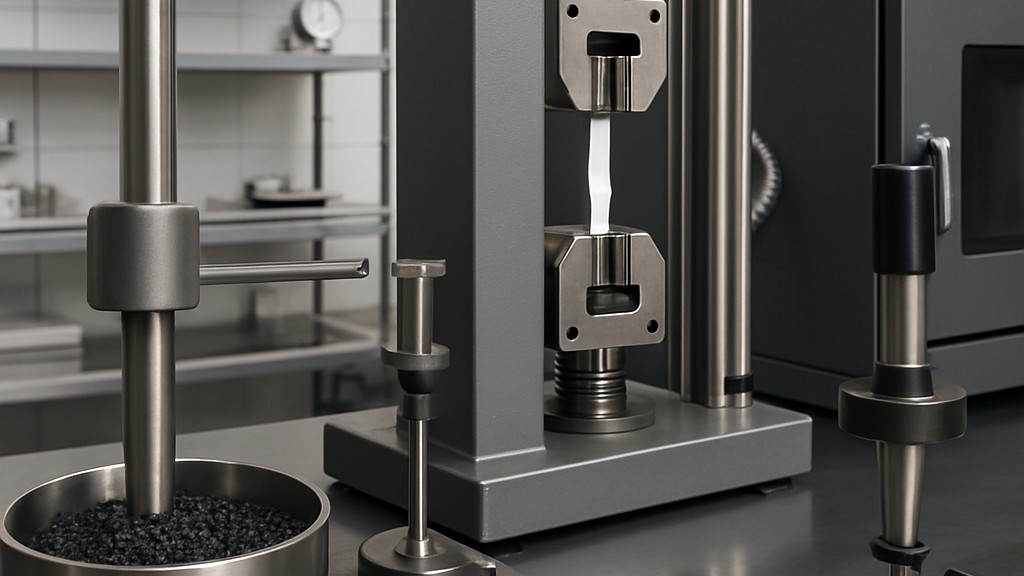
Various methods have been used in the past to determine the resistance of activated carbons to particle size degradation under service conditions, including the ball pan method, the stir bar method, and the powder elutriation method. None of these have been completely satisfactory for all applications, and all have been questioned by the ASTM Activated Carbon Committee as tests for determining degradation resistance. However, the ball pan method has been widely used in the past and has a long history in the activated carbon industry for measuring a property roughly defined as hardness. In this context, the test is useful for determining a measurable property of a carbon. Recognizing that the test does not actually measure resistance to in-service degradation, it can be used to determine the comparability of batches of the same carbon class.
For the purposes of this standard, the following terms and definitions apply:
A sieved and weighed carbon sample is placed in a special hardness container with a set of stainless steel balls and then subjected to combined rotation and impact for 30 minutes. After this period, the amount of particle size degradation is determined by measuring, by weight, the amount of carbon retained on a sieve closest to half the sieve openings that define the minimum nominal particle size of the original sample.
Guidance on sampling granular activated carbon is included in the ASTM E300 standard.
Balances should be calibrated using standard laboratory methods. Sieves should be calibrated at reasonable intervals according to the procedure described in ASTM E11.
The testing process consists of the following steps:
In short, ASTM D3802 standard includes a method for determining the ball-pan hardness of granular activated carbon. This method measures the material's ability to resist abrasion (breaking down into smaller particles) when subjected to mechanical stress. The test simulates the physical stresses that activated carbon is subjected to during handling, loading, or operational use in filtration systems. Hardness is expressed as a percentage, with higher values indicating greater resistance to degradation. This standard is part of ASTM's activated carbon test suite and ensures consistent quality for applications requiring strong adsorbent materials.
The ASTM D3802 standard applies to granular activated carbon, including materials derived from sources such as coal, coconut shells or wood, and is used for:
This standard is applicable to manufacturers, suppliers and end users who want to ensure that activated carbon can withstand mechanical stresses without significant particle fragmentation that could reduce its effectiveness or clog filtration systems.
The ASTM D3802 standard is critical for the following reasons:
As a result, ASTM D3802 is a vital standard for evaluating the ball-peel hardness of granular activated carbon and ensuring its durability and performance in applications such as water treatment, air purification, and chemical processing. By providing a standardized and repeatable method, it supports quality control, regulatory compliance, and cost-effectiveness for manufacturers and end users. Its adoption across industries highlights its importance in delivering reliable, high-quality activated carbon products.
Our organization, which has been serving for many years and meticulously following global developments in science and technology, conducts testing, measurement, and analysis in a wide range of areas for businesses across all sectors with a skilled team and extensive infrastructure. In this context, we also provide testing services in accordance with ASTM D3802, Standard Test Method for Spherical Pan Hardness of Activated Carbon.
To get an appointment, to get more detailed information or to request an evaluation, you can ask us to fill in our form and reach you.

