

The “ISO 11358 Plastics - Thermogravimetry (TG) of Polymers” standard, developed by the International Organization for Standardization (ISO), essentially consists of the following three sections published under the same title:
For the purposes of this standard, the following terms and definitions apply:
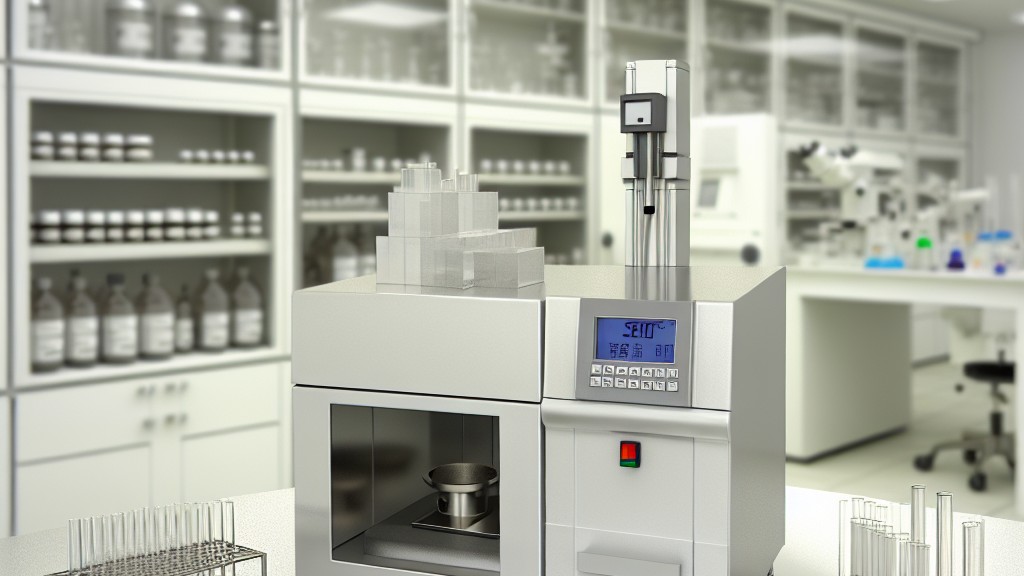
A test sample is heated at specified rates by a controlled temperature program and the change in mass is measured as a function of temperature (dynamic mass change determination). Alternatively, the sample is held at a specified constant temperature and the change in mass is measured as a function of time for a specified period of time (isothermal mass change determination).
During measurement, the test sample is held in a controlled inert, oxidizing, or otherwise reactive atmosphere. In general, reactions that cause the mass of a test sample to change are decomposition or oxidation reactions or evaporation of a component. In some cases, measurements with special reaction gases may also be made.
The change in mass is recorded as a thermogravimetric (TG) curve with respect to temperature or time. The change in mass of a material with respect to temperature and the extent of this change are indicators of the thermal stability of the material. Therefore, thermogravimetric data can be used to assess the relative thermal stability of polymers in the same general family and polymer-polymer or polymer-additive interactions using measurements made under the same test conditions.
For the purposes of this standard, the following terms and definitions apply:
Test samples are heated at several different heating rates and the mass change is measured as a function of temperature. For each heating rate, temperatures corresponding to given degrees of transformation are determined. For a given degree of transformation, the logarithm of the heating rate is plotted against the inverse of the absolute temperature and the activation energy is calculated from the slope of the line thus obtained.
For the purposes of this standard, the formulas for conversion, generalized time, and generalized conversion rate are given in the standard. In addition, the term master curve refers to a graph that can be used to evaluate results and investigate reaction kinetic models. Examples of master curves include conversion vs. generalized time, conversion vs. generalized conversion rate, and generalized conversion rate vs. generalized time.
Test samples are heated using any temperature profile and the change in mass is measured as a function of temperature and time. At a given transformation, the logarithm of the transformation rate is compared with the inverse of the absolute temperature and the activation energy is calculated from the slope of the straight line fitted to the data thus obtained. At least two of the master curves provide confirmation of the reaction kinetic analysis.
Our organization, which has been trying to support businesses from every sector with its wide range of testing, measurement, analysis and evaluation studies for years, has a strong staff that closely follows the developments in the world in the field of science and technology and constantly improves itself. In this context, testing services in accordance with the "ISO 11358 Plastics - Thermogravimetry of Polymers (TG)" standard are also provided to businesses.
To get an appointment, to get more detailed information or to request an evaluation, you can ask us to fill in our form and reach you.

