ASTM D4802-16 Standard Specification for Poly(Methyl Methacrylate) Acrylic Plastic Sheet
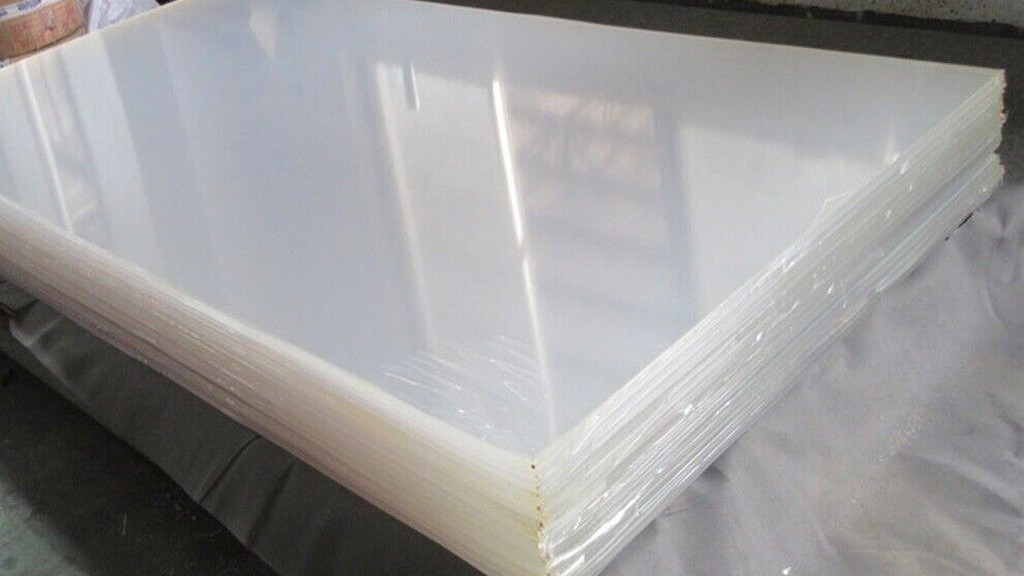
The ASTM D4802-16 standard specification for poly(methyl methacrylate) acrylic plastic sheet, published by the American Society for Testing and Materials (ASTM) , describes the requirements for monolithic methacrylate sheets produced by various processes. According to this standard, the methacrylate sheet must consist of polymerized acrylic monomers with at least 80% methyl methacrylate.
This specification is intended to combine the requirements of the repealed parts of the following standards:
- “Cast methacrylate plastic sheets” section of the standard “LP-391D Federal specification: Plastic sheets, rods, and tubes, hard cast, methacrylate (multiple applications)”
- “Cast methacrylate plastic sheets, rods, tubes, and shapes” section of “ASTM D4702-07 Standard practice for quality management of mechanical coal sampling systems”
- “Extruded acrylic plastic sheet” section of the standard “ASTM D1547-81 Specification for Extruded Acrylic Plastic Sheet”
This specification is intended to cover acrylic sheets for general purpose applications. For specific applications, appropriate usage standards apply.
Acrylic sheet is frequently used in applications where extreme clarity, absence of optical distortion and absence of foreign particulate matter are of primary importance. Regrind material is suitable for use as long as careful control is used to eliminate adverse effects on these properties.
The use of recycled material in B-1 and B-2 type boards is not suitable when these properties are adversely affected. The use of recycled or regrind material is not possible for A-1 and A-2 type materials, as the board is produced directly from monomer.
This standard and the standard “ISO 7823-1 Plastics - Poly(methyl methacrylate) sheets - Types, dimensions and properties - Part 1: Cast sheets” deal with the same subject, but differ in technical content.
The ISO 7823-1 standard specifies the requirements for unmodified plain poly(methyl methacrylate) (PMMA) cast sheets (plates) for general purpose use. The sheets may be colourless or coloured and may be transparent, translucent or opaque. The thickness of the sheets covered by this standard ranges from 1,5 mm to 25 mm.
For the purposes of the ASTM D4802-16 standard, the following definitions apply:
- Arc curvature refers to the distortion in the form of a simple curve or arc that extends across the sheet when it is displaced from the horizontal when the sheet is laid flat.
- Edge curl warpage refers to distortion in the form of a bend, wrinkle, or comb that occurs along the perimeter of the board.
- “S” curvature refers to the distortion in the form of a compound curve or “S” shape caused by an irregular change in internal stresses.
- Unmodified cast PMMA sheets refer to sheets produced by bulk polymerization in the presence of suitable initiators, based on MMA homopolymers or MMA copolymers with acrylic or methacrylic monomers.
- Flat PMMA sheets refer to sheets with two plane, essentially parallel surfaces.
According to this standard, the classification is as follows:
- Category A-1: Methacrylate sheet, usually produced by the cell casting process. This category represents the best optical quality sheet. It is characterized by the highest long-term design stress and the highest degree of chemical resistance found in methacrylate sheet.
- Category A-2: Methacrylate sheet is usually produced by continuous casting method. Physical, chemical and thermal properties are similar to Category A-1 sheet. Optical quality is lower than Category A-1 sheet. This category has better thickness control than Category A-1 sheet.
- Category B-1: Methacrylate sheet produced by any of several processes (often referred to as continuously produced sheet). This sheet has lower heat, chemical, and stress crack resistance than Category A-1 and Category A-2 sheet. It has optical quality and thickness tolerances equivalent to or better than Category A-2 sheet.
- Category B-2: Methacrylate sheet, usually produced by conventional extrusion processes. This sheet is characterized by excellent thickness control similar to Category A-2 and Category B-1 sheet. This sheet has reduced long-term design stress, chemical resistance, optical quality and thermal stability.
The following are suitable specified finishes for methacrylate sheet. Unless otherwise stated, the physical and optical properties in this standard are based on Finish 1 material:
- Finish 1: Smooth or polished.
- Finish 2: Patterned, including textures and frosting.
- Finish 3: With an abrasion resistant coating. Finish 3 material can be in any category as long as it meets the requirements of that category and any additional requirements listed in the table provided in the standard.
- Type UVF (UV filtering): Materials that contain an ultraviolet absorber to limit the transmission of UV radiation through the sheet, particularly for the protection of items sensitive to sunlight or UV radiation.
- Type UVT (UV-transmissive): Materials that do not contain any UV absorbers and are used in places where there is a need to transmit more UV radiation.
- For general purpose applications, no type needs to be specified. If not specified, materials usually contain only sufficient UV absorbers to protect the polymer from degradation from exposure to direct sunlight or UV radiation. There is no specific UV transmission requirement for materials of unspecified types.
Among the numerous testing, measurement, analysis and evaluation studies that our organization has provided for businesses in various sectors, it also provides testing services defined in the "ASTM D4802-16 Standard specification for Poly(methyl methacrylate) acrylic plastic sheet" standard with its trained and expert staff and advanced technological equipment.



