

The ASTM D1564-71 Flexible urethane foam sheet standard, published by the American Society for Testing and Materials (ASTM) , describes methods for flexible cellular foam sheets, also known as urethane foam. Urethane foam can generally be defined as an expanded cellular product produced by the interaction of active hydrogen compounds, water, and isocyanates.
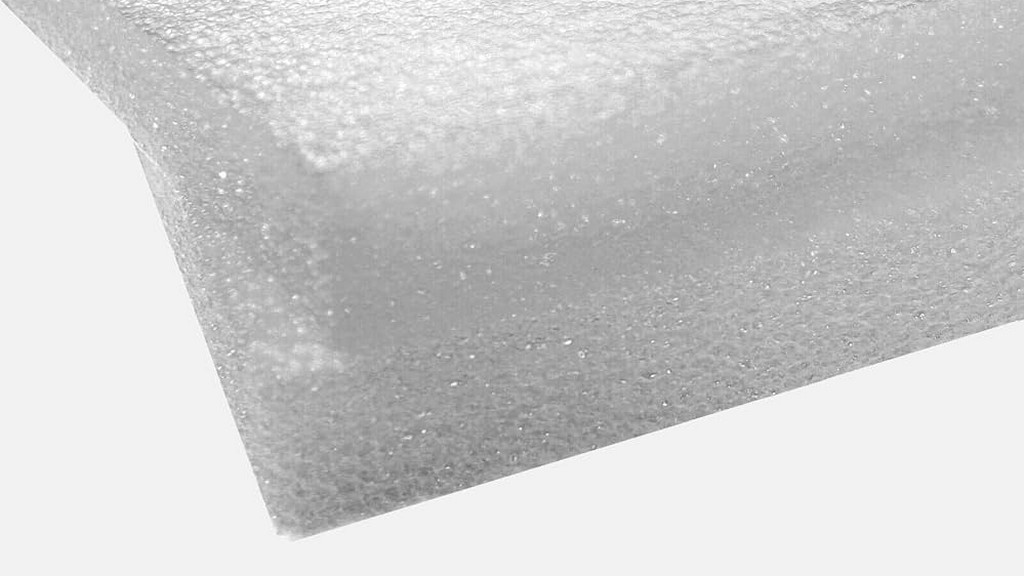
These methods were developed primarily for upholstery foam and are based on the standard “ASTM D2406-73 Method for Testing Molded Urethane Foam of Flexible Cellular Materials.”
ASTM D1564-71 covers test procedures only. Numerical specifications are developed as separate documents by appropriate groups based on automotive and similar end use.
Unless otherwise specifically agreed upon between the seller and the buyer, all tests are conducted in accordance with the methods specified in this standard. Tests are conducted under known temperature and humidity conditions or as specified in the individual test procedure. In case of disagreement, tests are conducted after pre-stretching at 23 degrees plus/minus 1,1 degrees and 50 percent plus/minus 7 percent relative humidity. The product must be conditioned without flexing and must remain intact at the test temperature and humidity for at least 2 hours prior to testing. It is recommended that all tests be conducted 12 hours or more after the foam has been manufactured for the arbitrator.
This standard was later withdrawn and replaced by ASTM D3574-01 Standard test methods for flexible cellular materials - Weak, bonded, and molded urethane foams. This new standard describes test methods for sheet, bonded, and molded flexible cellular products known as urethane foams. Urethane foam can be generally defined as an expanded cellular product produced by the interaction of active hydrogen compounds, water, and isocyanates.
For the purposes of this standard, the following definitions apply:
Unless otherwise specifically agreed upon between the supplier and the purchaser, all tests are carried out in accordance with the methods including the test procedures described in this standard:
Test procedures provide a standard method for obtaining data for research and development, quality control, acceptance and rejection according to specifications, and special purposes. Data obtained by these test methods are applicable to the material under specific test conditions and may not be the same as those obtained in other environments in use.
Tests are performed under known temperature and humidity conditions or as specified in the individual test procedure. The product shall be conditioned at the test temperature and humidity for at least 12 hours without warping or distortion prior to testing. In case of disagreement, tests shall be performed at 23 degrees plus/minus 2 degrees and 50 percent plus/minus 5 percent relative humidity. It is recommended that all tests be performed 7 days or more after the foam is manufactured for the arbitration.
To get an appointment, to get more detailed information or to request an evaluation, you can ask us to fill in our form and reach you.

