

The ASTM C732 standard, developed by the American Society for Testing and Materials (ASTM), describes a test method for determining the aging effects of artificial weathering on latex sealants.
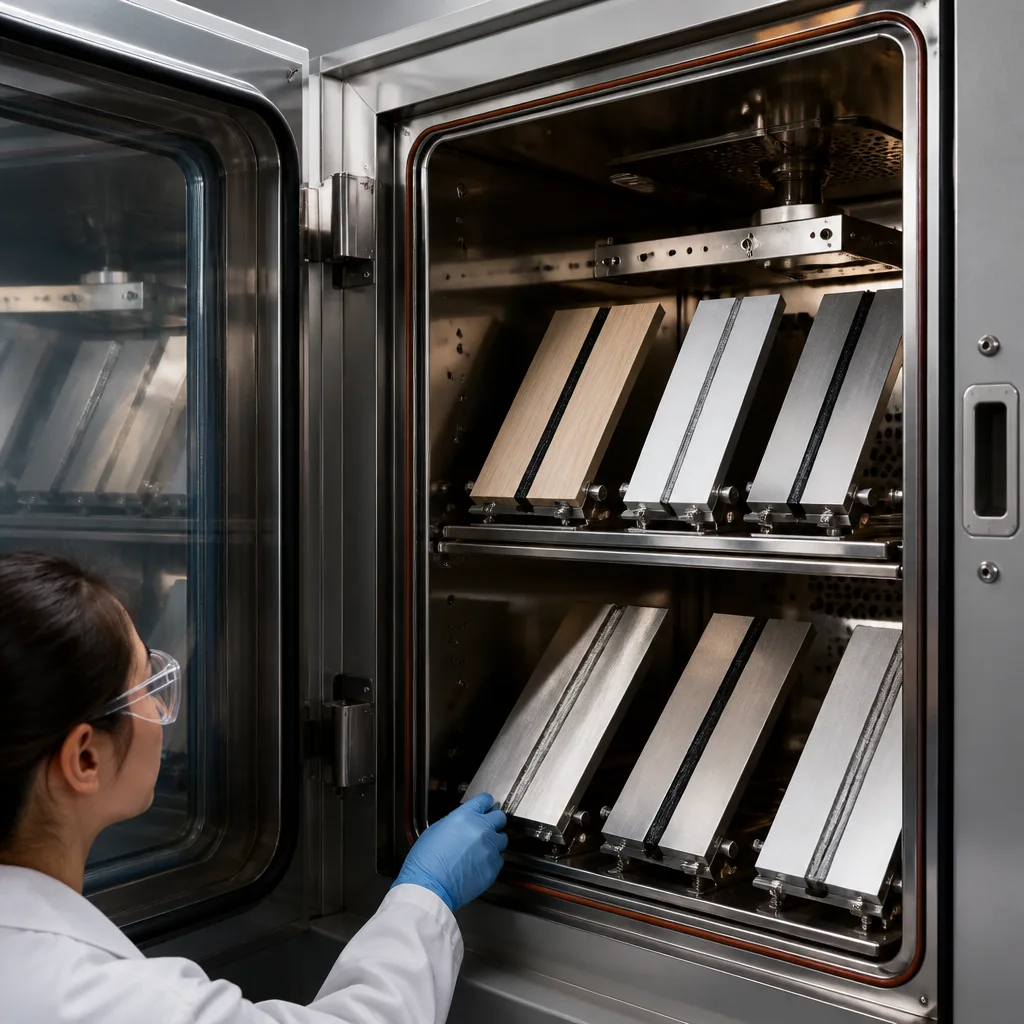
Accelerated weathering demonstrates the long-term outdoor durability of the sealant. In this testing method, durability is tested when the sealant is used in conjunction with wood or aluminum.
The ASTM C732 standard includes a laboratory procedure for evaluating the aging effects of artificial weathering on latex (emulsion) sealants. It focuses specifically on how these sealants perform when exposed to simulated outdoor conditions, particularly in joints involving wood or aluminum substrates.
Accelerated artificial weathering helps predict the long-term outdoor durability of latex sealants under real-world conditions. The test specifically evaluates performance in contact with common building materials such as wood and aluminum. This standard is often used as a reference in product specifications for latex sealants (along with standards such as ASTM C834 for latex sealant compounds) to verify resistance to weathering degradation.
The procedure involves applying latex sealant to a custom-made duct panel fixture (typically made of wood and aluminum) to simulate the joint. The prepared samples are then exposed to artificial weathering in a controlled laboratory apparatus that combines ultraviolet (UV) radiation, heat, humidity (usually water spray or condensation), and sometimes cycles of these elements to mimic outdoor exposure.
Common observations and assessments made after exposure (typically at intervals of around 500 hours, but exact durations may vary depending on the protocol or product specifications) include:
This test does not measure mechanical properties such as elongation recovery (addressed in relevant standards like ASTM C736) or low-temperature elasticity (which may occur following exposure to weathering). Instead, it focuses on apparent and physical changes due to aging.
The ASTM C732 standard is part of a series of test methods for sealing materials:
Manufacturers of latex fillers and stuffing materials typically use ASTM C732 standard results in their technical data sheets to demonstrate weather resistance.
This standard is widely used in the construction and building materials industry for quality control, product development, and certification of latex-based joint sealants used in interior and exterior applications around windows, doors, cladding, and other building joints. It helps ensure the sealant maintains its integrity and appearance over time when exposed to sunlight, rain, and temperature variations.
The ASTM C732 standard is necessary because latex (acrylic emulsion) sealants are widely used in the construction industry due to their ease of application, paintability, low cost, and low VOC content. However, they are naturally more sensitive to weathering compared to higher-performance sealants such as silicone or polyurethane.
Latex sealants are water-based emulsions. When exposed to actual outdoor conditions, they can degrade relatively quickly for the following reasons:
Without a standardized test like ASTM C732, manufacturers, specifiers, and builders lack a reliable, repeatable method for predicting how latex sealant will perform under years of outdoor exposure. Real-world outdoor testing takes too long, so accelerated artificial weathering in the lab compresses the time to simulate long-term durability in weeks or months.
This standard explicitly states that accelerated weathering exposure demonstrates the long-term outdoor durability of the sealant, especially when used on wood or aluminum surfaces. It evaluates visible and physical changes such as:
This helps distinguish high-quality latex sealants (which maintain their integrity) from lower-quality ones that deteriorate prematurely.
This standard is considered important for the following reasons:
In conclusion, the ASTM C732 standard is necessary to bridge the gap between the ease of use of latex sealants and the harsh realities of outdoor exposure, helping to ensure buildings remain waterproof, energy-efficient, and aesthetically sound for longer periods without requiring frequent maintenance or premature replacement.
For many years, our organization, with its competent and experienced team, has been understanding the needs of its clients, providing the advanced testing services they require, and assisting them in the establishment, implementation, and improvement of management systems. Within this framework, we also provide testing services in accordance with the ASTM C732 standard.
To get an appointment, to get more detailed information or to request an evaluation, you can ask us to fill in our form and reach you.

