

The ASTM D695-15 standard, developed by the American Society for Testing and Materials (ASTM), defines a test method for determining the mechanical properties of unreinforced and reinforced rigid plastics, including high modulus composites, when loaded with compression at relatively low uniform stress or loading rates. Standard shaped test specimens are used in this test method. This standard applies to a composite module up to 41.370 Mpa (up to 6 million psi).
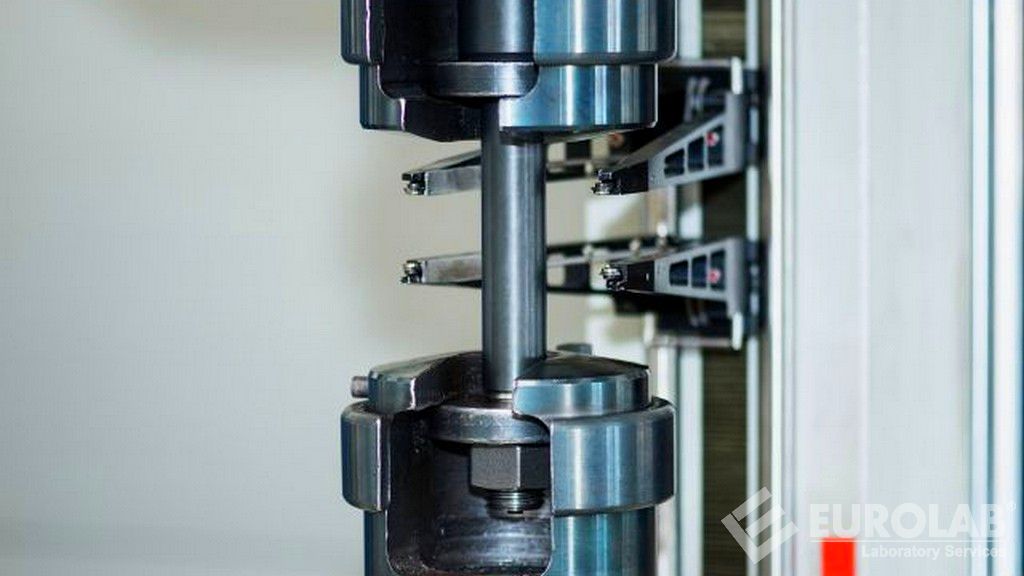
Compression tests provide information on the compression properties of plastics when performed under conditions close to those under which the tests were performed.
Compressive properties include modulus of elasticity, yield stress, deformation beyond the yield point, and compressive strength, unless the material simply flattens and breaks. Materials with a low degree of ductility may not show a yield point. In the case of a material that fails in compression due to fragmentation fracture, the compressive strength has a fairly precise value. The compressive strength of a material that does not fail in compression due to fragmentation fracture is a value dependent on the degree of deterioration, which is considered to have completely failed the material.
Many plastic materials continue to deform in compression until a flat disc is produced, the compression stress rising continuously in the process without any well-defined fracture occurring. In these cases the compressive strength cannot have any real meaning.
Pressure tests are generally carried out with the aim of obtaining a standard data for research and development, quality control, product acceptance.
In ASTM D695-15, typical experimental parameters to consider regarding the compressive properties of rigid plastic testing are:
Factors to be considered when testing to that standard include:
Among the numerous test, measurement, analysis and evaluation studies it provides for businesses in various sectors, our organization also provides standard testing services for the pressure properties of hard plastics within the scope of the ASTM D695-15 standard developed with its trained and expert staff and advanced technological equipment.
To get an appointment, to get more detailed information or to request an evaluation, you can ask us to fill in our form and reach you.

