

The ASTM D1183 Standard Practices for Resistance of Adhesives to Cyclic Laboratory Aging Conditions, developed by the American Society for Testing and Materials (ASTM) , describes practices for determining the resistance of adhesives to cyclically accelerated service conditions by exposing bonded samples to high and low temperatures and high and low relative humidity conditions.
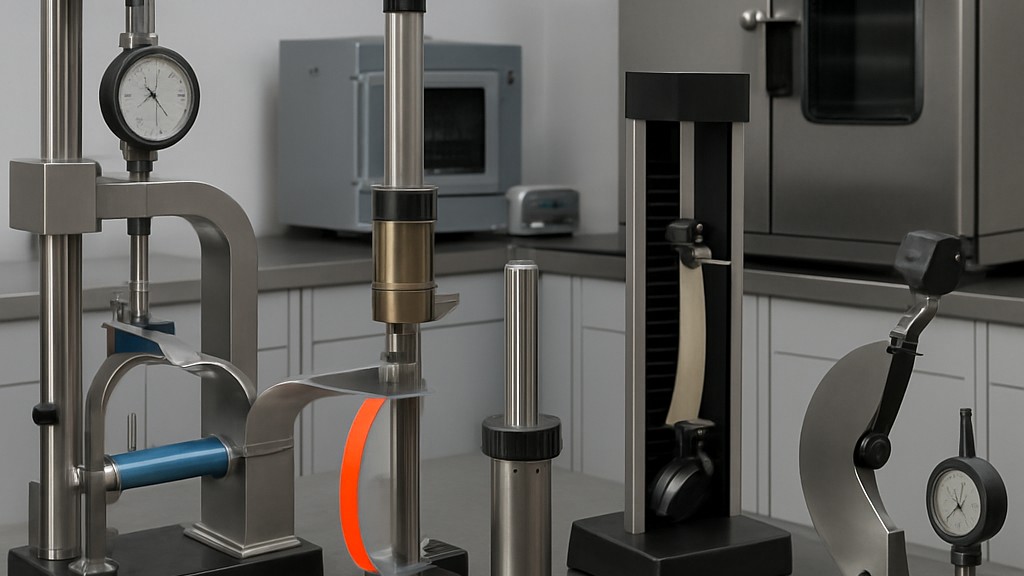
The degree of deterioration is determined by changes in strength properties resulting from exposure to the test conditions. It is recognized that no accelerated procedure for deteriorating materials perfectly correlates with actual service conditions, and no single or small set of laboratory test conditions can simulate all actual service conditions. Consequently, caution should be exercised in the interpretation and use of data obtained in this application.
The test condition, the number of cycles of the test condition to be used, the specific strength property to be used to determine the degree of failure, and whether test specimens or test panels are to be used are specified in the material specification.
This standard plays an important role in evaluating the long-term performance and durability of plastic products used in various applications, especially where thermal and oxidative stability is a concern.
ASTM D1183 standard includes procedures for exposing plastic samples to controlled heat and weather conditions to simulate aging. The goal is to determine how plastics degrade under long-term exposure, helping manufacturers predict product life and ensure quality.
Test results are vital for:
This standard includes multiple methods for aging plastics using different environmental conditions. The most commonly used procedures are:
After exposure, the physical and mechanical properties of plastic samples are tested and compared with unaged samples. Typical evaluations include:
These results indicate the degree of degradation and provide insights into material performance under prolonged heat and oxygen exposure.
The ASTM D1183 standard is applicable to a wide range of industries, including:
This standard is essential for evaluating the long-term viability and stability of plastic materials in thermal and oxidative environments. It helps manufacturers and engineers make informed decisions regarding material selection, predicting product life cycles, and meeting regulatory or safety requirements.
ASTM D1183 is a critical standard in polymer testing. It provides structured methods for evaluating the effects of heat and oxygen on plastics, enabling industry stakeholders to ensure the reliability, safety, and longevity of their plastic products.
In short, this standard is important to many industries because it provides a systematic way to evaluate how plastics degrade over time when exposed to heat and oxygen, which directly impacts the performance, reliability, and safety of plastic products in real-world conditions. This standard is considered important for the following reasons:
Ultimately, this standard helps industries ensure that plastic materials can withstand prolonged exposure to heat and oxygen without significant degradation. It also plays a vital role in improving product durability, safety, and performance.
Our organization, which has been supporting businesses across all sectors for years through a wide range of testing, measurement, analysis, and evaluation activities, has a strong team of employees who closely follow global developments in science and technology and are constantly improving themselves. In this context, we also provide testing services in accordance with ASTM D1183 Standard Practices for Resistance of Adhesives to Cyclic Laboratory Aging Conditions.
To get an appointment, to get more detailed information or to request an evaluation, you can ask us to fill in our form and reach you.

