SES N 3122 Ductile Iron Casting
Developed by Suzuki Motor Corporation as part of its standards for cast iron and iron-based materials, the “SES N 3122 Ductile Cast Iron” standard describes the requirements for ductile iron (nodular cast iron) components used in automotive applications.
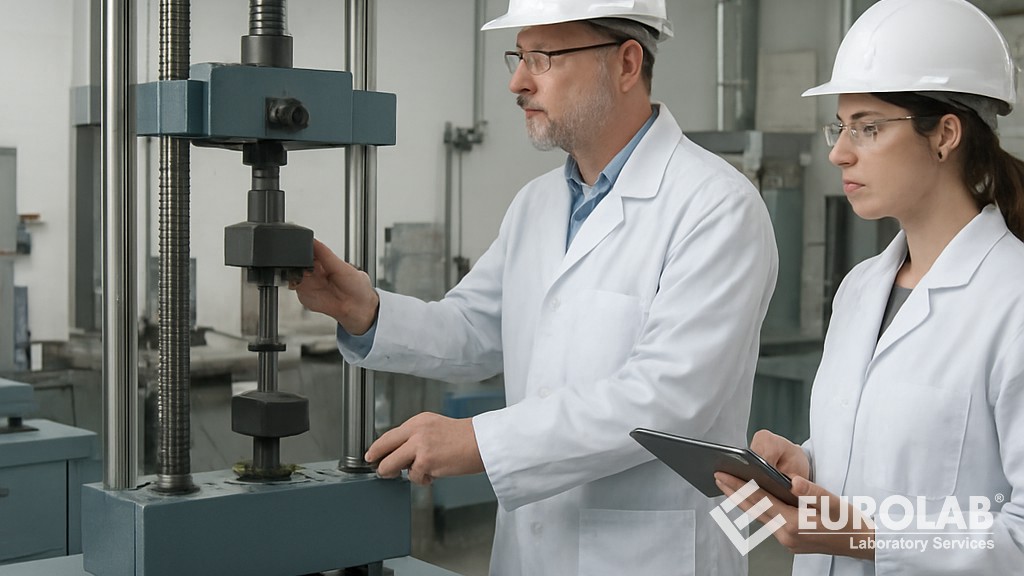
The use of ductile cast iron in the automotive industry is about combining strength, durability, and cost-effective production for complex parts. The basic properties of this material are as follows:
Engineers prefer ductile iron when a part needs to have the following properties:
- High strength and toughness
- Good fatigue resistance.
- Ability to absorb shock and vibration.
- Cost-effective casting for complex shapes.
Compared to gray cast iron, ductile iron can withstand dynamic loads and impacts much better.
In general, the casting process follows these steps:
- Iron smelting: Pig iron and scrap steel are melted in the furnace.
- Nodularization process: Magnesium is added, transforming the graphite into spherical nodules.
- Casting into molds: Sand casting is the most common method.
- Solidification: A ductile microstructure is formed.
- Heat treatment (if necessary): This treatment increases strength, stiffness, or ductility.
Ductile iron is used in load-bearing and safety-critical components:
- Chassis and suspension:
- Steering knuckles
- Control levers
- Wheel hubs
- Powertrain:
- crankshafts
- Camshafts
- Differential carriers
- Drive line:
- Axle housings
- Transmission housings
- Engine components:
- Exhaust manifolds (heat-resistant types)
Ductile iron casting is used for the following reasons:
- High strength and ductility: As strong as steel, but easier to cast. It does not easily crack under load.
- Excellent fatigue resistance: Ideal for rotating parts (e.g., crankshafts).
- Good wear resistance: Suitable for gears and moving interfaces.
- Cost efficiency: Production costs are lower compared to wrought steel. A nearly net shape is obtained, requiring less machining.
Essentially, the Suzuki SES N 3122 standard provides the following:
- Correct mechanical properties (tensile strength, elongation)
- Suitable graphite nodularity
- Minimum casting defects (porosity, shrinkage)
- Reliable heat treatment processes
Typical tests described in this standard include:
- Tensile test
- Microstructure analysis
- Hardness test
- Ultrasonic or X-ray examination
When using ductile cast iron, engineers should consider the following:
- Homogeneity of wall thickness (prevents internal defects)
- Stress concentration areas (smooth transitions are required)
- Processability margins
- Heat treatment deformation
A crankshaft made of ductile cast iron,
- It removes repetitive cyclical loads.
- It absorbs vibrations better than steel.
- It is cheaper than tattoo alternatives.
- It still meets durability requirements.
In conclusion, ductile iron casting is used in automotive manufacturing for the following purposes:
- To produce strong, durable, complex parts.
- To reduce production costs.
- Improving fatigue and impact performance.
- Ensuring consistent quality through standards such as SES N 3122.
In short, ductile iron (graphite iron) is a type of cast iron in which the graphite forms in nodules rather than flakes. This gives it the following properties:
- Higher strength and toughness
- Improved fatigue resistance.
- Improved ductility compared to grey cast iron.
The SES N 3122 standard typically covers the following:
- Material grades for ductile iron (FCD types)
- Mechanical properties
- Tensile strength
- Yield strength
- Elongation
- Casting quality requirements
- Microstructure (nodularity, graphite shape)
- Error limits (porosity, inclusions)
- Heat treatment conditions
- Examination and testing methods
This standard is closely related to the following standards:
- SES N 3121 Grey cast iron
- SES N 3123 Vermicular (compressed graphite) cast iron
Ductile cast iron is commonly used in automotive parts requiring strength and castability:
- crankshafts
- Steering knuckles
- Differential housings
- Suspension components
- Transmission housings
These parts benefit from the following advantages:
- High load-bearing capacity
- Good wear resistance.
- Cost-effective casting for complex shapes.
Typical properties of ductile cast iron are as follows:
- Class 400-15: Tensile strength approximately 400 MPa. Elongation 15 percent.
- Class 500-7: Tensile strength approximately 500 MPa. Elongation 7 percent.
- Class 600-3: Tensile strength approximately 600 MPa. Elongation 3 percent.
It implies a balance between higher strength and lower ductility.
The SES N 3122 standard is designed to ensure that ductile iron components used in vehicles are safe, reliable, and consistent, especially since many of these parts are critical to vehicle performance and safety. This standard is considered important for the following reasons:
- It ensures safety in critical components: Ductile iron is used in the following parts:
- crankshafts
- Steering knuckles
- suspension arms
These components are subjected to high loads, impacts, and fatigue cycles. Without this rigorous standard, variations in material quality can lead to:
- Cracks
- Sudden break
- Catastrophic malfunction.
- It guarantees consistent material properties: This standard defines the following:
- Tensile strength
- Yield strength
- Elongation
- Hardness
- It controls the microstructure (critical for ductile cast iron): The most important characteristic of ductile cast iron is graphite nodules. This standard ensures appropriate nodularity and a controlled matrix structure. Weak nodularity results in brittle behavior and is dangerous in automotive parts.
- It defines testing and inspection methods: This standard requires the following:
- Tensile test
- Hardness test
- Metallographic (microstructure) analysis
- Non-destructive testing (e.g., ultrasonic, X-ray)
- It standardizes production processes: It specifies the following:
- Casting methods
- Heat treatment conditions
- Quality acceptance criteria
This eliminates production variability and differences between suppliers.
- Compliant with global standards: This standard is compliant with ISO 1083, EN 1563, and ASTM A536 standards. This ensures:
- Global resource use
- Easier supplier selection
- Consistent engineering practices
In conclusion, the Suzuki SES N 3122 standard guarantees that ductile cast iron castings used in vehicles meet the following requirements:
- To meet stringent mechanical and structural requirements.
- Maintaining consistent quality among suppliers.
- To provide safe, durable, and cost-effective components.
For many years, our organization, with its competent and experienced team, has been understanding the needs of its clients, providing the advanced testing services they require, and assisting them in the establishment, implementation, and improvement of management systems. Within this framework, we also provide testing services compliant with the SES N 3122 standard.



