
ASTM C813-20 Standard Test Method for Hydrophobic Contamination on Glass by Contact Angle Measurement

ASTM C813-20 Standard Test Method for Hydrophobic Contamination on Glass by Contact Angle Measurement

The standard "ASTM C813-20 Standard Test Method for Hydrophobic Contamination on Glass by Contact Angle Measurement" developed by the American Society for Testing and Materials (ASTM) describes a test method for detecting hydrophobic contamination on glass surfaces by contact angle measurements. When properly conducted, this test method enables the detection of hydrophobic organic contaminant fractions in monomolecular layers. Very rough or porous surfaces may significantly reduce the sensitivity of this test method.
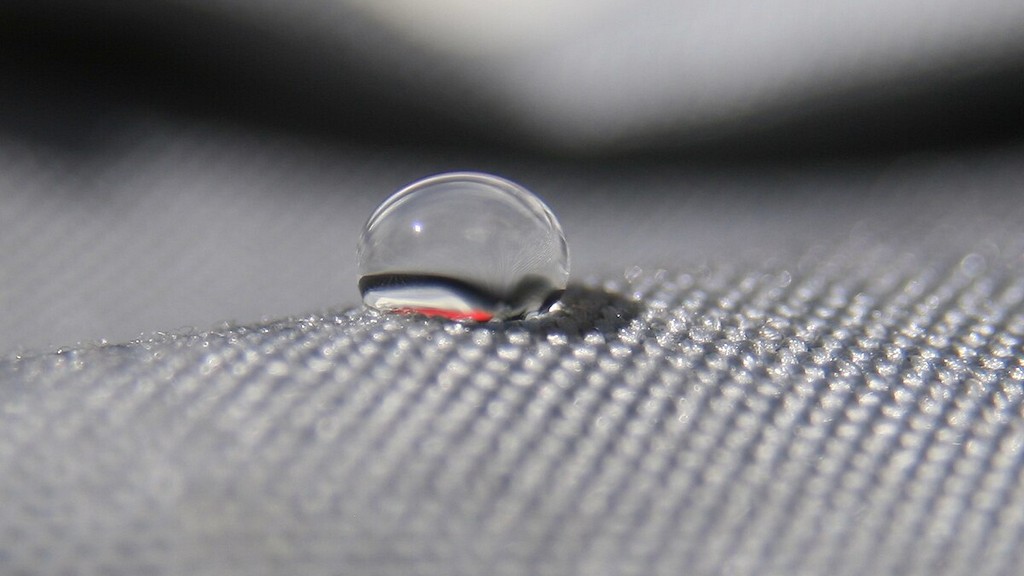
ASTM C813-20 Standard Test Method for Hydrophobic Contamination on Glass by Contact Angle Measurement

For the purposes of this standard,

  • The equilibrium contact angle refers to the angle that can be observed immediately after a liquid droplet increases in size.
  • Hydrophilic refers to being wettable, having a strong affinity for water. Perfectly hydrophilic surfaces exhibit zero contact angles.
  • Hydrophobic refers to being non-wettable, having little affinity for water. Hydrophobic surfaces exhibit contact angles significantly greater than zero (usually greater than 45 degrees for the equilibrium angle).
  • The angle of retraction is the smallest angle that can be observed when a liquid droplet is reduced in size.
  • A dormant drop is a drop of liquid that rests on top of a horizontal surface.

The contact angle test is performed by depositing droplets of permanganate-distilled water or reagent water conforming to “ASTM D1193-06 Standard Specification for Reagent Water” onto the surface to be tested using a mounted hypodermic syringe. The droplets are deposited in a manner that measures the equilibrium contact angle as described herein.

Measurements are made by one of two well-known methods:

  • Imaging of the fixed drop with a comparison microscope fitted with a goniometer scale that measures the angle directly
  • Photographing the stationary drop and measuring the angle with a protractor

The interpretation of the measurements is based on the fact that organic contamination on surfaces results in contact angles that are significantly higher than the near-zero angles measured on clean surfaces or on surfaces contaminated with hydrophilic materials.

Contact angle testing is non-destructive and can be used to control and evaluate processes for the removal of hydrophobic contaminants. The test can also be used to detect and control hydrophobic contaminants in processing environments. For this application, a surface free of hydrophobic films is exposed to ambient conditions and then tested.

Loss of sensitivity may be caused by any of the following factors:

  • Presence of hydrophilic substances such as residual cleaning detergent on the surface to be tested or in the water used for testing
  • An unusually rough or porous surface

The equipment used in these tests includes:

  • Low power comparator microscope (5 to 50×) with goniometer scale and light source for illuminating small drops.
  • Camera that can take photos of the drop if this alternative method is used.
  • Protractor to measure the angle if alternative method is used.
  • Hypodermic syringe or micrometer burette in a fixed mount. The needle of the syringe or burette tip should be BD size 20 to 26 or equivalent and should have a perfectly clean, square-cut tip free from any foreign matter which might inhibit drop formation.
  • Movable plate for mounting the specimen while viewing the drop profile.

Reagents and materials used in these tests include:

  • Purity of water: Type II reagent water conforming to ASTM D1193-06 or distilled water from a 3 g/L potassium permanganate solution is usually sufficient. The water used should be free of hydrophobic and hydrophilic substances. To test whether the water is free of hydrophobic contamination, a freshly cut mica sheet should be used as a test surface for measuring the equilibrium contact angle of water as described in this standard. If the average of two such equilibrium contact angle determinations is not less than 4 degrees, further purification of the water is required.
  • Mike.
  • Polytetrafluoroethylene sheet.

Contact angles of water on clean polytetrafluoroethylene should be measured to familiarize the operator with the test and to check equipment and techniques.

Among the numerous testing, measurement, analysis and evaluation studies that our organization has carried out for businesses in various sectors, our organization also provides testing services defined in the "ASTM C813-20 Standard test method for hydrophobic contamination on glass by contact angle measurement" standard with its trained and expert staff and advanced technological equipment.

WhatsApp

