

In the automotive industry, adhesive coating adhesion testing refers to evaluating how strongly an adhesive coating (dry film lubricant, solid lubricant coating, or anti-friction adhesive coating) adheres to a substrate (typically metal or elastomer parts). These coatings are thin layers of solid lubricant applied to automotive components such as O-rings, seals, bearings, fasteners, sliding parts, or engine and transmission components. These coatings reduce friction, prevent wear, provide lubrication where oil and grease are unavailable, and often offer corrosion protection.
In the automotive industry, reliable adhesion is crucial because poor adhesion can lead to coating separation, increased wear, noise (e.g., squeaking in internal parts), or functional failure under vibration, temperature changes, chemicals, or mechanical stress.
The automotive industry uses standard coating adhesion tests, often adapted from paint and coating standards, with specific requirements for dry lubricants. Common adhesion testing methods for bonded coatings include:
During testing, a grid pattern (a grid of cuts) is drawn from the coating onto the substrate. Pressure-sensitive tape is applied over the grid and quickly pulled off.
The rating ranges from 5B (excellent, no wear) to 0B (poor, at least 65 percent wear). Automotive suppliers typically require a minimum of 4B-5B.
This testing method is used for quality control of manufactured parts (e.g., elastomer seals, fasteners).
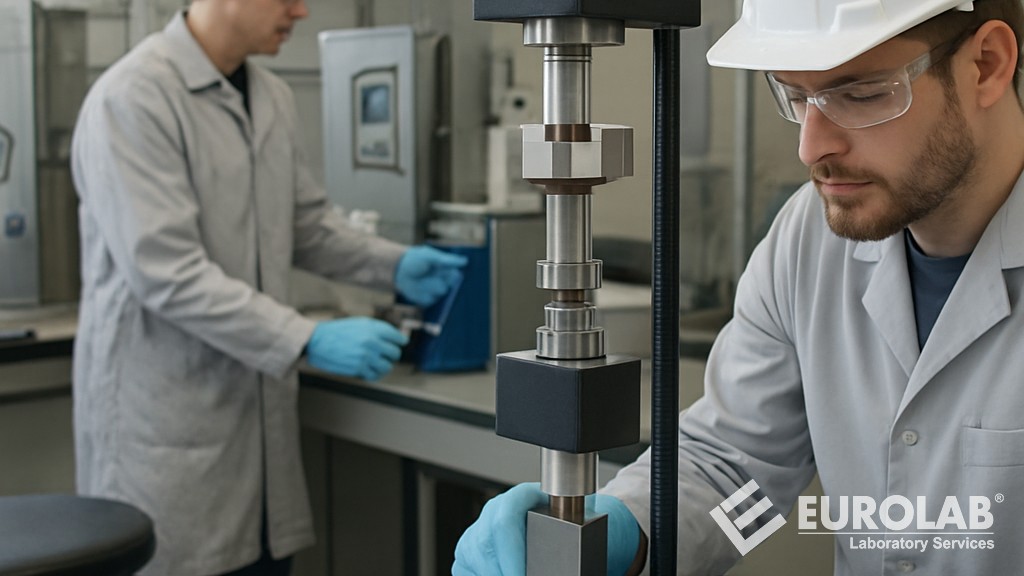
During testing, a test dolly is attached to the coated surface. A portable tensile testing machine applies increasing tensile force until fracture occurs. The result is measured in psi or MPa, and the fracture mode is recorded (such as adhesion fracture at the coating-substrate interface, cohesive fracture within the coating).
This method is preferred when high numerical values are required (for example, for critical automotive sliding components).
In practice, automotive original equipment manufacturers and first-tier suppliers (e.g., for brake systems, door seals, engine parts) specify these tests in their material approval processes. Good adhesion ensures that the bonded coating will withstand the vehicle's lifespan without flaking or losing dry lubrication performance.
Elongation determination of bonding coating on elastomer seals is a specialized test method used in the automotive and sealing industries to evaluate how well a bonded coating adheres to an elastomer substrate (e.g., O-rings, radial shaft seals, or other rubber/elastomer seals) when the part is stretched or elongated.
This is especially important for elastomer seals because they undergo significant deformation during assembly (tension) and operation (dynamic movement, compression, or thermal expansion). Poor adhesion can cause the coating to crack, flake, or separate under stress, increasing friction, wear, noise, or seal failure.
Traditional adhesion tests (e.g., cross-band testing according to ASTM D3359 or tensile testing according to ASTM D4541) perform well on rigid surfaces but are less representative for flexible elastomers. Elastomeric materials can stretch 100-500% or more before fracture, so adhesion must be evaluated under similar stress conditions to simulate real-world stress (e.g., typical O-ring assembly elongation of 1-5%, but can reach higher levels during assembly or stretching).
The test verifies that the coating can stretch and return to its original state with the elastomer without adhesion failure (cracking within the coating), loss of adhesion (separation from the surface), or excessive peeling/flaking.
The typical procedure for elongation adhesion testing in bonded elastomer seals is as follows:
This method allows the bonded coating to withstand the inherent flexibility of the elastomer without compromising dry lubrication performance in automotive applications such as transmission seals, fuel system O-rings, or dynamic shaft seals.
For many years, our organization, with its competent and experienced team, has been understanding the needs of its clients, providing the advanced testing services they require, and assisting in the establishment, implementation, and improvement of management systems. Within this framework, we also provide bonded coating adhesion testing services to businesses.
To get an appointment, to get more detailed information or to request an evaluation, you can ask us to fill in our form and reach you.

