

The standard "ASTM D6641/D6641M Standard Test Method for Compressive Properties of Polymer Matrix Composite Materials Using a Combined Load-Compression (CLC) Test Fixture" developed by the American Society for Testing and Materials (ASTM) describes the compressive strength and hardness properties of polymer matrix composite materials using a combined load-compression (CLC) test fixture. This test method is applicable to general composites that are balanced and symmetrical.
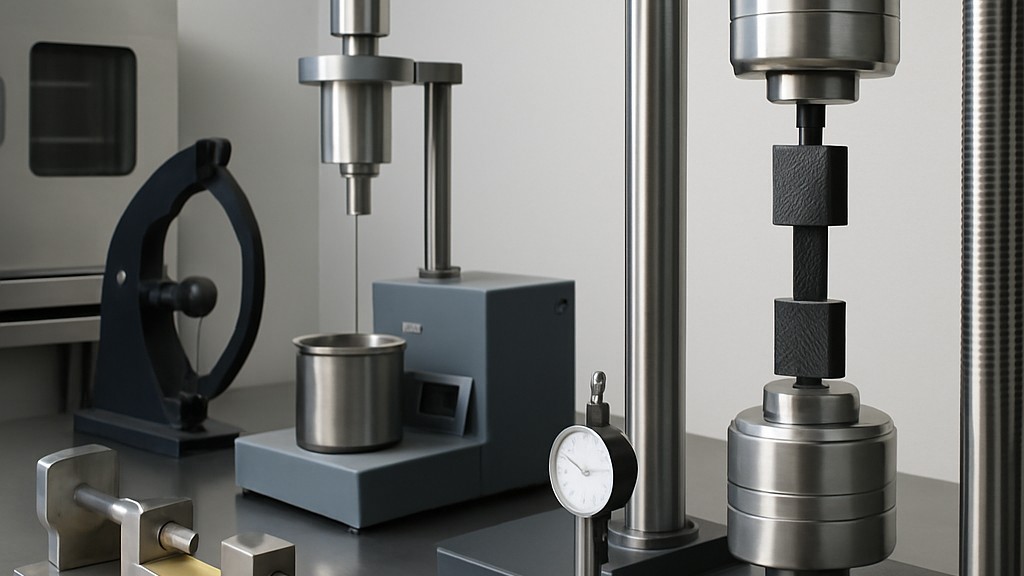
The specimen can be non-tabbed (Method A) or tabbed (Method B), as required. A requirement for successful testing is that the specimen ends not be crushed during testing. Non-tabbed specimens are generally suitable for use with low-orthotropy materials, such as fabrics, chopped-fiber composites, and laminates with a maximum of 50 percent 0-degree lamination or equivalent. Higher-orthotropy materials, including unidirectional composites, generally require tabs.
Compressive force is introduced into the specimen by combined end and shear loading. By comparison, the test method described in ASTM D3410/D3410M is a pure shear loading compression test method, and ASTM D695 includes a pure end loading test method. Unidirectional (0-degree ply orientation) composites and multidirectional composite laminates, fabric composites, chopped fiber composites, and similar materials can be tested.
This test method is designed to produce compressive property data for material properties, research and development, quality assurance, and structural design and analysis. Tabular (Procedure B) specimens, typically used when testing unidirectional composites, are similar to the combined loading compression (CLC) test method (combined shear end loading), ASTM D3410/D3410M standard (shear loading), and ASTM D695 standard (end loading).
The benefits of combined loading become particularly evident when testing lower-strength materials (Procedure A), where non-tab combined loading compression (CLC) specimens can be used. It may not be possible to successfully test non-tab specimens of the same materials using either of the other two methods. When testing specific laminates, combined loading compression (CLC) data is often used to deduce the 0-degree ply strength, and lamination theory is used to calculate the 0-degree unidirectional laminate strength.
Factors affecting compressive response include: material type, material preparation and placement methods, specimen stacking order, specimen preparation, specimen conditioning, test environment, test speed, time at temperature, void content, and volume percent reinforcement. Composite properties in the test direction that can be obtained from this test method include:
In the ASTM D6641 standard, Method A and Method B refer to two different procedures for measuring compressive properties of composite materials, depending on how strain is measured:
Poisson's ratio expresses the ratio of the proportional decrease in lateral dimension to the proportional increase in length in an elastically stressed material specimen. Poisson's ratio is an essential constant in analyses to determine the tensile and deflection properties of materials (plastics or metals).
Method A provides full mechanical characterization, while Method B provides rapid strength assessment.
Combined loading compression (CLC) refers to the method of applying compressive force to a test specimen using a combination of:
This technique is used to determine the compression properties of fiber-reinforced polymer matrix composites in the ASTM D6641 standard.
Compression testing of composites can be problematic when:
The combined loading approach addresses these issues by distributing the load:
Benefits of combined load compression include:
Our organization, which has been supporting businesses across all sectors for years through a wide range of testing, measurement, analysis, and evaluation activities, has a strong team of employees who closely follow global developments in science and technology and are constantly improving themselves. In this context, we also provide testing services in accordance with the "ASTM D6641/D6641M Standard Test Method for Compression Properties of Polymer Matrix Composite Materials Using the Combined Load Compression (CLC) Test Fixture."
To get an appointment, to get more detailed information or to request an evaluation, you can ask us to fill in our form and reach you.

