

The standard “DIN 51718 Testing of solid fuels - Determination of water content and moisture content of the analytical sample”, published by the German Institute for Standardization (DIN), describes standardized procedures for determining the water content and moisture content of analytical samples in solid fuels.
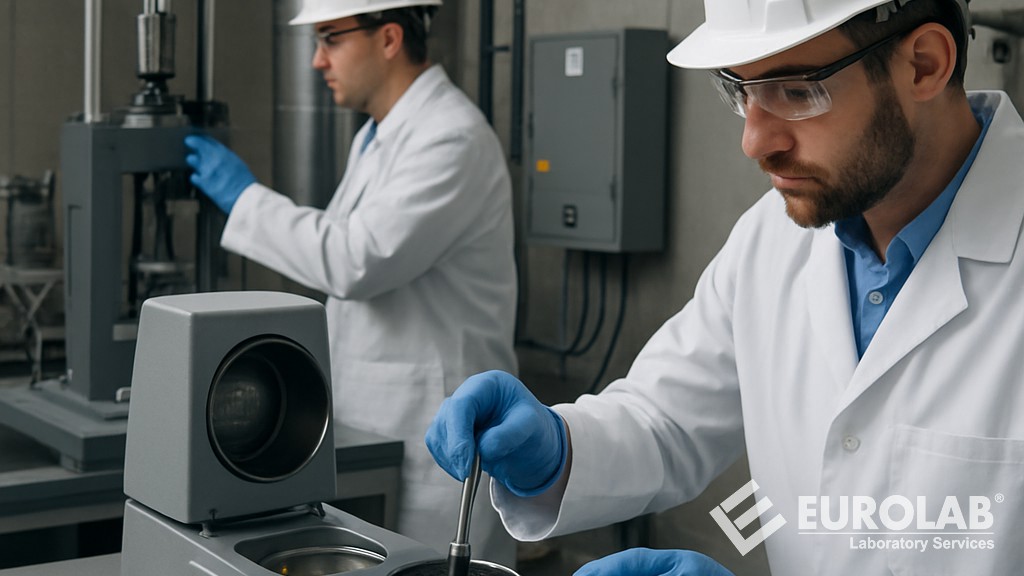
Moisture content is one of the most important quality parameters for solid fuels. It directly affects:
Therefore, accurate moisture content determination is crucial for coal trading, power plants, coke production, biochar certification, biomass fuels, and fuel quality control.
This standard applies to solid fuels such as:
The DIN 51718 standard defines three main methods for determining total water content, selected based on fuel type, particle size, expected moisture level, and required precision:
This method is particularly suitable for hard coal and coke to prevent oxidation or loss of volatile matter.
To ensure reproducibility, the precise temperature, drying time, sample mass (approximately 1-50 g depending on the stage), crucible type, cooling in the dryer, and calculation formula (percentage of water content) were precisely defined.
The calculation method is standard. Results are generally reported as received or converted to other bases.
The DIN 51718 standard is technically very similar to (and is generally considered equivalent in practice to) the following standards:
Many laboratories and certification systems (e.g., European biochar certification, global biochar C-Sink standards) explicitly recognize the DIN 51718 standard (specifically Method A) as an accepted or equivalent procedure alongside its ISO versions.
Current practical applications of this standard are as follows:
In short, the DIN 51718 standard outlines a method for determining the water (moisture) content of solid mineral fuels such as coal and coke. Moisture content is one of the most important parameters affecting fuel quality, calorific value, storage behavior, and combustion efficiency.
The DIN 51718 standard primarily applies to the following:
This standard defines procedures for determining total moisture or analytical moisture content by controlled drying under specified conditions. The determination is based on:
Moisture content is expressed as a percentage of the original sample mass.
The steps of this method are generally as follows:
Moisture content determination is considered important for the following reasons:
The DIN 51718 standard is widely used in the following areas:
The DIN 51718 standard is part of the broader DIN 51700 series of standards covering the testing of solid fuels. Technically, it is compatible with the following international standards:
Although the methods are similar, there are minor differences in drying temperature, sample preparation, or reporting principles.
Accurate moisture determination allows for the following:
In conclusion, the DIN 51718 standard remains a fundamental standard in fuel analysis, providing reliable and comparable moisture values for solid fuels. Even though newer biofuel-specific norms exist, it is still widely cited and used today. Since moisture directly affects energy value, handling behavior, and industrial performance, this standard plays a crucial role in fuel testing laboratories and energy production industries.
For many years, our organization, with its competent and experienced staff, has been understanding the needs of its clients, providing the advanced testing services they require, and assisting them in the establishment, implementation, and improvement of management systems. Within this framework, we also provide testing services in accordance with the DIN 51718 standard.
To get an appointment, to get more detailed information or to request an evaluation, you can ask us to fill in our form and reach you.

