

The European standard “EN 10339 Steel pipes for land and sea water pipelines - Internal liquid-applied epoxy coatings for corrosion protection” describes the requirements for applying liquid-applied epoxy internal coatings for corrosion protection of steel pipes.
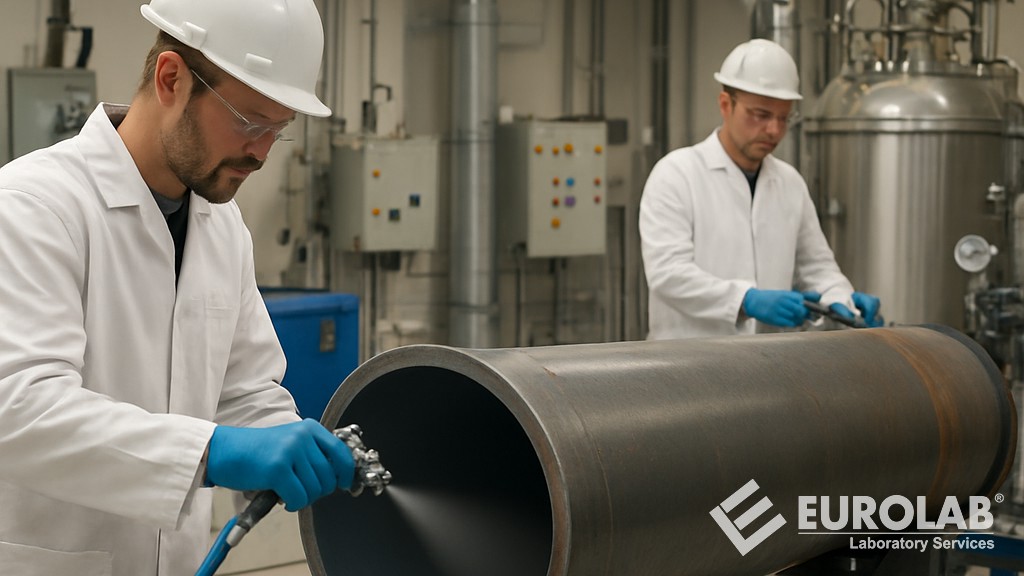
These types of coatings are generally used for the pressurized or gravity-fed transport and distribution of water for human consumption and industrial use, as well as seawater, wastewater, and fire water. The temperature of the transported water usually does not exceed 50 degrees Celsius.
Primer selection and application limits depend on the type of product used, pipe laying conditions, fluid temperature, and chemical composition. Product selection and specifications suitable for the transport medium are outside the scope of this standard. Primers generally consist of a single-coat liquid product applied using an airless spray technique after surface preparation.
All or some of the requirements of this standard may also apply to the internal coatings of fittings, if agreed upon by the buyer and the painter. Coatings conforming to this standard may be applied to longitudinally or spirally welded pipes and seamless steel pipes used in the construction of pipelines for the transport of liquids. These pipes are not designed to be bent after the application of the epoxy coating. This standard does not cover in-situ applied or rehabilitation coatings.
The component materials of epoxy coatings, when used in permanent or temporary contact with water intended for human consumption under the conditions for which they are designed, must not alter the quality of that water to such an extent that it fails to meet the requirements of European regulations at the end-user. For this purpose, relevant national standards addressing the impact of the materials on water quality should be consulted, where applicable.
In the world of infrastructure engineering, where reliability meets durability, corrosion protection of steel pipelines is of paramount importance. Whether buried on land or submerged offshore, water pipelines are constantly exposed to moisture, minerals, and microbial activity that can degrade materials over time. Becoming a fundamental element in protecting these vital channels, the EN 10339 standard specifies the requirements for internal liquid-applied epoxy coatings designed to provide robust corrosion protection for steel pipes used in water transport systems. This standard not only guarantees longevity but also complies with broader European regulations concerning construction products.
As global demand for clean water increases due to urbanization, climate change, and industrial growth, EN 10339 and similar standards play a critical role in minimizing leaks, reducing maintenance costs, and preventing environmental hazards.
The EN 10339 standard specifies precise rules for the application of epoxy-based coatings to steel pipes. This standard was developed to address the weaknesses of bare steel in aqueous environments. Although steel is strong and cost-effective, it corrodes rapidly upon contact with water, leading to pitting, flaking, and ultimately structural damage. Epoxy coatings act as a barrier, creating a seamless and non-porous shield that inhibits the electrochemical reactions responsible for rust formation.
The EN 10339 standard focuses solely on internal coatings for water pipelines, which distinguishes it from external coatings covered by standards such as EN 10289 or oil and gas coatings like the EN 10290 standard. This standard is not designed for drinking water certification, but it provides a foundational layer for further hygiene assessments.
The EN 10339 standard mandates a liquid epoxy system, which is essentially a two-component mixture, usually consisting of resin and hardener, applied in a controlled manner to ensure homogeneous thickness and adhesion. The key technical elements of this standard are as follows:
These properties enable the liner to withstand pressures up to 100 bar and temperatures between 4 and 50 degrees Celsius, making it suitable for most water transport scenarios.
Implementing the EN 10339 standard involves a factory-based priming process to ensure consistency. Pipes are first inspected, cleaned, and preheated to 20-60 degrees Celsius if necessary. Epoxy is applied in multiple passes to increase thickness, followed by visual and non-destructive testing. After priming, pipes are marked with batch details for traceability.
On-site installation is carried out according to the EN 12747 standard for onshore burial or the EN 10219 standard for offshore welding, and care is taken to prevent damage to the lining during transport. For repairs, standard touch-up kits are used, but complete priming is preferred for extensive damage.
For many years, our organization, with its competent and experienced staff, has been understanding the needs of its clients, providing the advanced testing services they require, and assisting in the establishment, implementation, and improvement of management systems. Within this framework, we also provide testing services to businesses in accordance with the "EN 10339 Steel pipes for onshore and offshore water pipelines - Epoxy coatings with internal liquid applied for corrosion protection" standard.
To get an appointment, to get more detailed information or to request an evaluation, you can ask us to fill in our form and reach you.

