Waterproof Tests
Waterproofing tests are necessary to verify a product's resistance to water ingress under defined conditions. They are commonly used in industries such as automotive, electronics, construction, textiles, and consumer goods to ensure durability, safety, and performance in wet or humid environments.
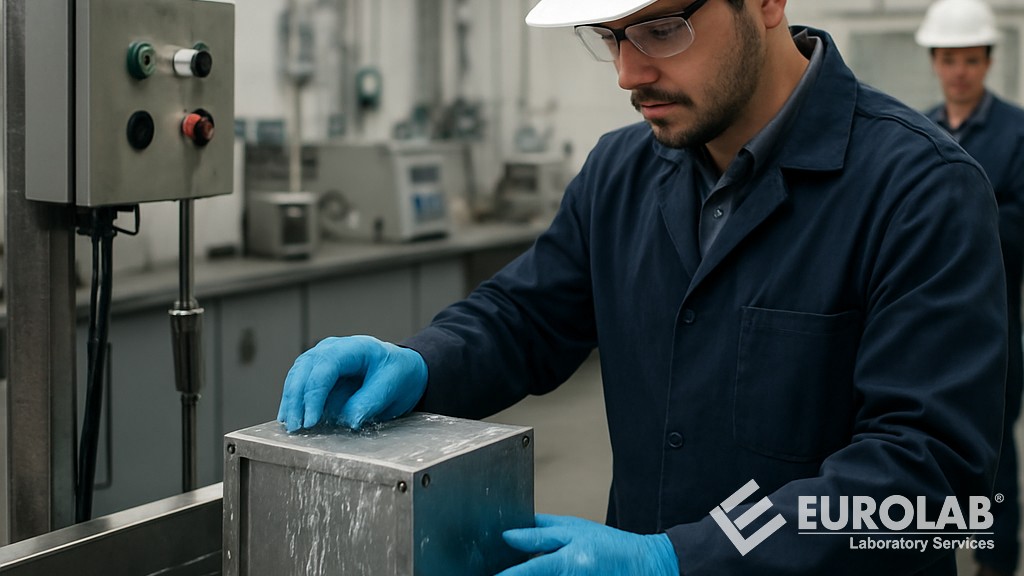
Waterproofing testing evaluates how well a material, component, or finished product's structure resists water ingress. The aim is to simulate real-world exposure conditions such as rain, splashes, submersion, or high-pressure water jets.
These tests primarily help to determine the following:
- Water permeability resistance
- Structural integrity in humid environments
- Long-term durability in wet environments.
The main types of waterproofing tests are as follows:
- Drip and splash test: Simulates light rain or accidental splashes. Water is dripped or sprayed at low pressure. Common for electronics and enclosures.
- Spray test: Controlled nozzles are used to simulate rainfall. It evaluates sealing performance under continuous exposure.
- Immersion test: The product is submerged in water for a specific duration and depth. Used for high protection ratings such as IP67 or IP68.
- High-pressure jet testing: Exposes the product to powerful water jets. Important for automotive and outdoor equipment. Tests sealing integrity under extreme conditions.
- Hydrostatic pressure test: Increasing water pressure is applied until a leak occurs. Common in textiles, membranes, and gaskets.
Generally, waterproofing tests require specialized equipment such as:
- Calibrated nozzle water spray chambers
- Immersion tanks with depth control
- Pressure systems for hydrostatic testing.
- Environmental chambers for humidity and temperature testing.
The main parameters checked during the test are:
- Water pressure
- Temperature
- Exposure time
- Water application angle and direction
Waterproofing test methods used in various sectors are as follows:
- Automotive industry: Waterproofing testing is a critical validation step in automotive engineering, ensuring vehicles and components are resistant to rain, splashes, high-pressure washes, and prolonged exposure to moisture. With the increasing complexity of modern vehicles, especially electric and autonomous systems, effective waterproofing testing has become even more important.
The applicable standards for waterproofing tests in the automotive industry are as follows:
- The “ISO 20653 Road vehicles – Protection levels (IP code) – Protection of electrical equipment against foreign objects, water and ingress” standard is the most relevant standard for vehicles and covers protection against water ingress in real automotive conditions (e.g. road spray, pressure washer).
- The “IEC 60529 Degrees of protection provided by enclosures (IP code)” standard provides general IP ratings (e.g., IP67, IP69K) and is commonly used in automotive electrical and electronic components.
- Meanwhile, many original equipment manufacturers (e.g., VW, BMW, Stellantis) define stricter internal waterproofing requirements for critical components.
Common waterproofing test methods in the automotive industry include:
- Spray test (rain simulation): Simulates rain or road spray. Applied at different angles and flow rates. Used for body seals and exterior components.
- High-pressure/jet test: Simulates vehicle washing or intense road splashing. Typically compliant with ISO 20653 standard IPX9K requirements. Critical for underbody and engine compartment components.
- Immersion test: Components are submerged in water for a specific period of time. Used for connectors, sensors, and battery housings. Corresponds to IP67 and IP68 ratings.
- Leak testing (air pressure/vacuum): Detects micro-leaks using pressure differences. It is an extremely sensitive method for leak-proof enclosures.
- Climate and humidity test: Combines water exposure with temperature cycles. Evaluates condensation and long-term durability.
- Electronics industry: Waterproofing tests are a fundamental part of the design and verification processes for electronic devices, ensuring they remain functional and safe when exposed to water, moisture, or harsh environmental conditions. From smartphones to industrial control systems, waterproofing performance directly impacts product reliability and lifespan.
In the electronics industry, manufacturers rely on globally accepted standards to determine water resistance performance:
- The “IEC 60529 Enclosure Protection Ratings (IP Code)” standard is the most widely used and defines ingress protection (IP) ratings such as IPX4 (splash-proof), IP67 (submersion-proof), and IP68 (continuous submersion-proof).
- The standard “EC 60068-2-18 Environmental tests - Part 2-18: Tests - Test R and guidance: Water” provides environmental test methods for water exposure under controlled laboratory conditions.
- The “MIL-STD-810G Department of Defense test method standard: Environmental engineering considerations and laboratory tests” standard is used in military and rugged electronic devices, including rain, humidity, and immersion testing.
Common waterproofing testing methods in the electronics industry include:
- Drip and splash test (IPX1–IPX4): Simulates light rain or splashes. Water drips or sprays at controlled angles. Used for basic consumer appliances.
- Spray test (IPX5–IPX6): Simulates more powerful water jets. Evaluates the sealing of the enclosure under pressure.
- Immersion test (IPX7–IPX8): The device is submerged in water to a defined depth and for a specified duration. This is critical for smartphones and wearable devices.
- High pressure/high temperature test (IPX9K): Extreme water jets at high temperatures. Used for rugged or industrial electronics.
- Humidity and condensation test: High humidity cycles with temperature changes. Detects risks of indoor condensation.
- Leak detection test: Uses air pressure or vacuum to detect micro-leaks. Ensures enclosure integrity before final assembly.
- Construction industry: Waterproofing tests ensure buildings and infrastructure are protected against water leaks. These leaks can lead to structural damage, mold growth, and long-term durability issues. These tests are applied to materials, systems, and completed structures throughout the construction lifecycle.
In the construction industry, manufacturers use the following standards for waterproofing performance and building waterproofing:
- The standard “EN 1928 Flexible sheets for waterproofing - Bitumen, plastic and rubber sheets for roof waterproofing - Determination of waterproofness” defines methods for determining the waterproofness of roof and waterproofing membranes.
- The "ASTM D5385 Standard test method for hydrostatic pressure resistance of waterproofing membranes" standard measures the resistance of waterproof membranes to water pressure.
- The standard “BS 8102 Protection of underground structures against water ingress - Application guide” provides guidance for waterproofing basements and underground structures.
- The “ISO 811 Textiles - Determination of water resistance - Hydrostatic pressure test” standard is also used for flexible waterproof materials such as geotextiles.
Common waterproofing testing methods in the construction industry include:
- Water retention test (flood test): The surface (e.g., roof or bathroom floor) is filled with water. The water is held for 24-72 hours. It is then checked for leaks from below. This test is applied to roofs, terraces, and wet areas.
- Spray rack test (facade test): Simulates wind-borne rain using spray nozzles and air pressure. Evaluates windows, curtain walls, and cladding systems.
- Hydrostatic pressure test: Applies water pressure to membranes or structures. Determines resistance to groundwater pressure.
- Permeability test: Measures how much water passes through a material. Used for concrete, coatings, and membranes.
- Crack bridging test: Evaluates the performance of waterproofing material over cracks. Important for concrete structures at risk of slippage or settlement.
- Textile industry: Waterproofing tests ensure that fabrics and finished products (such as jackets, tents, and footwear) effectively resist water penetration while maintaining comfort and durability. These tests are crucial for outdoor, protective, and performance textiles.
The textile industry uses the following internationally accepted standards to evaluate waterproofing performance:
- The “ISO 811 Textiles - Determination of water resistance - Hydrostatic pressure test” standard measures the water resistance of fabrics by determining the pressure required for water penetration.
- The “AATCC TM127 Waterproofing Test Method: Hydrostatic Pressure” standard is very similar to the ISO 811 standard and is commonly used in North America.
- The “AATCC TM 22 Waterproofing: Spray Test” standard evaluates surface water repellency (not complete waterproofing).
- “ISO 4920 Textile fabrics - Determination of resistance to surface wetting (spray test)” measures resistance to surface wetting.
Common waterproofing testing methods in the textile industry include:
- Hydrostatic pressure test: The fabric is subjected to increasing water pressure. It measures the height of the water (in mm) before water seeps through. For example, 1.000-5.000 mm is considered water-resistant, 10.000-20.000 mm is considered waterproof, and above 20.000 mm is considered high-performance waterproof.
- Spray test (surface wetting): Water is sprayed onto the fabric surface. It evaluates how many droplets the water forms or spreads. This method measures water repellency, not complete waterproofing.
- Rain simulation test: Simulates real rain conditions. Evaluates the dynamic performance of the garment.
- Moisture absorption and diffusion test: Measures how water spreads through the fabric. Important for comfort and drying performance.
- Seam leak test: Focuses on the stitched areas. Ensures the stitches are properly sealed (e.g., with seam tape).
- Consumer products: Waterproofing tests ensure that everyday products remain safe, functional, and durable when exposed to water, spills, moisture, or outdoor conditions. They are commonly applied across various categories, including personal electronics, household goods, home appliances, and lifestyle products.
In consumer products, manufacturers rely on the following standardized testing methods to define and verify waterproof performance:
- The “IEC 60529 Enclosure Protection Degrees (IP Code)” standard is the most common standard defining IP ratings (e.g., IPX4, IP67, IP68) for water resistance.
- The standard “EC 60068-2-18 Environmental tests - Part 2-18: Tests - Test R and guidance: Water” provides environmental test procedures for water exposure.
- The standard “ASTM D2247 Standard practice for testing the water resistance of coatings at 100% relative humidity” is used for coatings and surface treatments in consumer products.
- Cosmetics industry: Waterproofing tests ensure that products like mascara, foundation, sunscreen, and lipstick maintain their performance when exposed to water, sweat, humidity, and sebum (skin oils). These tests are essential to verify product claims such as "waterproof" or "water-resistant."
Unlike the automotive and electronics industries, cosmetic products rely more on guidelines and test protocols rather than strict universal standards:
- ISO cosmetic guidelines: Provide general frameworks for safety, efficacy, and testing practices.
- The US FDA (Food and Drug Administration) defines labeling guidelines, especially for claims such as "water-resistant sunscreen."
- COLIPA (currently known primarily as Cosmetics Europe) provides recommended testing methods for the water resistance of sunscreens.
Cosmetic products generally rely on the following standardized testing methods:
- Water immersion test: The product is applied to the skin or surface. It is then submerged in water for a specific period of time (e.g., 40 or 80 minutes for sunscreens). This is generally used to verify the "water-resistant" claims of sunscreens.
- Sweat resistance test: Sweating is simulated using artificial sweat. The product's durability under realistic conditions is evaluated.
- Rubbing and transfer test (after exposure to water): After wetting, the product is rubbed or wiped. This measures how much the product transfers or deteriorates.
- Spray test: Water is sprayed onto the treated skin. Observe for smudging, running, or fading.
- Visual and instrumental evaluation: Before and after comparisons are made using imaging systems. Color intensity and coverage are measured quantitatively.
- Packaging industry: Waterproofing tests ensure that packaging protects its contents from water, moisture, and environmental factors during storage, transport, and use. This is particularly critical for food, pharmaceutical, electronics, and e-commerce packaging.
The packaging industry uses the following internationally accepted standards to evaluate waterproofing performance:
- The standard “ASTM D3078 Standard test method for detecting leaks in flexible packaging by the bubble emission method” detects leaks in flexible packaging using the vacuum bubble emission method.
- The ASTM E96 Standard test methods for water vapor permeability of materials standard measures the moisture permeability of packaging materials.
- The “ISO 811 Textiles - Determination of water resistance - Hydrostatic pressure test” standard applies to flexible packaging materials such as laminated films.
- The “ISTA Procedure 2A Packaged goods weighing 150 lb (68 kg) or less” standard includes environmental conditions such as moisture exposure during transport simulation.
Common waterproofing test methods in the packaging industry include:
- Leak (bubble) test: The package is submerged in water under vacuum. Air bubbles indicate leak points (ASTM D3078).
- Water spray/rain simulation test: Simulates exposure to rain during transport. Evaluates the integrity of the outer packaging.
- Immersion test: The package is submerged in water for a specific period of time. This checks the sealing effectiveness and water ingress.
- Water vapor permeability test: Measures the moisture permeability of materials. Critical for shelf life assessment (ASTM E96).
- Compression + Moisture test: Combines moisture exposure with mechanical stress. Simulates real shipping conditions.
- Composite materials: Waterproofing tests are crucial for evaluating the resistance of materials such as fiber-reinforced polymers, laminates, and sandwich structures to water ingress, moisture absorption, and long-term environmental degradation. These tests are widely used in aerospace, automotive, marine, wind energy, and construction applications.
Composite materials are evaluated using standards that focus on water absorption, permeability, and durability.
- The "ASTM D570 Standard test method for water absorption rate of plastics" standard measures the amount of water absorbed by composite materials over time.
- “ISO 62 Plastics – Determination of water absorption rate” is the international equivalent standard used to determine moisture absorption.
- The ASTM E96 standard, "Standard methods for testing the water vapor permeability of materials," evaluates moisture permeability through composite films and laminates.
- The “ISO 811 Textiles - Determination of water resistance - Hydrostatic pressure test” standard is used for coated or fabric-based composites.
Common waterproofing test methods for composite materials include:
- Water absorption test: Samples are immersed in water for specific periods. Weight gain is measured to determine moisture absorption (ASTM D570 and ISO 62 standards).
- Immersion and aging test: This involves prolonged immersion in water (sometimes at high temperatures). It evaluates the deterioration of mechanical properties.
- Water vapor permeability test: Measures moisture diffusion through composite layers. Important for barrier performance (ASTM E96 standard).
- Hydrostatic pressure test: Applies water pressure to detect permeability or leakage. Used for coated or laminated composites.
- Environmental conditioning test: Combines humidity, temperature, and water exposure. Simulates real-life service conditions.
- Medical sector: Water resistance testing is crucial to ensure devices, equipment, and packaging remain safe, sterile, and fully functional when exposed to liquids such as water, body fluids, disinfectants, and cleaning agents. These tests are critical for patient safety, infection control, and regulatory compliance.
Medical products are evaluated using strict international standards and regulatory guidelines:
- The “IEC 60529 Enclosure Protection Ratings (IP Code)” standard defines ingress protection (IP) ratings (e.g., IPX7 or IPX8) for medical electrical equipment.
- The ISO 11607 standard, “Packaging for medical devices that have undergone final sterilization,” covers the integrity and barrier performance of sterile medical packaging.
- The ASTM F1929 standard test method for detecting leaks in porous medical packaging by dye penetration method detects leaks in medical packaging seals.
- The “IEC 60601-1 Medical electrical equipment - All parts” standard includes requirements for protection against water ingress and cleaning procedures.
In conclusion, waterproof testing is a vital part of product validation in many industries. By following standardized methods such as IEC 60529 and ISO 20653, manufacturers can ensure their products operate reliably in wet conditions. As technology advances, the importance of robust waterproof testing continues to grow, particularly in automotive electrification and portable electronics.
For many years, our organization, with its competent and experienced team, has been understanding the needs of its clients, providing the advanced testing services they require, and assisting in the establishment, implementation, and improvement of management systems. Within this framework, we also provide waterproofing testing services to businesses.



