

The standard “DIN 51722-1 Testing of solid fuels - Determination of nitrogen content - Semi-micro Kjeldahl method”, published by the German Institute for Standardization (DIN), describes a standardized procedure for determining the nitrogen content in solid fuels.
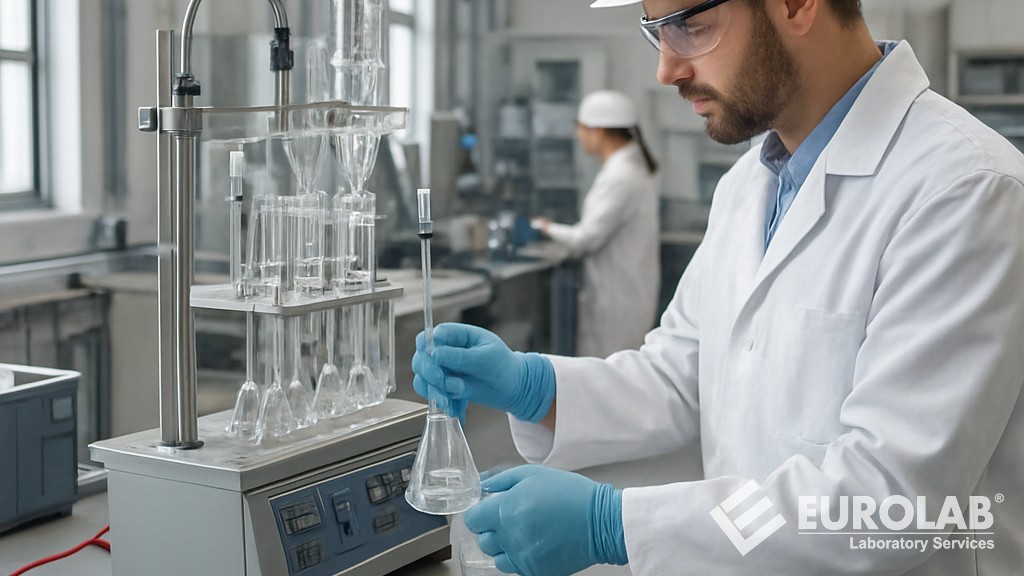
This standard applies to solid fuels such as the following:
Nitrogen content is an important parameter in fuel analysis because:
The method is particularly suitable for routine laboratory testing in the quality control, research, and certification of solid biofuels or fossil fuels.
This method follows the classic Kjeldahl method (semi-micro scale), which is one of the most widely used techniques worldwide for the determination of total nitrogen in organic and many inorganic samples.
This method generally follows these steps:
Nitrogen content is calculated from the amount of acid (or base equivalent) consumed and is expressed as a percentage by mass.
The advantages of the semi-micro Kjeldahl variant are as follows:
This method has the following limitations:
Although the DIN 51722-1 standard remains a significant reference for laboratories and fuel testing (particularly coal and early biomass standards), many applications now refer to the following:
Today, laboratories analyzing solid fuels often use automated CNS analyzers for faster results, but the Kjeldahl method remains a reference wet chemical technique and is still used when instrumental methods need to be validated or for specific regulatory purposes.
In conclusion, the DIN 51722-1 standard represents a reliable and classic approach to determining nitrogen in solid fuels, using semi-micro Kjeldahl digestion and distillation. This method has been a fundamental approach in fuel chemistry for many years.
In short, the DIN 51722-1 standard describes a semi-micro version of the classic Kjeldahl method used for nitrogen determination in solid and liquid samples. This standard is widely applied, particularly in the analysis of coal, coke, and similar fuels.
Semi-micro, according to the classical Kjeldahl method, refers to the following:
These features provide efficiency, especially in routine laboratory analyses.
The areas of application of this standard are:
DIN 51722-1 is used particularly in the following areas:
Nitrogen content is a critical parameter in fuels for the following reasons:
The DIN 51722-1 standard defines the following topics in detail:
Nitrogen percentage is usually calculated according to the formula given in the standard.
The DIN 51722-1 standard is considered important for the following reasons:
In conclusion, this standard has the advantages of high accuracy, internationally accepted principles, and a wide range of applications. However, it does have some limitations. For example, it does not directly measure nitrate and nitrite nitrogen, the analysis time is relatively long, and acidic and corrosive chemicals are used.
For many years, our organization, with its competent and experienced staff, has been understanding the needs of its clients, providing the advanced testing services they require, and assisting them in the establishment, implementation, and improvement of management systems. Within this framework, we also provide testing services in accordance with the DIN 51722-1 standard.
To get an appointment, to get more detailed information or to request an evaluation, you can ask us to fill in our form and reach you.

