

Sulfur dioxide is known for its aggressiveness towards steel and other metal alloys. Although the compound in its pure form does not react strongly with metal, it can be quite corrosive when exposed to the atmosphere. Sulfur dioxide forms sulfuric acid when it reacts with moisture (water) and oxygen. This acidic compound is highly corrosive and can cause accelerated deterioration of steel infrastructures. Sulfate ions formed on the surface of the moisture layer are a major contributor to accelerated corrosion of metallic surfaces.
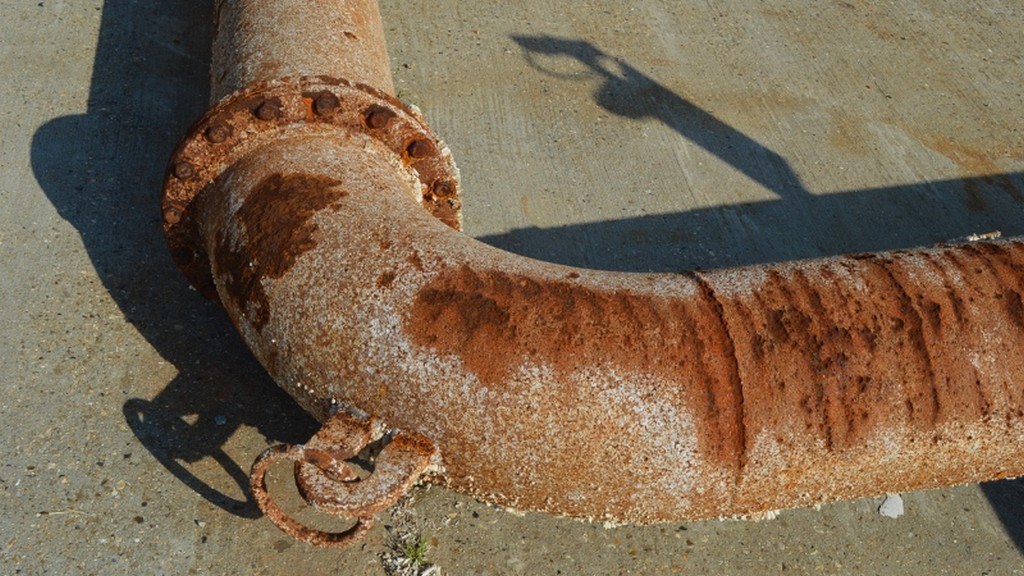
Sulfur dioxide is a colorless gas belonging to the family of gases called sulfur oxides. It reacts on the surface of various airborne solid particles, is soluble in water, and can be oxidized in airborne water droplets. Sulfur dioxide, a product of the combustion of fossil fuels containing sulfur, plays an important role in atmospheric corrosion in urban and industrial atmospheres. It is adsorbed on metal surfaces, has high solubility in water, and tends to form sulfuric acid (acid rain) in the presence of moisture films. Sulfate ions are formed in the surface moisture layer by the oxidation of sulfur dioxide, and their formation is considered the main effect of sulfur dioxide in accelerating corrosion.
Sulfur dioxide can be expressed in terms of deposition rate or concentration in the air. Both measurements should be made in accordance with the standard “ISO 9225 Corrosion of metals and alloys – Corrosivities of atmospheres – Measurement of environmental parameters affecting the corrosivity of atmospheres”. In the standard “ISO 9223 Corrosion of metals and alloys – Corrosivities of atmospheres – Classification, determination and estimation”, the units used for sulfur dioxide categories are sulfate deposition rates in mg m-2 day-1. This standard specifies the fundamental factors in the atmospheric corrosion of metals and alloys. These are the temperature-humidity complex, sulfur dioxide pollution, and salinity in the air.
Natural sources of sulfur dioxide include emissions from volcanoes, oceans, biological decay, and forest fires. The most important man-made sources of sulfur dioxide are fossil fuel burning, smelting, sulfuric acid production, wood pulping into paper, garbage incineration, and elemental sulfur production.
Coal burning is the largest man-made source of sulfur dioxide, accounting for about 50 percent of annual global emissions, while oil burning accounts for 25 percent to 30 percent. In the atmosphere, sulfur dioxide mixes with water vapor to produce sulfuric acid. This acidic pollution can be carried hundreds of miles by wind and deposited as acid rain.
Sulfur dioxide corrosion refers to corrosion resulting from the reaction of a metal with sulfur compounds in high-temperature environments, where the sulfur usually penetrates slightly below the original thickness, forming a sulfur layer on the surface. This process is generally referred to in the corrosion literature as sulfidic corrosion. Sulfur dioxide corrosion can occur wherever sulfur compounds are present in a hydrocarbon stream and the temperature exceeds about 230 degrees.
The sulfur dioxide corrosion test is a laboratory test performed on electrical insulating liquids to detect the presence of corrosive sulfur in the sample. Corrosive sulfur can be in the form of elemental sulfur or thermally unstable sulfur compounds. Elemental sulfur is immediately detrimental to a transformer, while thermally unstable sulfur compounds are potentially detrimental. These forms of sulfur corrode metals such as copper and silver.
The problem of corrosive sulfur receives much attention in industry. When a transformer operates at sufficiently high temperatures, unstable sulfur compounds in the oil are converted into corrosive sulfur compounds. The corrosive sulfur compounds attack the copper conductor, causing the formation of copper sulfide, some of which is soluble in the oil. Copper sulfide has an affinity for paper insulation and forms layers on and in the paper. The copper sulfide forms a conductive path that eventually causes failure and degrades the insulating properties of the paper.
Sulfur dioxide corrosion tests generally refer to the standard “ASTM D1275-15 Standard Test Method for Corrosive Sulfur in Electrical Insulating Liquids” developed by the American Society for Testing and Materials (ASTM). This standard describes a test method for the detection of corrosive sulfur compounds (both inorganic and organic) in electrical insulating liquids. New and in-service insulating liquids may contain elemental sulfur or sulfur compounds, or both, that are corrosive under specified conditions of use. This test method is designed to detect the presence or tendency for free sulfur and corrosive sulfur compounds by contacting copper or silver with an insulating liquid under specified conditions.
Among the numerous tests, measurements, analyses and evaluation studies carried out by our organization for businesses in various sectors, our organization also provides sulfur dioxide corrosion testing services with its trained and expert staff and advanced technological equipment.
To get an appointment, to get more detailed information or to request an evaluation, you can ask us to fill in our form and reach you.

