

In the search for new and improved engineering materials, researchers use multiple tests. The purpose of this is to obtain as robust data as possible on the thermochemical and mechanical properties of the material in question. Microhardness testing is the basis for this process, which provides the basis for detailed knowledge of the dynamic physical properties or functionality of sample materials.
Hardness is a physical quality property that represents how well a material resists friction. It is intrinsically linked to both strength and toughness, which is determined at the microstructural level.
As needs and requirements have changed, hardness testing has become much more complex. Indentation hardness became the new standard and a number of advanced testing methods were implemented, including Brinell, Vickers and eventually Rockwell hardness tests.
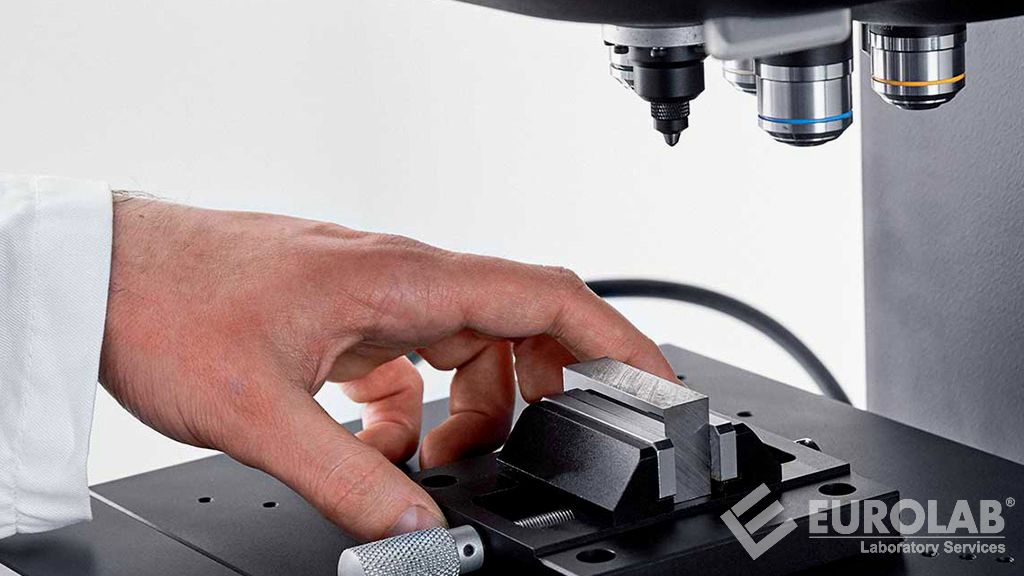
Microhardness testing still uses indentation to investigate the surface of a sample and measure the resulting impression. The principles vary from test to test, but generally a sample is placed on a piezo-driven base and positioned under a calibrated optical microscope with a diamond-tipped indenter and built-in imaging. The indenter is pressed against the surface to a predefined load for a predefined period of time. Various material properties are predicted from the subsequent impression made on the surface. Hardness is not an intrinsic value, therefore tight control of test parameters and application of the correct testing method are extremely important.
Hardness is not an innate mechanical quality, but is intrinsically linked to a variety of fundamental physical properties and functions. Studies have revealed that there is a relationship between hardness and grain size in various materials. In ceramic and metal alloys, orientation and phase composition is a critical factor underlying surface hardness.
Microhardness testing is usually performed to investigate material properties or functionality. That is, microhardness tests are generally used to test the hardenability of the material, to confirm process parameters or ability, or to predict other mechanical properties such as wear resistance, toughness, impact resistance, and tensile strength.
Our organization also provides micro-hardness and scratch testing services with its trained and expert staff and advanced technological equipment, among the numerous test, measurement, analysis and evaluation studies it provides for businesses in various sectors.
To get an appointment, to get more detailed information or to request an evaluation, you can ask us to fill in our form and reach you.

