

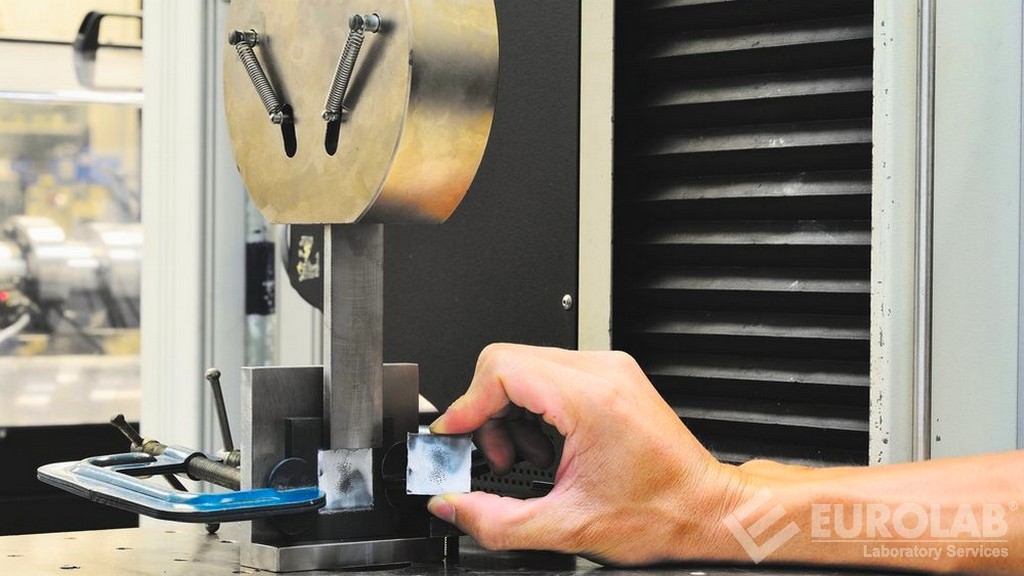
The standard "DIN 50134 Testing of metallic materials - Compression testing of metallic cellular materials" developed by the German Institute for Standardization (DIN) describes a test method for determining the strength properties and deformability behavior of 3D-printed (rapid prototyping) metallic cellular material under compressive loading. For this mechanical test, an electromechanical load frame equipped with a non-contact video extensometer is used.
Medical implant and medical device testing is critical to ensuring product safety and meeting the requirements of the highly regulated medical industry. The medical device field is rapidly evolving with new breakthroughs in technology and improvements in medical supplies, devices and implants. This creates a growing need for the highest quality and most reliable products to ensure performance, durability and long-term reliability.
Cellular solids and porous metals have become some of the lightweight multifunctional materials due to the superior combination of advanced properties derived from their base materials and cellular structures. Such materials are used in a wide variety of commercial, biomedical, industrial, and military applications. Unlike other cellular materials, cellular metals are non-flammable, recyclable, extremely tough, chemically stable, and excellent energy absorbers.
This test method is used to determine the mechanical properties of additively manufactured porous components under uniaxial compressive loads. This test method is carried out by applying force to the tester between two plane, parallel, ground and lubricated plates having a hardness of at least 60 Rockwell Hardness C. The Rockwell Hardness C expression is a unit of measurement used to determine the hardness of steel and similar metals. Essentially, in the Rockwell Hardness test, a specific load is applied to the surface of the material.
Lubrication can be done, for example, with graphite. During the actual test, three samples per cage structure are used to determine the mechanical properties. Before the test, the width of each test sample is measured at at least three measuring points. In order to obtain a smooth contact surface between the test plates, the outer surfaces of the edges must be ground and parallel to each other.
The most commonly performed tests on metal materials include chemical analysis, tensile properties, and flexural and hardness tests. This combination of metal composition tests provides a reasonably good basis for a metal sample assuming it is large enough to perform all three tests, uniform in composition, and uniform in hardness. Depending on the application, there may be other properties that are important, such as corrosion resistance, case depth or microstructure, or coating thickness.
Porous and cellular metals have attractive properties due to their unique cell morphology. When used as impact energy absorbing components in automotive structures, knowledge of their high-speed compressive properties is required for industrial design. The high-speed compressive deformation behavior of porous and cellular metals is quite different from their static compressive properties. Therefore, test methods for static compressive deformation are inadequate for characterizing high-speed compressive deformation. Standardization of a test method for the high-speed compressive behavior of porous and cellular metals is necessary.
The test method described in the DIN 50134 standard consists of applying an impact force to porous and cellular metals at specific test speeds and measuring the compressive force and displacement to evaluate high-speed compressive deformation properties such as plateau stress and energy absorption.
Among the numerous testing, measurement, analysis and evaluation studies that our organization has provided for businesses in various sectors, it also provides testing services defined in the “DIN 50134 Testing of metallic materials - Compression testing of metallic cellular materials” standard with its trained and expert staff and advanced technological equipment.
To get an appointment, to get more detailed information or to request an evaluation, you can ask us to fill in our form and reach you.

