
ISO 27448 Fine Ceramics (Advanced Ceramics, Advanced Technical Ceramics) - Test Method for Self-Cleaning Performance of Semiconductor Photocatalytic Materials - Measurement of Water Contact Angle

ISO 27448 Fine Ceramics (Advanced Ceramics, Advanced Technical Ceramics) - Test Method for Self-Cleaning Performance of Semiconductor Photocatalytic Materials - Measurement of Water Contact Angle

The standard “ISO 27448 Fine ceramics (advanced ceramics, advanced technical ceramics) - Test method for self-cleaning performance of semiconductor photocatalytic materials - Measurement of water contact angle” developed by the International Organization for Standardization (ISO) describes a test method for determining the self-cleaning performance of materials with photocatalysts or photocatalytic films on their surfaces, usually made of semiconductor metal oxides such as titanium dioxide.
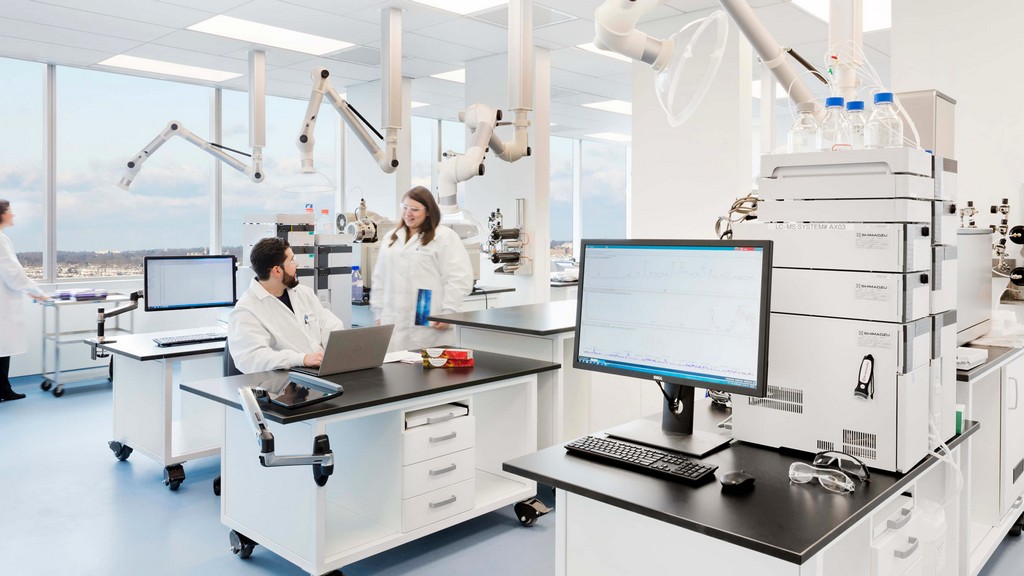
ISO 27448 Fine Ceramics (Advanced Ceramics, Advanced Technical Ceramics) - Test Method for Self-Cleaning Performance of Semiconductor Photocatalytic Materials - Measurement of Water Contact Angle

This method is used to measure the water contact angle under ultraviolet light illumination, which is one of the indexes affecting the self-cleaning performance of photocatalytic materials.

This standard does not include water-permeable substrates, rough surfaces without water droplets, highly hydrophobic, powdery or granular materials, or visible light-sensitive photocatalysts.

For the purposes of this standard,

  • Photocatalyst refers to a substance that performs one or more functions, including decomposition and removal of air and water pollutants, deodorization, and antibacterial, self-cleaning and anti-fog actions, based on oxidation and reduction reactions under photo irradiation.
  • Photocatalytic materials refer to materials to which photocatalyst is added by coating, impregnation, mixing, and similar processes. Such photocatalytic materials are designed for use as building and road construction materials to achieve the functions specified in this standard.
  • A fluorescent UV lamp is a lamp that provides UV-A radiation in the wavelength range of 300 nm to 400 nm. A suitable lamp is the so-called black light blue (BLB) fluorescent lamp with a maximum wavelength of 4892 nm, as described in the ISO 3-351 standard.
  • Hydrophilicity refers to the property that the surface of the photocatalytic material has a strong affinity to water.
  • Self-cleaning is the function of a photocatalyst attached to a surface, such as a building material, in which it prevents the surface from becoming contaminated using at least one of the following:
    • The phenomenon in which contaminants adhering to a surface are degraded by oxidation and reduction when irradiated with light
    • The phenomenon in which contamination is washed away due to hydrophilicity, which manifests itself simultaneously when the surface is exposed to rain or washed with water.
  • The contact angle is when a tangent line is drawn from the point of contact of solid, liquid and vapor phases (normally air) along the curve of the liquid on the solid, the angle between the line and the solid surface is called the contact angle.
  • The initial contact angle is the contact angle just before the start of UV irradiation.
  • The contact angle after n hours of UV irradiation is the contact angle measured n hours after UV irradiation. The time unit can be days, minutes or seconds in addition to hours.
  • The final contact angle is the contact angle at the highest water binding after constant intensity irradiation on a photocatalytic material.
  • Pretreatment of the test piece is the preparation of a test piece by irradiating it with UV and then applying organic substances such as oleic acid.
  • The coefficient of variation is the ratio of the standard deviation to the arithmetic mean.

This international standard is for the development, comparison, quality assurance, characterization, reliability and design data generation of photocatalytic materials. This standard defines a test method that provides performance related to contamination generated during exposure testing.

This test method is to evaluate the self-cleaning performance of a photocatalytic material by obtaining the final contact angle of a test piece to which organic substances are applied. The organic substance is first applied to a test piece (pretreatment), then irradiated with UV at a constant intensity. The water contact angle after n hours can be measured during the process. This test evaluates the decomposition of organic substance and the change of water binding simultaneously. In case pretreatment of a certain test piece is impossible and the initial contact angle before UV irradiation is 20 degrees or greater, the final contact angle can be obtained without pretreatment.

These tests use the following equipment: a black light fluorescent lamp, an ultraviolet irradiator, an ultraviolet light radiometer, and a contact angle meter.

The following chemicals are also used in the tests: Oleic acid and n-Heptane.

Among the numerous testing, measurement, analysis and evaluation studies that our organization has provided for businesses in various sectors, with its trained and expert staff and advanced technological equipment, it also provides testing services defined in the standard “ISO 27448 Fine ceramics (advanced ceramics, advanced technical ceramics) - Test method for self-cleaning performance of semiconductor photocatalytic materials - Measurement of water contact angle”.

WhatsApp

