

One of the most common mechanical testing methods is tensile strength testing. Known as tensile testing, this test determines the behavior of a specimen while an axial tensile load is applied. These types of tests are performed under controlled conditions (such as heating or cooling) to determine the tensile properties of a material. Tensile strength testing is performed on a variety of materials including metals, plastics, elastomers, paper, composites, rubbers, fabrics, adhesives, films, and the like. These tests are commonly used to determine the maximum load (tensile strength) that a material or product can withstand. During a tensile test, the change in length and the applied force are recorded as the specimen is slowly pulled.
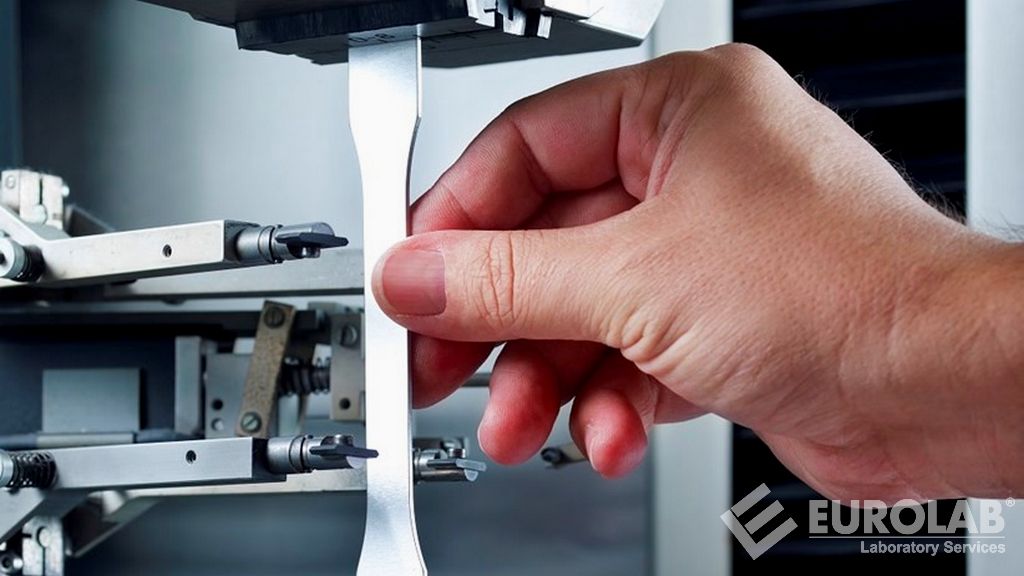
Generally, tensile strength test results include: maximum load, maximum load deflection, operating at maximum load, stiffness, load at break, deflection at break, chord pitch, stress, and tension.
Young's modulus test method is also used to determine the behavior of a sample under axial tensile load. Common tensile strength test results include elastic limit, tensile strength, yield point, yield strength, elongation, and Young's modulus. Young's modulus is commonly reported as N/mm2 or megapascal (MPA).
Strain analysis (or stress-strain analysis) is a powerful tool for detecting changes in a material under the effects of various loading conditions. This technique is performed in a variety of work environments with physical testing methodologies.
Tensile strength tests are performed for various reasons. For example, test results are used to select materials for engineering applications. Tensile properties are often incorporated into material properties to ensure quality. Tensile properties are often determined during the development of new materials and processes so that different materials and processes are compared. Finally, tensile properties are often used to predict the behavior of a material under loading patterns other than uniaxial stress. The strength of a material is often a concern. Therefore, strength is measured in terms of the stress required to cause plastic deformation, or the maximum stress that the material can withstand.
Our organization also provides tensile strength testing services with its trained and expert staff and advanced technological equipment, among the numerous test, measurement, analysis and evaluation studies it provides for businesses in various sectors.
To get an appointment, to get more detailed information or to request an evaluation, you can ask us to fill in our form and reach you.

