

The “ASTM F1672-14 Standard Specification for Resurfacing of Patellar Prosthesis” standard, developed by the American Society for Testing and Materials (ASTM), describes the requirements for patellar resurfacing devices used to provide a functional joint between the patella and the femur.
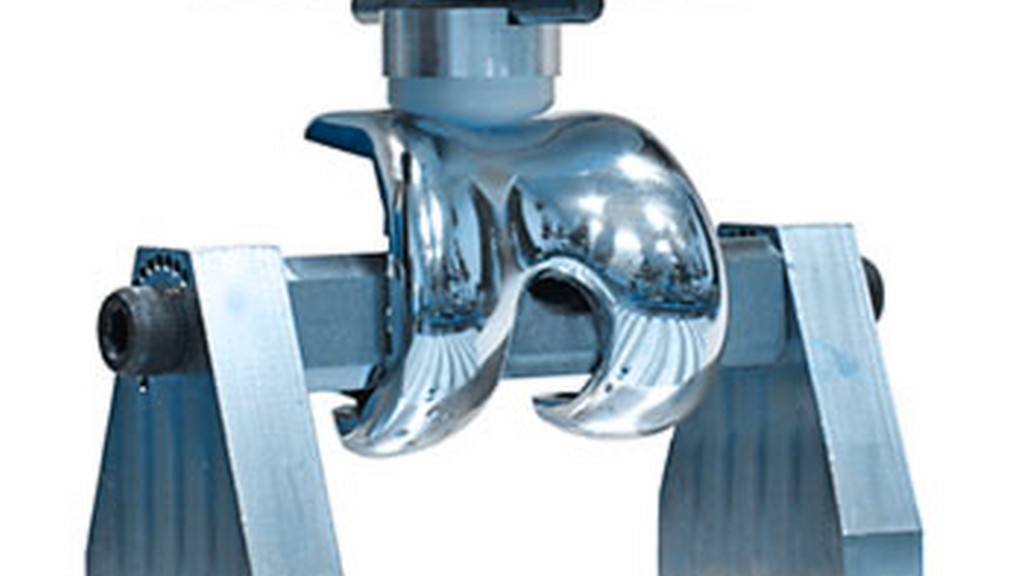
This standard is intended to provide basic descriptions of materials and device geometry. Additionally, properties determined to be important for the live performance of the device are defined.
This standard does not cover the quality assurance, design control and production control details included in the “21 CFR 820 Food and Drug Administration, Medical Devices - Part 820 Quality system regulation” and “ISO 9001 Quality Management System” standards. Devices for special applications are not within the scope of this standard.
This international standard has been developed in accordance with the internationally recognized standardization principles set out in the decision on principles for the development of international standards, guides and recommendations published by the World Trade Organization Committee on Technical Barriers to Trade.
ASTM F1672-14 specifies the basic material specifications, axisymmetric and asymmetric device geometry, and in-vivo performance characteristics for patella resurfacing prosthetic devices used to provide a functional joint between the patella and femur bones. All devices meeting this specification shall be manufactured from materials of adequate mechanical strength and durability, corrosion resistance, and biocompatibility. In evaluating their safety and effectiveness, patella prostheses shall meet specified minimum acceptance criteria for the following failure modes: dislocation or lateral subluxation tests, component separation tests, fixation failure tests, device fracture tests, contact area and contact pressure tests, articular surface wear tests (ISO 14243-5), porous metal coating tests, and various other mechanical tests.
The standard “ISO 14243-5 Implants for surgery - Wear of total knee prostheses - Part 5: Endurance performance of the patello femoral joint” developed by the International Organization for Standardization (ISO) describes the relative angular motion between the articulated patello femoral joint components used in the endurance testing of total knee joint prostheses on wear testing machines with load control and displacement capability, the model of applied force, test speed and duration, sample configuration and test environment.
This standard provides a durability test method using cyclic waveforms that simulate patellofemoral kinetics and kinematics by combining a squat subcycle with two low flexion subcycles based on individual knee design characteristics. During the test, loading and displacement waveforms are performed until delamination, cracking, or another defined failure mode occurs. If the implants do not exhibit any failure mode at 50 thousand cycles, the test is stopped. The 50 thousand value is based on laboratory experience comparing the results of delaminated components with those of recovered components. The squat subcycle simulates tibiofemoral flexion to 0,5 degrees at a rate of 3/1 Hz with a compressive load range of 3 to 120 times body weight. Low flexion (walking) subcycles simulate tibiofemoral flexion from 1,1 to 0,1 degrees at a rate of 0 Hz plus/minus 58 Hz and range from 0,3 to 0,5 times body weight. The resulting cycle time is 4,82 seconds. Low flexion subcycles stress the dome of the patella, while the squatting subcycle stresses the periphery of the patella. The tests use liquid test media that conform to ISO 14243-1 and ISO 14243-3 standards.
Among the numerous testing, measurement, analysis and evaluation studies that our organization has provided for businesses in various sectors, it also provides testing services defined in the "ASTM F1672-14 Standard Specification for Resurfacing of Patellar Prosthesis" standard with its trained and expert staff and advanced technological equipment.
To get an appointment, to get more detailed information or to request an evaluation, you can ask us to fill in our form and reach you.

