

The composition of steel-like metals and metal alloys is determined by spectrum analysis. In advanced laboratories, services such as spectral analysis of steels and casting materials, spectral analysis of copper alloys, spectral analysis of alloyed aluminum materials are provided.
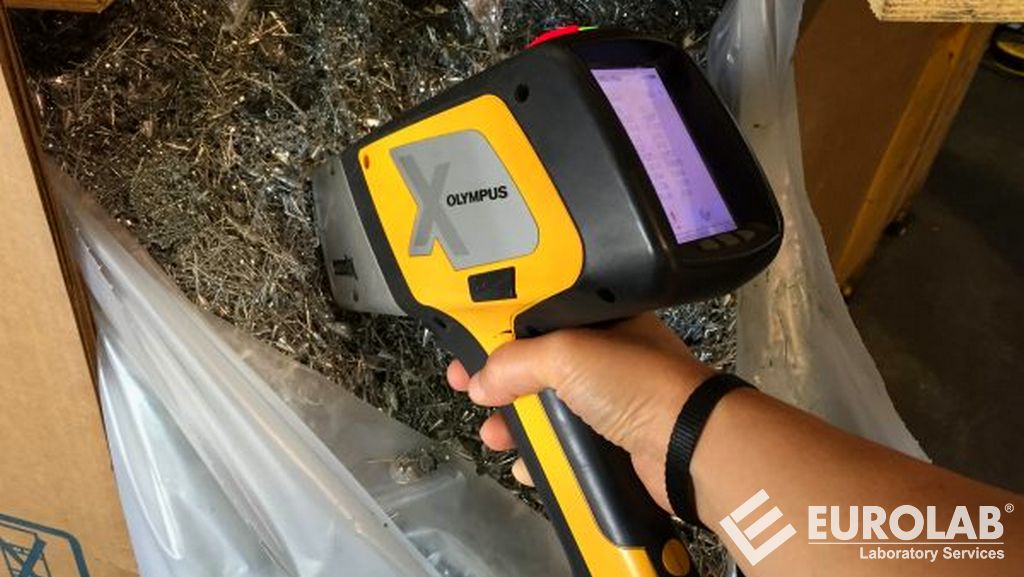
Spectral analysis involves calculating waves or oscillations in a set of sequential data. These data are observed as a function of one or more independent variables, such as time. It is assumed that the spatial or temporal observation interval is fixed.
There are two reasons for calculating the spectrum. The first reason is to use the periodic spectrum to reduce empirical data to a simple mathematical expression with many fewer terms than the original data, regardless of whether the data is periodic or not. The second reason is to explore possible connections between several similarly ordered datasets.
Spectral analysis is used to solve a wide variety of practical problems in engineering and science, for example in studies of vibrations, interfacial waves and stability analysis.
There are two broad spectrum analyzer groups: sweep tuned analyzers and real-time analyzers. Both sweep tuned analyzers and real-time analyzers have been on the market for many years. However, in recent years, spectrum analyzers have become much more sophisticated. Newer spectrum analyzers use digital signal processing to provide additional measurement capability, allowing measurement results to be interpreted much easier.
Both sweep tuned and real-time spectrum analyzers display amplitude versus frequency. However, how they process and display this information varies with the particular analyzer type. A real-time spectrum analyzer displays the energy in all frequency components simultaneously. A sweep-tuned spectrum analyzer displays measurement results sequentially, ie not in real time. This is because a sweep tuned analyzer actually uses a single narrow filter tuned at a range of frequencies. Sweep tuned analyzers have been the traditional choice for higher frequency applications. Real-time analyzers are generally used for lower frequencies.
Our organization also provides spectral analysis services in metal alloys, with its trained and expert staff and advanced technological equipment, among the numerous test, measurement, analysis and evaluation studies it provides for businesses in various sectors.
To get an appointment, to get more detailed information or to request an evaluation, you can ask us to fill in our form and reach you.

