

The European standard “EN 723 Copper and copper alloys - Combustion method for determining the carbon content on the inner surface of copper pipes or fittings” describes a combustion method for determining the carbon content (if any) on the inner surface of copper pipes or copper or copper alloy fittings. This standard applies only to seamless, round copper pipes as specified in EN 1057 and EN 13348 standards, or to copper or copper alloy fittings (all parts) as specified in EN 1254 standard.
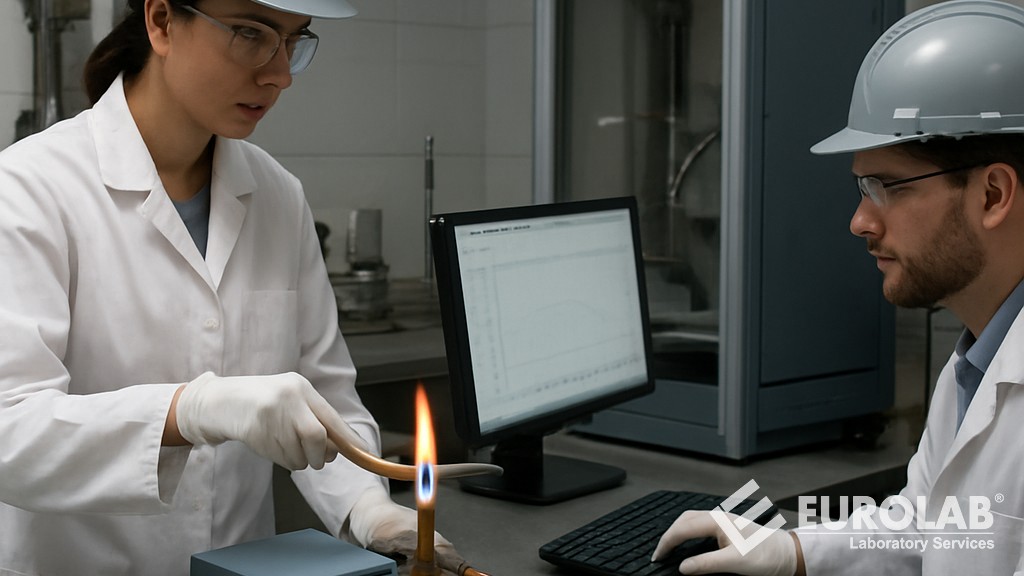
This method is based on the principle of burning the carbon present on the inner surface of a pipe or fitting in a stream of oxygen at a specific temperature. By measuring the resulting carbon dioxide, the residual or total carbon content, or both, is determined using infrared absorption spectrometry. The potential carbon content is calculated by subtracting the residual carbon content from the total carbon content.
The EN 723 standard defines a specific test method for measuring residual carbon found on the inner surface of copper pipes or copper fittings. Even small amounts of residual carbon can be critical in applications such as:
Excess carbon on the inner surface (typically from manufacturing lubricants or incompletely removed extraction processes) can lead to problems such as contamination, corrosion, or reaction under high temperature/oxygen conditions. This standard helps manufacturers, testing laboratories, and end-users verify that their copper products meet the cleanliness requirements for these sensitive uses.
This method is based on a combustion technique:
This method is specifically designed to detect surface carbon (not bulk carbon in the copper alloy itself).
The EN 723 standard applies to copper and certain copper alloys used in the manufacture of pipes and fittings. Calibration and equipment requirements (furnace, oxygen supply, gas analyzers) are specified. Accuracy and repeatability criteria are defined. Safety precautions for high-temperature combustion and oxygen handling are included.
This is a technical test method standard (not a product specification), therefore it is usually referenced in broader copper pipe standards (e.g., EN 1057 standard for seamless round copper pipes) where internal surface cleaning is required.
In short, the EN 723 standard is a European test method that specifies how to determine the apparent density of cellular plastics, particularly rigid foams used in thermal insulation and construction applications. This standard is widely applied in the evaluation of materials such as polyurethane (PU), polyisocyanurate (PIR), phenolic foam, and other rigid cellular plastics used in buildings, cooling systems, and industrial insulation.
The EN 723 standard defines a standardized procedure for measuring the apparent density of a cellular plastic material. Because cellular plastics contain gas-filled cells, the measured density is called apparent density rather than true material density.
This standard provides:
The EN 723 standard applies to:
European product standards are generally used as a reference for thermal insulation materials used in buildings.
Apparent density is calculated by dividing mass by volume. The result is expressed as kg/m³.
The EN 723 standard specifies the following:
Typical conditioning requires a temperature of 23 degrees Celsius and 50 percent relative humidity. Measurement accuracy is crucial because small size errors can significantly affect the calculated density.
Apparent density directly affects the following:
The EN 723 standard is widely used in the following areas:
Manufacturers rely on the EN 723 standard to ensure compliance with the requirements of the European Construction Products Regulation (CPR).
Density is a key characteristic for CE marking and product certification in Europe. The EN 723 standard provides for:
Without standardized intensity measurement, performance data from different manufacturers cannot be compared.
In conclusion, the EN 723 standard is a fundamental European test standard for determining the apparent density of cellular plastics. Although the process is simple, it plays a critical role in ensuring material performance, product consistency, and regulatory compliance in the insulation and construction sectors.
For many years, our organization, with its competent and experienced staff, has been understanding the needs of its clients, providing the advanced testing services they require, and assisting them in the establishment, implementation, and improvement of management systems. Within this framework, we also provide testing services in accordance with the EN 723 standard.
To get an appointment, to get more detailed information or to request an evaluation, you can ask us to fill in our form and reach you.

