NORSOK M-501 Surface Preparation and Protective Coating
The “NORSOK M-501 Surface preparation and protective coating” standard, developed by the Norwegian oil industry, describes the requirements for the selection of coating materials, surface preparation, application procedures, and inspection for protective coatings to be applied during the construction and assembly of offshore facilities and related installations. This standard covers paints, metallic coatings, and passive fire-protective coatings applied by spraying.
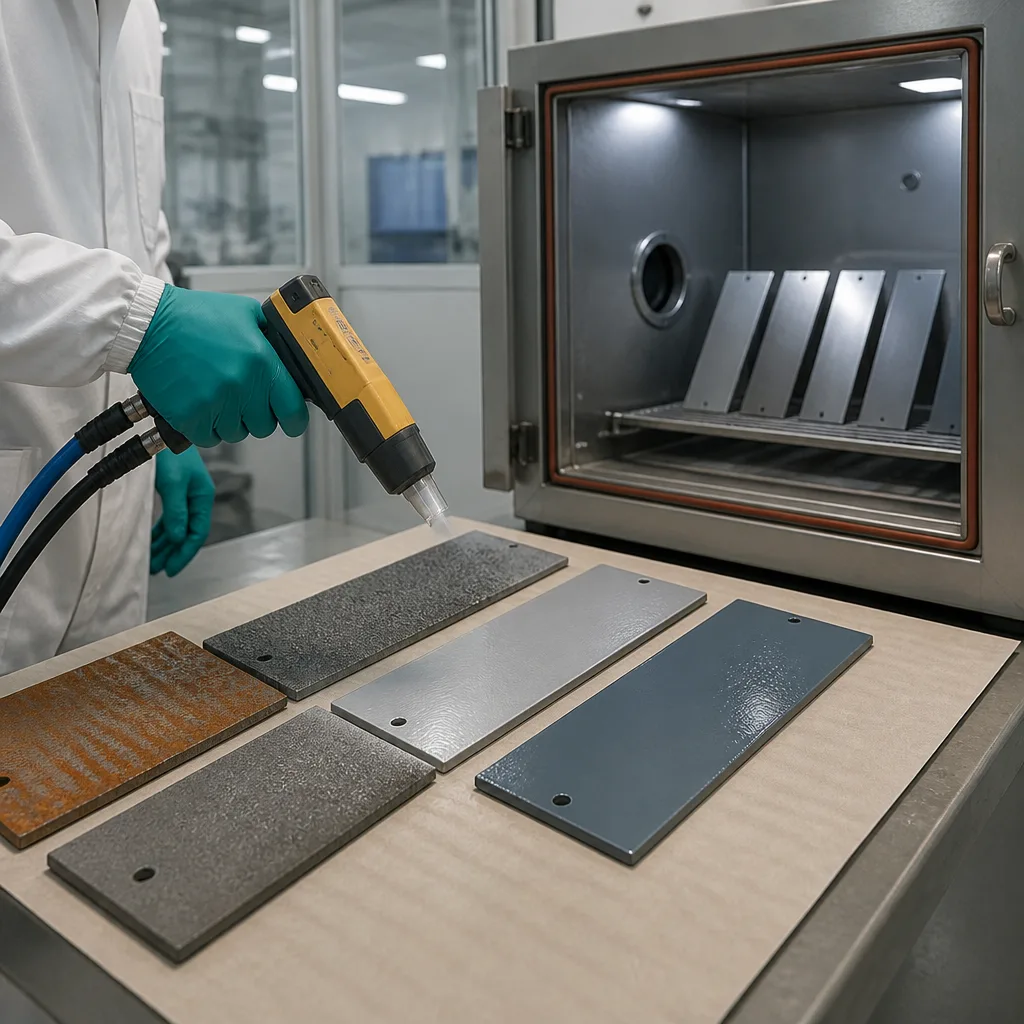
The aim of this standard is to obtain a coating system that provides the following:
- Optimal protection of the facility with minimum maintenance requirements.
- The coating system must be suitable for maintenance.
- The coating system must be suitable for the application.
- Assessment and documentation of health, safety and environmental impacts.
This standard does not apply to pipelines and pipeline risers.
The selection of coating systems and application methods should be made taking into account the conditions during the manufacturing, assembly, and servicing of the facility. Specific qualification requirements for products, personnel, and companies are included in this standard.
The NORSOK M-501 standard is a globally recognized offshore industry standard that defines the requirements for surface preparation and protective coating systems used in steel structures in harsh environments. Over time, this standard has become a benchmark for providing long-term corrosion protection in the offshore oil and gas, marine, and renewable energy sectors.
The main objective of the NORSOK M-501 standard is to ensure that coating systems provide the following:
- To provide high durability and corrosion resistance.
- Requiring minimum maintenance throughout its service life.
- Being safe and environmentally friendly.
- To be practical for implementation and monitoring.
This standard covers:
- Selection of coating materials
- Surface preparation methods
- Application procedures
- Inspection and testing requirements
- Maintenance guides for coatings
This standard applies to offshore and onshore installations, including major platforms, pipelines (excluding certain pipeline systems), ships, and wind energy structures.
The basic technical requirements have been defined as follows:
- Surface preparation: Proper surface preparation is crucial for coating performance. The NORSOK M-501 standard generally requires the following:
- Abrasive sandblasting cleaning (e.g., very thorough sandblasting cleaning)
- Controlled surface roughness (profile)
- Cleanliness verification before coating application.
- Coating systems: This standard defines multiple coating systems adapted for different environments and components. These include:
- Epoxy and polyurethane coatings
- Thermal spray aluminum systems
- Passive fire protection coatings
- Specialized systems for high temperature, cryogenic and underwater conditions.
There are generally nine main coating system categories, and each is designed for specific service conditions such as splash zones, tanks, or dry interiors.
- Inspection and quality control: Rigorous inspection procedures ensure coating quality. These include:
- Dry film thickness measurement
- Adhesion test
- Surface cleanliness checks
- Continuous monitoring during implementation
The application areas of the NORSOK M-501 standard are as follows:
- Offshore oil and gas platforms
- Floating production systems
- Offshore wind turbines
- Marine vessels and equipment
- Submarine structures and pipelines
The NORSOK M-501 standard is important because it directly protects critical infrastructure against corrosion, one of the most costly and dangerous problems in the industry. The main reasons why this standard is necessary are as follows:
- It prevents catastrophic corrosion failures: Offshore and marine environments are extremely aggressive; saltwater, oxygen, humidity, and temperature variations accelerate steel corrosion. This standard,
- It prevents steel structures from deteriorating rapidly.
- It prevents premature deterioration of coatings.
- It preserves structural integrity.
By requiring appropriate surface preparation and coating systems, this standard ensures long-term corrosion resistance.
- It extends the lifespan of assets by many years: Oil platforms, wind turbines, and offshore structures are designed for 20-30 years of service. The NORSOK M-501 standard ensures the following:
- Coatings remain effective for a long time.
- Minimal deterioration under harsh conditions.
- Reduced need for frequent recoating.
This translates to a longer service life and a better return on investment.
- Reduces maintenance and lifecycle costs: Offshore maintenance is extremely costly due to factors such as limited access, harsh weather conditions, and the need for specialized labor and equipment. A high-quality coating system applied according to this standard provides the following:
- Reduces the frequency of repainting.
- It minimizes closures.
- It avoids costly repairs.
- It ensures safety and environmental protection: Corrosion is not just a cost issue, but also a safety risk. Failures caused by corrosion can lead to leaks (oil, gas, chemicals), structural collapse, or fire or explosion hazards. This standard helps by providing reliable protection:
- Protecting workers
- To prevent environmental damage.
- Supporting regulatory compliance
- It standardizes quality in global projects: Large offshore projects involve multiple contractors, suppliers, and countries. This standard ensures the following:
- Clear, unified requirements
- Consistent monitoring and testing criteria
- Reducing ambiguity in specifications
- It reflects real offshore experience: Unlike purely theoretical standards, this standard is based on decades of operational experience in the world's most challenging environments. In this respect,
- The requirements are not only ideal, but also practical.
- Proven coating systems are listed.
- Lessons learned from failures have been included.
- It supports advanced coating technologies: The latest update to this standard includes the following:
- Thermal spray aluminum systems
- High temperature and cryogenic coatings
- Improved competency and testing methods
In short, without the NORSOK M-501 standard, offshore structures would face the following problems:
- Faster deterioration
- Higher maintenance costs
- Greater security risks
In conclusion, the NORSOK M-501 standard is one of the most important standards for protective coatings in offshore engineering. By combining stringent requirements for surface preparation, coating systems, and inspection, it enables structures to withstand some of the world's most challenging environments.
For many years, our organization, with its competent and experienced staff, has been understanding the needs of its clients, providing the advanced testing services they require, and assisting them in the establishment, implementation, and improvement of management systems. Within this framework, we also provide testing services in accordance with the NORSOK M-501 standard.



