

The “ISO 22675 Prostheses - Testing of ankle-foot appliances and foot units - Requirements and test methods” standard, developed by the International Organization for Standardization (ISO) , describes a cyclical testing procedure primarily for ankle-foot appliances and foot units of external lower extremity prostheses, distinguished by its potential to realistically simulate the load conditions of the full stance phase of walking, from heel strike to toe-off. This procedure is concerned with verifying performance requirements such as durability, robustness, and service life.
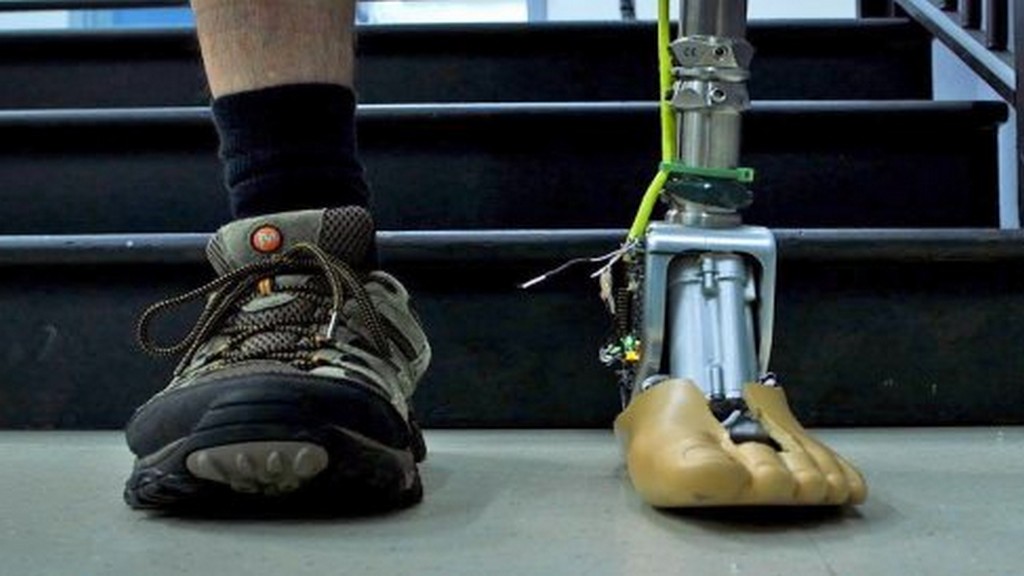
This potential is particularly important for evaluating the performance of various new ankle-foot device and foot unit designs that have specific properties that will only improve under realistic loading conditions.
In addition, this standard includes a static test procedure for prosthetic ankle-foot devices and foot units, consisting of a static endurance test and a static ultimate strength test, distinguished by, among other features, the potential to produce heel and forefoot forces in lines of action appropriate to those occurring at the maximum heel and forefoot loading moments during cyclic testing. The loading conditions discussed in the third paragraph are characterized by a loading profile determined by the resultant vector of vertical and horizontal (AP) ground reaction forces and a motion profile determined by the tibia angle.
The test loading conditions specified in this standard are characterized by standardized formats of these loading and motion profiles, and they are uniformly applied by cyclic and static test procedures to each specimen of ankle-foot device or foot unit submitted for testing.
Each ankle-foot device or foot unit sample submitted for testing is, however, free to develop its own individual performance under load.
For the purposes of this standard, the following terms and definitions apply:
Definitions and symbols of all relevant test forces are listed in the table provided in the standard.
According to the standard “ISO 22523 External limb prostheses and external orthoses - Requirements and test methods”, a prosthetic ankle device or foot unit must have the strength to support the loads generated during use by amputees as prescribed by the manufacturer in the written instructions for use for this device. In order to assess the conformity of ankle devices and foot units to these requirements, this standard provides means of determining different strength categories. These are listed in the table provided in the standard, together with the relevant performance requirements and the test methods for their verification.
In order to meet the general requirement for a particular ankle device or foot unit, the following safety concept is applied: The device
These conditions are taken into account in the classification, description and labeling of ankle-foot devices and foot units.
The statement of the body mass limit that should not be exceeded by amputees is part of the conditions of use to be stated in the manufacturer's written instructions for the intended use of the ankle-foot device or foot unit by amputees, justified by taking into account all other factors affecting the loads expected to be applied to the ankle-foot device or foot unit by amputees.
Among the numerous testing, measurement, analysis and evaluation studies that our organization has provided for businesses in various sectors, it also provides testing services defined in the “ISO 22675 Prostheses - Testing of ankle-foot devices and foot units - Requirements and test methods” standard with its trained and expert staff and advanced technological equipment.
To get an appointment, to get more detailed information or to request an evaluation, you can ask us to fill in our form and reach you.

