

Compression permanent deformation in elastomers is a crucial property for gaskets, seals, and rubber components. It is one of the most important performance characteristics of elastomers (rubber-like materials), foams, and soft polymers. It measures the permanent deformation remaining after a material is released following prolonged compression. Simply put, it indicates how well or poorly a material returns to its original shape after compression.
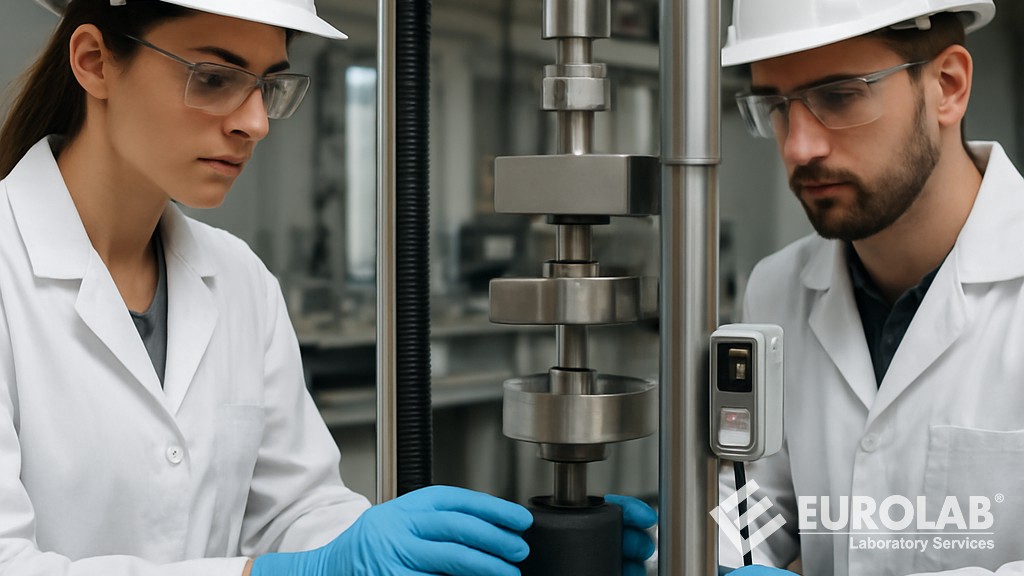
This property is particularly critical in applications such as O-rings, gaskets, sealing elements, cushioning foams, and any component that needs to maintain its sealing strength or flexibility over time under continuous compression.
When an elastomer is compressed (for example, an O-ring compressed between two surfaces), the polymer chains and cross-links rearrange. Over time (especially under heat, prolonged exposure, or chemical exposure), some of these changes become permanent. When the compressive force is removed, the material does not fully return to its original state.
In compression permanent deformation,
Good sealing materials show 10-30% permanent deformation under standard test conditions; higher values indicate poor long-term performance.
The most common formula is found in Method B of the “ASTM D395 Rubber property - Standard test methods for permanent compression deformation” standard. A lower percentage indicates better elastic recovery.
Compressive permanent deformation results from a combination of physical and chemical processes:
Factors that worsen compression permanent deformation include:
The primary standard for determining compressive permanent deformation in elastomers is ASTM D395. This standard describes two methods:
Samples are typically compressed to 25 percent pressure for 22–70 hours at a specific temperature (e.g., 70 degrees, 100 degrees, or 150 degrees), then released and measured after the recovery period.
Other standards include “ISO 815-1 Rubber, vulcanized or thermoplastic - Determination of permanent compressive deformation” and similar methods for foams.
The performance of materials varies greatly:
For example, in high-temperature sealing, fluoroelastomers typically show less than 20% set after 70 hours at 150 degrees, while natural rubber can exceed 50-80%.
Meanwhile, high compression sets flatten O-rings or gaskets, reducing contact force, and leaks occur when parts move or vibrate. Foam gaskets lose thickness and voids form. For long-term static gaskets, materials with low compression permanent deformation should be selected, excessive compression percentages should be avoided, and temperature drop should be considered.
Compression permanent deformation is one of the most critical properties when evaluating elastomers (such as rubbers, silicones, and fluoroelastomers) for real-world use. It directly determines whether a component, such as an O-ring, gasket, sealing element, or cushion, will continue to operate reliably under continuous compression for months or years, or whether it will fail prematurely.
The main reasons why this feature is so important are as follows:
In conclusion, compression permanent deformation is important because it indicates whether an elastomer will forget its elasticity after being compressed for a long time, and in sealing applications, this loss of elasticity often means a loss of sealing. Compression permanent deformation is the loss of memory of elastomers under continuous load. For reliable and long-lasting performance in gaskets and flexible components, selecting a material with low compression permanent deformation is crucial.
For many years, our organization, with its competent and experienced team, has been understanding the needs of its clients, providing the advanced testing services they require, and assisting in the establishment, implementation, and improvement of management systems. Within this framework, we also provide compression permanent deformation testing services for elastomers to businesses.
To get an appointment, to get more detailed information or to request an evaluation, you can ask us to fill in our form and reach you.

