

The standard “ASTM C177-19 Standard test method for steady-state heat flux measurements and thermal conductivity by means of guarded hot plate apparatus” developed by the American Society for Testing and Materials (ASTM) describes criteria for laboratory measurement of steady-state heat flux through flat, homogeneous specimens when in contact with solid, parallel boundaries whose surfaces are held at constant temperatures.
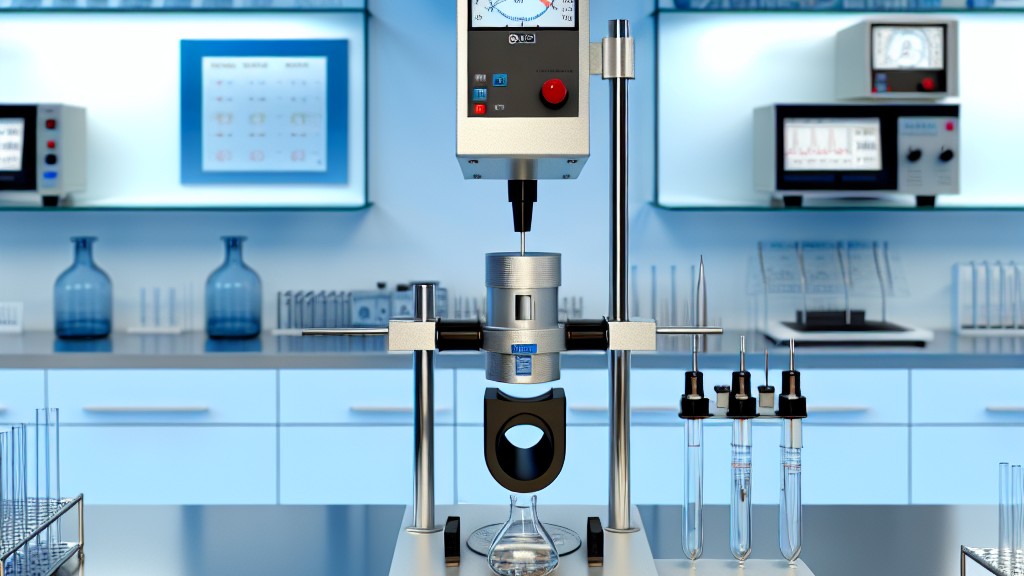
The test apparatus designed for this purpose is known as a guarded-hot-plate apparatus and is a primary (or absolute) method. This test method is comparable to the ISO 8302 standard test method, but is not the same.
This test method establishes the general design requirements necessary to fabricate and operate a satisfactory guarded-hot-plate device. It covers a wide range of device structures, test conditions, and operating conditions. Detailed designs suitable for this test method are not given, but should be developed within the constraints of the general requirements. Examples of analysis tools, concepts, and procedures used in the design, construction, calibration, and operation of a guarded-hot-plate device are included in the standard (References).
This test method covers both single-sided and double-sided measurement modes. Both distributed and line-source shielded hot plate designs are permitted. The user should refer to ASTM C1044 and ASTM C1043 for more details on these heater designs.
The shielded hot plate apparatus can be operated with either vertical or horizontal heat flow. However, the user is cautioned that if convective heat flow occurs within the samples, test results from the two orientations may differ.
Although no absolute upper limit can be given for the magnitude of sample conductivity that can be measured on the protected hot plate, for practical reasons the sample conductivity should be less than the value given in the standard.
This test method is applicable to the measurement of a wide variety of samples, from opaque solids to porous or transparent materials, and a wide range of environmental conditions, including measurements at extreme temperatures and with various gases and pressures.
Inhomogeneities perpendicular to the direction of heat flow, such as layered structures, can be successfully evaluated using this test method. However, testing specimens with inhomogeneities in the direction of heat flow, such as a thermal bridge insulation system, may yield location-specific results and should not be attempted with such an instrument. ASTM C1363 applies to testing these systems.
Calculation of heat transfer properties based on measurements made using this method should be made in accordance with the ASTM C1045 standard.
To ensure the expected level of precision and accuracy, those applying this standard should be familiar with the requirements for thermal measurement and test practices and the practical application of heat transfer theory to thermal insulation materials and systems. Detailed operating procedures, including design diagrams and electrical drawings, should be available for each device to ensure that tests are in accordance with this test method. In addition, automatic data acquisition and processing systems connected to the device should be verified for accuracy. This can be done by calibration and inputting data sets associated with known results into computer programs.
It is impractical for such a test method to specify design and construction details and procedures that will cover all contingencies, which would be difficult for a person without technical knowledge of heat flow theory, temperature measurements, and general test practices. The user may also find it necessary to be a designer or a manufacturer, or both, when repairing or modifying equipment, where the demands of basic understanding and careful experimental technique are greater. The standardization of this test method is not intended to restrict in any way the future development of new or improved equipment or procedures.
This test method does not specify all the details necessary for instrument operation. Decisions regarding sampling, sample selection, preconditioning, sample mounting and positioning, selection of test conditions, and evaluation of test data should follow applicable ASTM test methods, guidelines, practices, or product specifications or regulatory requirements. If no applicable standard is available, sound engineering judgment reflecting accepted heat transfer principles should be used and documented.
This test method allows a wide range of instrument designs and design accuracies to be used to meet the requirements of specific measurement problems. Compliance with this test method requires a statement of the uncertainty of each variable reported in the report.
The figure given in the standard shows the main components of the idealized system: two isothermal cold surface assemblies and a guarded-hot plate. Some apparatus may have more than one guard. The guarded-hot plate consists of a metered section thermally isolated from the concentric primary guard by a specified separation or gap. Some apparatus may have more than one guard. The test specimen is sandwiched between these three units. In the double-sided measurement mode, the specimen actually consists of two pieces. In this case, the measurement produces a result that is the average of the two pieces, and it is therefore important that the two pieces are very close together. In the single-sided measurement mode, ASTM C1044 applies. In the use of the guarded-hot plate, which includes the use of a line-supply heater, ASTM C1043 applies.
The shielded hot plate provides the power (heat flow per unit time) for the measurement and defines the actual test volume, i.e. the portion of the sample that is actually measured. The function of the primary shielding of the shielded hot plate apparatus and any additional coplanar shielding is to provide suitable thermal conditions within the test volume to reduce lateral heat flow within the apparatus. Suitable (idealized) conditions are shown in the figure by the configuration of isothermal surfaces and constant heat flow lines within the specimen.
Deviations from the idealized configuration are caused by: sample inhomogeneities, temperature differences between the measured section and the guard (gap imbalance), and temperature differences between the outer edge of the assembly and the surrounding controlled environment (edge imbalance).
Three heating/cooling devices are designed to create isothermal surfaces on the surfaces of the samples within the measured section. The two surfaces designated as cold surface devices are set to the same temperature for the double-sided mode of operation. In practice, since the plates and samples are of finite size and the external controlled environment is usually at a different temperature than the edge of the measured section, some lateral heat flow occurs. Primary protection for the protected hot plate limits the magnitude of lateral heat flow into the measured section. The effectiveness of the primary protection is determined in part by the ratio of the lateral size to the size of the measured section and the sample thickness.
Compliance with this test method requires: establishing steady-state conditions and measuring the unidirectional heat flow through the metered section, the metered section area, the temperature gradient across the specimen in terms of the temperature of the hot surface and the temperature of the cold surface (or equivalently, the temperature between the two surfaces), the thickness of each specimen, and the balance of protection between the metered section and the primary protection.
Our organization, which has been trying to support businesses from every sector with its testing, measurement, analysis and evaluation studies carried out in a wide range for years, has a strong staff that closely follows the developments in the world in the field of science and technology and constantly improves itself. In this context, testing services are also provided to businesses in accordance with the standard "ASTM C177-19 Standard test method for steady-state heat flux measurements and thermal conductivity properties by means of a protected hot plate apparatus".
To get an appointment, to get more detailed information or to request an evaluation, you can ask us to fill in our form and reach you.

