

The American Society for Testing and Materials (ASTM) standard "ASTM D4332-22 Standard Practice for Conditioning Containers, Packages, or Packaging Components for Testing" defines standard and specific conditioning and test atmospheres that can be used to simulate specific field conditions that a container, package, or packaging component may encounter during its life or test cycle. This practice covers conditioning procedures to approach or reach equilibrium with the atmosphere to which these containers, packages, or packaging components may be exposed. This standard is commonly used for conditioning when conducting transit simulation tests.
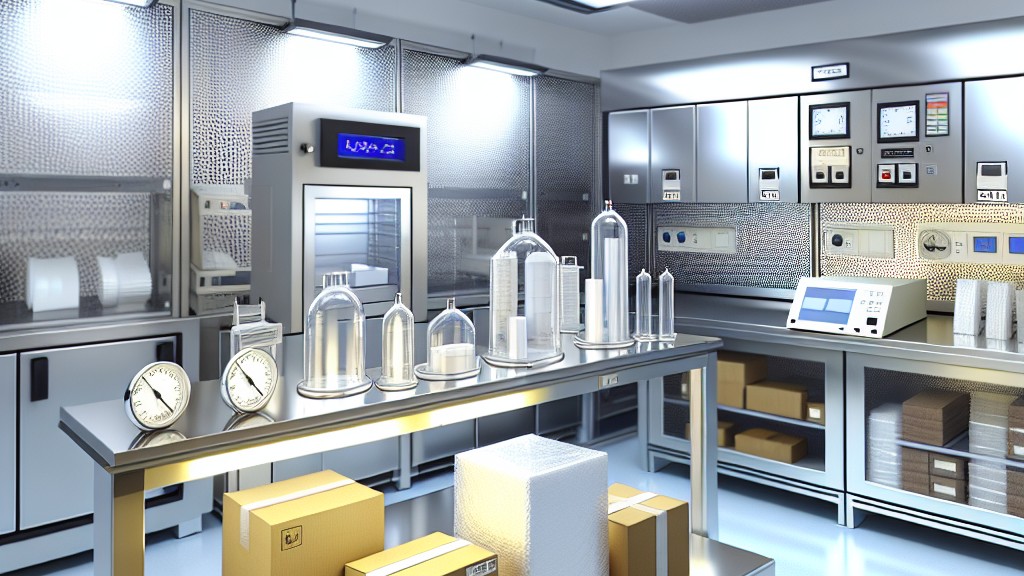
This standard should be used as the corresponding conditioning standard when it is necessary to quantify the can compressive strength under atmospheric conditions, ASTM D685-22.
Many materials, especially cellulosic materials, from which containers and packages are made undergo changes in their physical properties depending on the temperature and relative humidity to which they are exposed. Therefore, the package must be placed and maintained in a specific atmosphere for a specific period of time. In this way, subsequent measurements of physical properties will be meaningful and repeatable.
The conditions specified in this standard are historically accepted standard conditions or specific laboratory conditions chosen to represent particular phases of the distribution environment. These specific conditions do not necessarily replicate actual field conditions, but tend to simulate them and have effects on packages and materials that may be relevant to their field performance.
Atmospheric conditions are defined in this standard as follows:
When performing the test method, the container, package or packaging component is placed in the conditioning chamber and exposed to the required conditions for the period specified in the specific test procedure. If no period is specified, a minimum period of 72 hours or the time required to reach equilibrium is recommended (may be shorter or longer than 72 hours). The container, package or packaging component should be supported so that all surfaces have free access to the conditioning atmosphere. Heavier packages may be placed on a pallet or other device that allows as much of the bottom surface to be exposed to the conditioning atmosphere as possible, provided that the device does not cause a permanent change in the container or affect the final test result.
Whenever possible, the desired test or measurement should be made in the specified conditioning atmosphere. When this is not possible, the test should be made as soon as possible after the specimen is removed from the conditioning atmosphere.
Alternatively, the packaging can be wrapped in plastic wrap before being removed from the conditioning atmosphere, thus preventing the plastic from interfering with the particular test, so that the packaging neither gains nor loses moisture. Here too, the packaging is tested as soon as possible after being removed from the conditioning atmosphere.
In short, packaging materials are frequently exposed to various environmental stresses, such as changes in temperature and humidity during storage, transportation and handling. This standard ensures that materials are conditioned to simulate real-world conditions prior to testing.
This standard ensures consistency and comparability. By following a standardized conditioning method, different laboratories or companies can produce comparable test results. Without this, changes in the environment can skew results and make it difficult to assess the true performance of a package.
Tests such as drop testing, compression testing, or vibration testing can give misleading results if the materials are not properly conditioned. This method ensures that the materials are in a consistent and predictable condition prior to testing.
After all, many industries, including food, pharmaceutical, and consumer goods, rely on this standard to meet regulatory and quality assurance requirements. By having packages evaluated under realistic conditions, manufacturers can better understand how their packaging is protecting products, thus reducing the risk of damage during shipping.
Our organization, which has been trying to support businesses from every sector with its testing, measurement, analysis and evaluation studies carried out in a wide range for years, has a strong staff that closely follows the developments in the world in the field of science and technology and constantly improves itself. In this context, testing services are also provided to businesses in accordance with the "ASTM D4332-22 Standard Application for Conditioning Containers, Packages or Packaging Components for Testing" standard.
To get an appointment, to get more detailed information or to request an evaluation, you can ask us to fill in our form and reach you.

